Best EV Wall Charger Options for Fast Home Charging?
As electric vehicles (EVs) become more popular, choosing the right EV wall charger is crucial. According to industry expert John McCarthy, "A reliable EV wall charger is essential for every EV owner." This statement highlights the importance of selecting a charger that fits both your vehicle and lifestyle.
Fast home charging is a game-changer for EV owners. Instead of being tied to public charging stations, a dependable home charger offers convenience. Investing in the right EV wall charger can significantly reduce your charging time. However, not every charger meets all needs. Some may require professional installation, which can add to the cost.
Many chargers vary in terms of speed and compatibility. Some may only work with specific vehicle brands. It's essential to choose a charger that offers flexibility. Take the time to compare different models. Read both expert reviews and user feedback. This process can sometimes feel overwhelming. Yet, being informed can lead to a more satisfying choice in the long run.
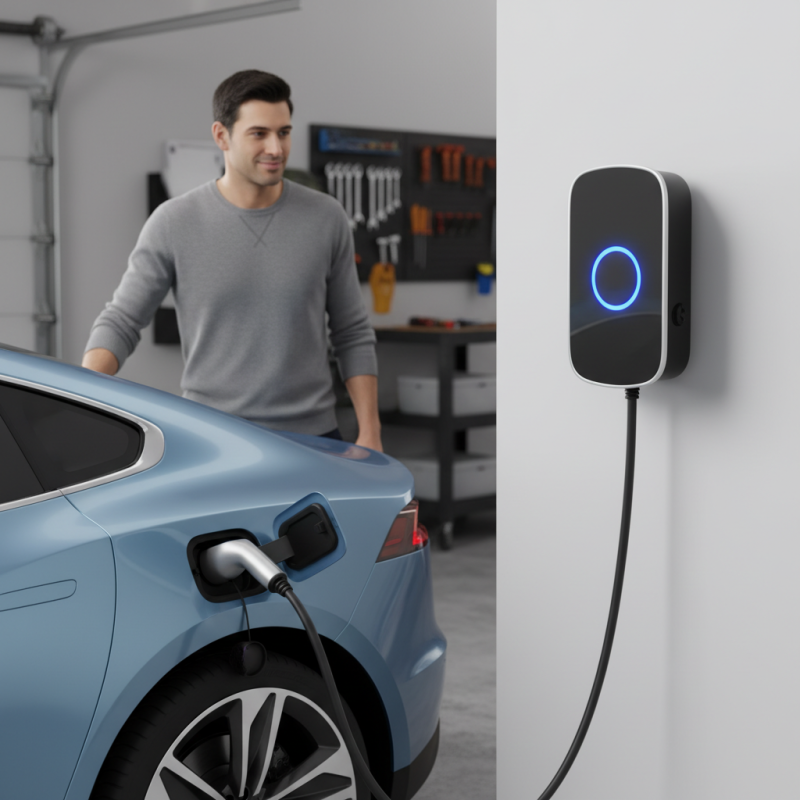
Understanding the Importance of EV Wall Chargers for Homeowners
Electric vehicle (EV) wall chargers are increasingly crucial for homeowners. A report by the International Energy Agency (IEA) indicates that the number of electric cars on the road reached over 10 million globally in 2020. As this number continues to grow, the need for efficient home charging solutions becomes apparent. Home chargers can significantly reduce the reliance on public charging stations, which may be scarce in some areas.
A well-placed wall charger can recharge most EVs overnight. This is often more convenient than waiting at a public charger during the day. Many homeowners see savings in electricity costs too, as charging at home can be cheaper than using public stations. However, not all chargers are equal. Some may not support fast charging. Choosing the right charger should consider installation costs, charging speed, and compatibility with different EV models.
Moreover, installing a wall charger brings challenges. Not all homes are equipped with the necessary electrical capacity. Homeowners should evaluate their current electrical systems. It might require upgrades to handle the additional load. A careful assessment is vital to avoid future problems and ensure safety during the charging process. In conclusion, understanding the significance of having a reliable home charging solution is fundamental for seamless EV ownership.
Best EV Wall Charger Options for Fast Home Charging
| Charger Type |
Charging Speed (Miles/Hour) |
Power Output (kW) |
Installation Type |
Smart Features |
| Level 2 Charger |
25-70 miles |
7.2 - 22 kW |
Wall-mounted |
Wi-Fi Connectivity |
| Portable Charger |
15-30 miles |
1.4 - 3.8 kW |
Plug-in |
None |
| Level 1 Charger |
3-5 miles |
1.2 kW |
Standard Outlet |
None |
| Smart Level 2 Charger |
30-75 miles |
11 - 22 kW |
Wall-mounted |
App Control |
Types of EV Wall Chargers Available for Fast Home Charging
When considering the types of EV wall chargers for fast home charging, it's essential to understand the options available.
Level 1 chargers are the most basic. They use a standard household outlet. Charging time is lengthy, often taking
overnight or longer. These are perfect for slow charging needs but may not fit everyone’s lifestyle.
Level 2 chargers are more efficient. They typically require a dedicated circuit.
These units charge much faster than Level 1. Depending on the vehicle, they can take just a few hours. However, installation can be tricky.
Finding the best location for the charger can also be a challenge.
Lastly, some advanced home systems offer smart features. These can optimize energy use and schedule charging times.
Although they are convenient, they can come with a higher price tag. Not every home can accommodate these systems, leading to consideration of
space and budget. Choosing the right type requires careful thought.
Key Features to Consider When Choosing an EV Wall Charger
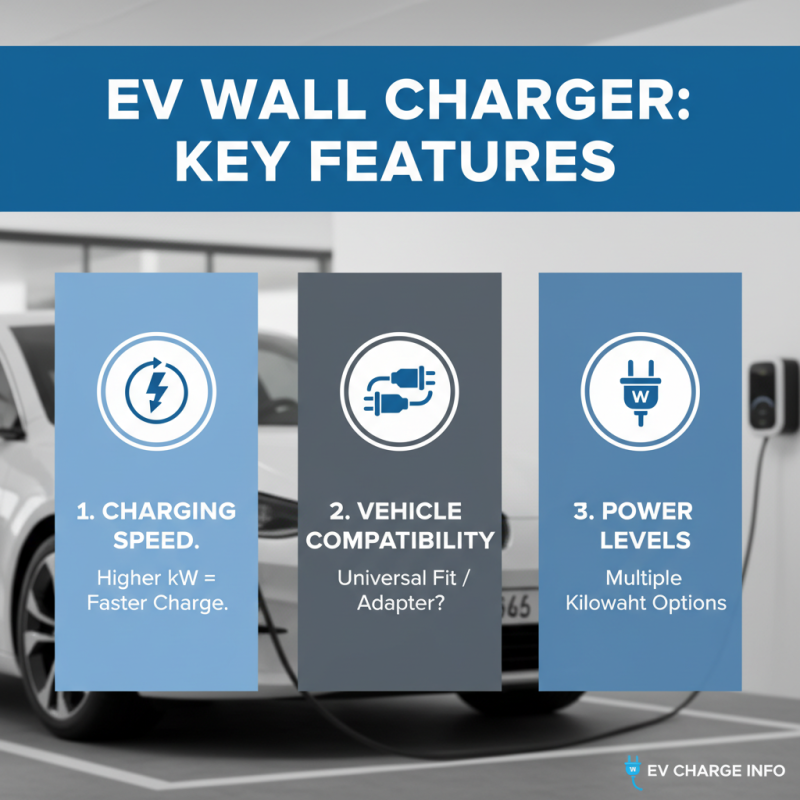
When selecting an EV wall charger, several key features are essential. Charging speed is paramount. Look for chargers that offer various power levels. A higher kilowatt rating reduces charging time significantly. Compatibility with your electric vehicle also matters. Ensure the charger fits your specific model.
Another important aspect is installation flexibility. Some chargers are wall-mounted, while others require professional setup. Consider your home layout and available space. Smart features, like mobile app connectivity, allow for monitoring charging sessions.
Safety is vital too. Overcurrent protection and weather resistance can enhance reliability. Look for models that meet safety standards. Admittedly, technology evolves quickly, and future upgrades may be necessary. Research real user experiences for insight. Balancing features and price can be tough. Keep an open mind, and reflect on your needs regularly.
Installation Considerations for Home EV Wall Chargers
When considering installation for home EV wall chargers, several critical factors emerge. Many homes may lack the electrical infrastructure to support fast charging. The average home electrical panel typically supports 100 amps, which may not be sufficient for high-capacity chargers. According to industry reports, nearly 30% of homes might require panel upgrades. This can add significant installation costs.
Proper placement is another vital consideration. Installers recommend positioning chargers close to the parking area. This minimizes cable length and voltage drop, ensuring efficient charging. Local building codes can also influence installation. Some regions mandate specific conduit types or require permits. Neglecting these can lead to costly revisions later.
Future-proofing your installation may be wise. As EV technology evolves, you may wish to upgrade your charger. Choosing a professional for the installation becomes essential. A qualified electrician can evaluate your system’s capacity and safety needs. Poor installations may lead to overheating or increased energy costs. Always seek comprehensive assessments to avoid these pitfalls.
Comparative Analysis of Top EV Wall Charger Brands and Models
When considering the best options for fast home charging, it's essential to analyze the top EV wall charger brands. Recent industry reports indicate a growing shift toward faster charging solutions. According to the U.S. Department of Energy, over 70% of EV owners prefer charging at home due to convenience.
Efficiency plays a crucial role in the performance of wall chargers. Some models claim to deliver up to 80% charge in just 30 minutes. However, the actual performance can vary significantly. In real-world tests, many chargers fall short of their advertised capabilities. Users often report charging speeds that differ from manufacturer claims.
Tip: Choose chargers with adjustable amperage settings. This feature allows users to match the charger output with their home’s electrical capacity. Also, investigate local electrical codes. Some areas have strict regulations for home charging installations.
Compatibility is another significant issue. Not all chargers work seamlessly with every EV model. Consumers should research compatibility carefully. The latest reports suggest that about 15% of users encounter compatibility problems. This can lead to frustrating charging experiences and wasted time.
Tip: Consider future-proofing your charger. As EV technology evolves, a versatile charger can adapt to new models and standards. Investigating warranty and customer service options may also save you headaches later.