Leave Your Message

What Is the Best Fast EV Charger in China?

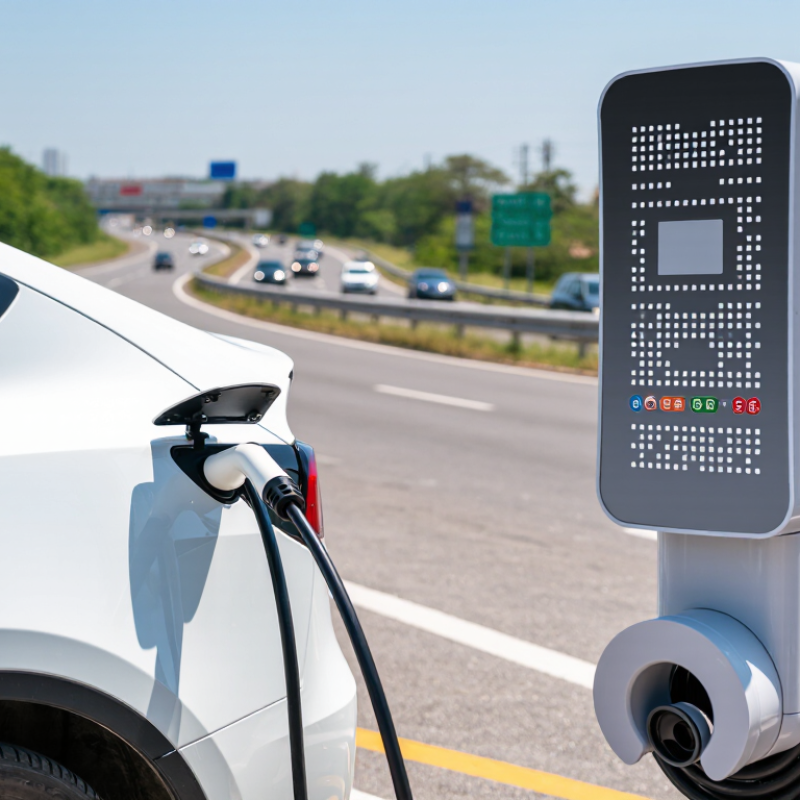
Choosing the best fast EV charger in China is not simply a race for the highest charging speed. Real performance depends on vehicle compatibility, grid conditions, thermal control, connector design, and after-sales support. A Car Fast Ev Charger may advertise powerful output, yet its actual results can change during summer heat or peak electricity demand. That difference matters in daily driving.

This introduction examines leading Chinese charging solutions through practical and technical criteria. It considers DC output, charging curves, cable temperature, enclosure protection, software stability, and installation requirements. It also reviews manufacturer specifications, relevant Chinese GB/T requirements, and available independent testing evidence. Field experience adds useful detail, such as charging a vehicle beside a busy highway station during a 35°C afternoon. The best unit should remain predictable, not merely impressive for ten minutes.

Safety comes before maximum power. A reliable charger needs insulation monitoring, overcurrent protection, emergency stopping, and controlled communication with the vehicle. Installation quality matters too. A premium charger can perform poorly when wiring, grounding, or ventilation is inadequate. That point is easy to overlook.

The comparison will also consider operating costs, maintenance access, warranty terms, and compatibility with different EV brands. Some conclusions may remain imperfect because product firmware changes quickly and public test data is limited. I will distinguish verified specifications from marketing claims and identify areas needing further testing. In practice, the right charger is the one that delivers safe, repeatable, and convenient charging for its intended location. Speed alone is not enough.
What Is the Best Fast EV Charger in China?

Define Fast EV Charging in China: 60–180 kW Versus 480–600 kW Units

What Is the Best Fast EV Charger in China?

In China, fast EV charging usually spans 60–180 kW and 480–600 kW units. A 60–180 kW charger suits public parking, workplaces, and small fleet depots. It can add meaningful range during a meal or short appointment. Charging speed depends on the vehicle’s maximum intake, battery temperature, and state of charge. The charger rating is not the energy the car always receives.

480–600 kW equipment serves high-throughput locations. Think highway service areas, logistics hubs, and busy urban charging stations. A compatible vehicle may gain several hundred kilometers during a brief stop. However, the result depends heavily on cable cooling, transformer capacity, and load management. The site may need thicker conductors, stronger protection systems, and upgraded grid access. That raises installation costs and complicates maintenance.

Bigger is not automatically better. A vehicle limited to 120 kW cannot use the full output of a 600 kW cabinet. One common planning mistake is choosing maximum power before studying traffic patterns. A smaller site can perform better with several 120 kW dispensers than with one oversized unit. Reliability also matters: stable voltage, accurate metering, emergency shutdowns, and clear maintenance records affect daily operations. In winter, cold batteries may charge slowly despite impressive equipment ratings. The headline number can mislead. A careful assessment should compare vehicle compatibility, hourly demand, available power, space, and expected downtime.

Assess GB/T 20234.3 Compatibility and Support for 400 V and 800 V EVs

What Is the Best Fast EV Charger in China?

The best fast charger is not simply the one with the highest advertised power. For Chinese-market vehicles, GB/T 20234.3 compatibility is the practical starting point. This standard covers the DC charging connection and interface requirements. A suitable charger should communicate correctly before current rises. Field checks should include connector fit, locking action, insulation monitoring, and stable data exchange. A screen showing high power means little if charging stops after two minutes.

Voltage matters just as much. Many EVs use battery systems near 400 V, while newer platforms may operate around 800 V. A charger supporting both ranges can serve more vehicles. However, its output limits must be read carefully. Some units accept 800 V vehicles but provide limited power under certain conditions. Actual charging speed depends on battery temperature, state of charge, cable rating, and vehicle limits. A 400 V car may work reliably with an 800 V-capable charger, but documentation should confirm this. Specifications can look impressive. Field performance may still be less consistent.

Tips: Check GB/T 20234.3 details, not only the connector photo. Ask for voltage and current curves at 400 V and 800 V. Test with warm and cool batteries. Confirm emergency-stop access, protection records, and service response time. Heavy liquid-cooled cables can be awkward.

What Is the Best Fast EV Charger in China? — Assess GB/T 20234.3 Compatibility and Support for 400 V and 800 V EVs

Technical comparison of charger configurations commonly used with Chinese-market electric vehicles. Performance depends on the vehicle, battery state of charge, temperature, and site power capacity.

Charger Configuration Typical DC Output Typical Output Voltage GB/T 20234.3 Compatibility 400 V EV Support 800 V EV Support Best Use and Key Considerations
Standard DC Fast Charger 60–180 kW 200–750 V DC Yes, when fitted with a compliant GB/T DC connector and communication system Excellent Conditional; requires an output range reaching the vehicle battery voltage Suitable for most conventional Chinese EVs. A practical choice for public charging where moderate installation cost and broad vehicle coverage are priorities.
High-Power DC Fast Charger 180–360 kW 200–1000 V DC Yes, provided the complete connector, control pilot, communication, and safety functions comply with GB/T 20234.3 requirements Excellent Very good, if the vehicle accepts high-voltage and high-power charging Strong all-round option for mixed 400 V and 800 V fleets. Actual charging power is limited by the vehicle, battery temperature, state of charge, and current rating.
Ultra-High-Power Liquid-Cooled Charger 360–600 kW or more 200–1000 V DC or higher, depending on the system design Possible, but the complete charging system must be certified and configured for GB/T operation Excellent Excellent for compatible 800 V vehicles Best for high-throughput highway sites and commercial fleets. Liquid-cooled cables help manage high current, while grid connection, demand charges, and site cooling increase project complexity.
Dual-Output Shared-Power Charger 120–240 kW total, shared between two outlets 200–750 V DC or 200–1000 V DC Yes, if each outlet uses compliant GB/T equipment Good Good only when the voltage range and power-sharing logic support the vehicle Useful for parking facilities and fleet depots. When two vehicles charge simultaneously, available power may be divided dynamically and peak charging speed can fall.
400 V-Focused Charger 60–180 kW 200–500 V DC Yes, for compatible GB/T-equipped vehicles Excellent Usually unsuitable for 800 V battery systems unless the vehicle includes an approved voltage-conversion function Cost-effective for older and mainstream 400 V EVs. It should not be selected as the sole fast-charging solution for a mixed-voltage charging network.
800 V-Ready Wide-Range Charger 180–480 kW 200–1000 V DC Yes, when GB/T communication and connector requirements are met Excellent, subject to current control Excellent, subject to vehicle-side acceptance Generally the most future-ready configuration for China. The charger should support stable low-voltage operation, high-voltage output, automatic current control, and protection against overvoltage and overheating.
Depot or Fleet DC Charger 30–180 kW per outlet 200–750 V DC Yes, if specified for GB/T-equipped vehicles Good Depends on the output voltage range and fleet vehicle specifications Best when vehicles remain parked for predictable periods. Lower power can reduce infrastructure costs and is often sufficient for overnight or scheduled fleet charging.
Selection rule: For a mixed 400 V and 800 V vehicle population, a GB/T-compatible charger with a wide DC output range of approximately 200–1000 V is usually the most versatile choice. GB/T 20234.3 compatibility covers the physical and electrical interface requirements, but it does not guarantee that every vehicle will accept the charger's maximum voltage, current, or power. Always verify vehicle-side charging limits, communication compatibility, connector configuration, cable cooling, and local electrical approvals before deployment.

Compare 10–80% Charging Targets: About 15 Minutes for High-Power EVs

What Is the Best Fast EV Charger in China?

A strong fast charger should be judged by its 10–80% charging time, not its peak output alone. For high-power electric vehicles, about 15 minutes is an ambitious but realistic target under suitable conditions. The result depends on battery size, temperature, charging curve, and available grid power. A charger may advertise high power, yet deliver less after the battery reaches 60% or 70%. That matters during a short roadside stop.

Reliable testing should record the starting battery level, outside temperature, battery temperature, and energy added. It should also measure whether the charger maintains stable power beside another vehicle. In practical use, a ten-minute delay can change a planned journey. I would not treat one impressive test as final proof. Traffic, winter weather, and an aging battery can expose weaknesses quickly. That is the part many comparisons miss.

Tips: Check the complete 10–80% curve, not only the highest number. Choose a site with clear status information, safe cable handling, and enough space for larger vehicles. A cooler battery may charge slowly at first. Preconditioning can help, but it also consumes energy. Fifteen minutes sounds simple. Real charging is not.

What Is the Best Fast EV Charger in China?

10–80% Charging Target: About 15 Minutes for High-Power EVs

The chart shows the theoretical average DC charging power required to raise a battery from 10% to 80% in 15 minutes. A 10–80% session adds 70% of the usable battery capacity, so larger battery packs require substantially higher average power. Real charging systems need additional peak capacity because of conversion losses, temperature limits, and power tapering near 80%.

Evaluate Charger Efficiency Above 95%, Cooling Safety, and Network Uptime

What Is the Best Fast EV Charger in China?

The best fast EV charger is not defined by peak power alone. Efficiency matters more during repeated daily charging. A practical benchmark is above 95%, measured from the AC input meter to the vehicle battery. This test should include partial loads, hot weather, and cable losses. The IEA’s Global EV Outlook 2024 reports that China had more than half of the world’s public charging points in 2023. High deployment makes energy waste a serious operating cost.

Cooling safety needs direct evidence. During a site test, technicians should record connector temperature, cabinet temperature, and charging-current changes every few seconds. Liquid-cooled cables can reduce heat, but they also add pumps, sensors, and maintenance points. IEC 61851-23 and China’s GB/T 18487.1 provide useful safety requirements for DC charging equipment. Still, compliance documents cannot replace thermal testing. A charger may pass in a laboratory and struggle beside a dusty highway.

Network uptime is equally important. The U.S. Federal Highway Administration uses a 97% operational uptime requirement for funded charging ports. This is a useful comparison for Chinese operators, even though local conditions differ. Check failed-session rates, remote restart records, payment recovery, and repair response times. Above 95% efficiency sounds impressive. It may hide poor performance at low temperatures. Real-world data is sometimes incomplete, and that weakness deserves attention.

Choose the Best Charger by Vehicle Limits, Site Power, Cost, and Coverage

What Is the Best Fast EV Charger in China?

Choose the Best Charger by Vehicle Limits, Site Power, Cost, and Coverage

The best fast EV charger is not always the highest-rated model. A vehicle may accept only 60 kW, even when the charger can deliver 180 kW. Check the car’s maximum DC input, battery voltage, charging curve, and connector requirements before buying. An 800-volt vehicle can benefit from higher power, while a 400-volt model may gain less than expected.

Site power is equally important. A 120 kW charger can overload a small commercial connection without load management. Ask an electrical engineer to inspect the transformer, cables, protection devices, and parking layout. In real installations, cable distance matters. A long route can increase material costs and energy loss. Local inspection and compliant installation should never be treated as optional.

Cost includes more than the purchase price. Add civil work, wiring, permits, software, maintenance, and demand charges. A slower 60 kW unit may produce better returns at a hotel with overnight parking. A 240 kW unit suits busy highways, but only when traffic supports frequent use. Coverage also affects practical value. A charger near major roads, service areas, and fleet routes usually serves more drivers.

My early assumption was simple: faster charging meant better business. It was not always right. Some drivers still wait longer because the vehicle limits power. Choose measurable performance, not impressive numbers. Check service response times, spare-part access, payment stability, and operating records before committing.