Best Level 2 Car Chargers for 2026 What to Look For?
In the evolving landscape of electric vehicles, selecting the right Level 2 car charger is critical for optimal performance. Experts emphasize the importance of this choice. "A quality Level 2 car charger can make a significant difference in charging efficiency," says John McCarthy, a leading figure in EV technology. His insights reflect the growing need for reliable charging solutions as electric vehicles gain popularity.
As we approach 2026, the market for Level 2 car chargers is expanding. Consumers will have numerous options, making choices challenging. It's important to understand key features like charging speed, installation requirements, and compatibility with various vehicle models. Each feature impacts daily usability and efficiency significantly.
While aesthetics and brand reputation play roles, slight imperfections in choices can often lead to frustration. Some models might not suit every home’s electrical setup. Buyers should be prepared for the details. Assessing personal needs is crucial to finding the right match. Focusing on these aspects will ensure a smoother transition to electric vehicle ownership and enhanced driving experiences.
Best Level 2 Car Chargers for 2026: Key Features and Specifications
When choosing the best Level 2 car chargers for 2026, consider key features that enhance efficiency and usability. Look for chargers that offer adjustable power settings. Different vehicles have varied charging needs. Chargers with a range of power outputs can accommodate most electric vehicles. Fast charging capabilities are crucial. A charger that delivers 32 amps or more significantly reduces charging time, making it convenient for daily use.
Another important aspect is the connector type. Ensure compatibility with your vehicle. Most Level 2 chargers come with a standard connector, but always check specifications. Look for additional features like Wi-Fi connectivity. This allows for remote monitoring and updates. Safety features matter too. Overcurrent protection and surge protection are essential to safeguard your vehicle and home.
The design also plays a role. A compact, weather-resistant unit is ideal for outdoor installation. Cables should be long enough to reach your vehicle without straining. Consider the installation process. Some chargers are easier to install than others. If you are unsure, professional help may be needed. Reflecting on these elements can lead to a better charging experience.
Best Level 2 Car Chargers for 2026
Understanding Charging Speed: kW Ratings and Their Impact on Performance
When choosing a Level 2 car charger, understanding kW ratings is essential. The kW rating directly affects charging speed and overall performance. A higher kW rating means faster charging times. For example, a 7.2 kW charger significantly reduces wait times compared to a 3.8 kW option. It can charge most electric vehicles in just a few hours. This efficiency is crucial, especially for daily users.
Tips: Consider your vehicle's compatibility with different kW outputs. Some may not accept higher power levels. Check your home’s electrical system too. Upgrading service might be necessary for optimal functioning.
Charging speed and convenience matter. However, it’s essential to reflect on your habits. Do you really need the fastest charger? Sometimes, a slower charger suffices if it operates overnight. Charging cables also matter. Shorter cables can increase efficiency, but they must fit your parking setup. Make sure not to compromise on safety and equipment quality, as those factors also impact performance.
Compatibility with EV Models: Ensuring Optimal Functionality and Use
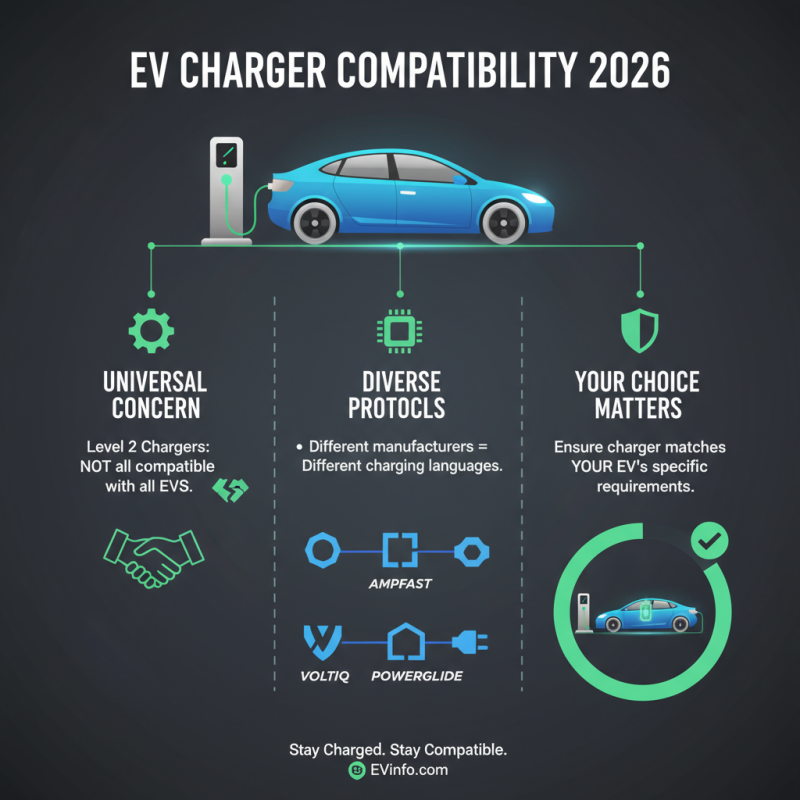
When selecting a Level 2 car charger for 2026, compatibility with various EV models is crucial. Not all chargers work with every electric vehicle. Different manufacturers often use distinctive charging protocols. Therefore, ensuring that your charger can handle your EV's specific requirements is essential.
You might find some chargers come with universal connectors. However, the charging speed may vary greatly. Some chargers may not provide sufficient power for certain models. It's important to check the technical specifications before making a purchase. Are you aware of your vehicle's charging capacity? A mismatch could lead to slower charging times or inefficiencies.
Consider the type of battery your vehicle has. Different batteries have different charging needs. For instance, lithium-ion batteries often require optimized charging methods. Not all chargers can accommodate this. Ensure that you consult your vehicle’s manual for compatible charger specs. It’s an oversight many make, leading to frustration down the line. Compatibility checks can save you time and enhance your overall EV experience.
Safety Standards: Importance of UL and ETL Certifications in Chargers
When choosing the best Level 2 car chargers, safety should be a top priority. UL and ETL certifications are vital in ensuring that chargers meet strict safety standards. These certifications indicate that the product has undergone rigorous testing. They assess the charger’s design and materials, ensuring they can safely handle electric currents.
Choosing uncertified chargers may seem tempting due to lower prices. However, they can pose serious risks. A faulty charger might lead to overheating or even fires. The absence of certifications raises red flags about the manufacturer's quality control measures. Reliable chargers also come with features like
overcurrent protection or
automatic shut-off. These can significantly enhance safety and prevent damage to your vehicle or home.
While more affordable options are available, skimping on safety is never advisable. Investing in well-certified chargers is a smart move. It not only protects your vehicle but also ensures the safety of your home. Consider asking for certifications before purchasing. Sometimes, the cheapest option may end up costing more in the long run.
User Experience: Installation, Smart Features, and Customer Reviews Trends
When considering Level 2 car chargers, user experience plays a crucial role. Installation is often a significant concern. Many users report difficulties finding qualified electricians. Approximately 30% of homeowners experience unexpected costs during installation. This reflects a growing need for clear installation guidelines from manufacturers. Simple setup processes are essential.
Smart features also enhance user experiences. Wi-Fi connectivity allows for remote monitoring and control. Even so, not all chargers offer user-friendly apps. A survey showed that 25% of users found smart technology hard to navigate. The demand for intuitive interfaces is growing. Customer reviews frequently highlight the importance of these features.
Additionally, trends in customer feedback reveal mixed feelings about charging speed. While many expect rapid charging capabilities, actual performance varies. Research indicates that around 20% of users feel their chargers underperform. This inconsistency can lead to frustration. Addressing user concerns about reliability is crucial for manufacturers.
Best Level 2 Car Chargers for 2026: User Experience
| Charger Model |
Installation Difficulty |
Smart Features |
Customer Review Rating |
Price Range |
| Model A |
Easy |
Wi-Fi, Mobile App |
4.7/5 |
$500 - $700 |
| Model B |
Medium |
App Integration, Scheduling |
4.5/5 |
$400 - $600 |
| Model C |
Hard |
Voice Control, Real-time Monitoring |
4.6/5 |
$600 - $800 |
| Model D |
Easy |
Smart Home Integration |
4.8/5 |
$450 - $650 |
| Model E |
Medium |
Energy Saving Mode, Reports |
4.4/5 |
$380 - $580 |