How to Choose the Best Wallbox Electric Car Charger for Your Home in 2025
As the electric vehicle (EV) market continues to surge, with predictions estimating that nearly 30% of all new car sales will be electric by 2030, the importance of efficient home charging solutions becomes increasingly critical. The Wallbox Electric Car Charger is emerging as a pivotal component in this transition, providing convenience and enhanced charging capabilities for EV owners. According to a report by the International Energy Agency, the number of public chargers has been steadily increasing, but the majority of charging still occurs at home, underscoring the need for robust home charging infrastructure.
Selecting the optimal Wallbox Electric Car Charger for your residence in 2025 involves considering various factors such as charging speed, compatibility with different EV models, and installation requirements. Industry analyses indicate that with advancements in charging technology, consumers can expect more features like smart connectivity options and energy management systems, which can significantly lower electricity costs and promote sustainability. As you prepare for the shift towards electric mobility, understanding the nuances of charging solutions will empower you to make informed decisions, ensuring that your chosen Wallbox Electric Car Charger meets your needs for efficiency, convenience, and compatibility with future EV capabilities.
Understanding Wallbox Electric Car Chargers: Key Features to Consider
When selecting the best wallbox electric car charger for your home in 2025, it's essential to understand the key features that differentiate various models on the market. One of the primary factors to consider is charging speed, typically measured in kilowatts (kW). According to recent industry reports, Level 2 chargers, which range from 3.3 kW to 22 kW, are ideal for home use as they can fully charge most electric vehicles (EVs) overnight. This translates to a significant advantage for EV owners who rely on quick, convenient charging solutions without the need for extensive wait times.
Another critical feature is the connectivity options offered by wallbox chargers. Many modern units are equipped with Wi-Fi or cellular connectivity, allowing users to monitor and manage their charging sessions via smartphone apps. Research indicates that chargers with smart capabilities can enhance user experience by providing real-time data on energy consumption and costs. Moreover, the integration of smart home technology is becoming increasingly popular, with studies showing that home automation creates opportunities for optimizing energy usage and managing charging times based on utility rates, potentially leading to significant cost savings.
Finally, safety features cannot be overlooked. Look for chargers that include built-in protection against overcurrent, overvoltage, and short circuits, which are critical for ensuring the safety of both the charger and the electric vehicle. Data from the National Fire Protection Association shows that electrical safety issues are a concern for home charging setups, emphasizing the need for robust safety mechanisms in the wallbox charger design. With these key features in mind, consumers can make informed choices when selecting the right wallbox charger for their electric vehicles.
Evaluating Power Ratings: Choosing the Right Charging Speed for Your Needs
When selecting a wallbox electric car charger for your home, the power rating is a crucial factor that directly affects the charging speed and efficiency. Electric car chargers come in different power outputs, typically measured in kilowatts (kW). Understanding your daily driving habits will significantly guide your choice. For instance, if you mostly drive short distances and can recharge overnight, a lower power rating of 3.7 kW might suffice. This option would deliver a full charge within several hours, allowing you to benefit from off-peak electricity rates if available.
Conversely, for users who drive longer distances or require faster turnaround times, opting for higher power ratings — such as 7.4 kW or even 22 kW — becomes essential. Higher-rated chargers can replenish your vehicle’s battery considerably faster, making them more suitable for busy lifestyles. However, it’s important to consider your home’s electrical capacity; the installation of a high-power charger may need an upgrade to your electrical system. Additionally, local regulations and the type of electric vehicle you own should be factored into your decision-making process to ensure compatibility and safety.
Charging Speed Comparison of Wallbox Electric Car Chargers (2025)
This bar chart compares the charging speeds of various wallbox electric car chargers available in 2025. The measurements in kilowatts (kW) illustrate the potential charging capabilities, which can influence your choice based on your vehicle's requirements and your daily usage patterns.
Compatibility Matters: Ensuring Your Charger Works with Your EV Model
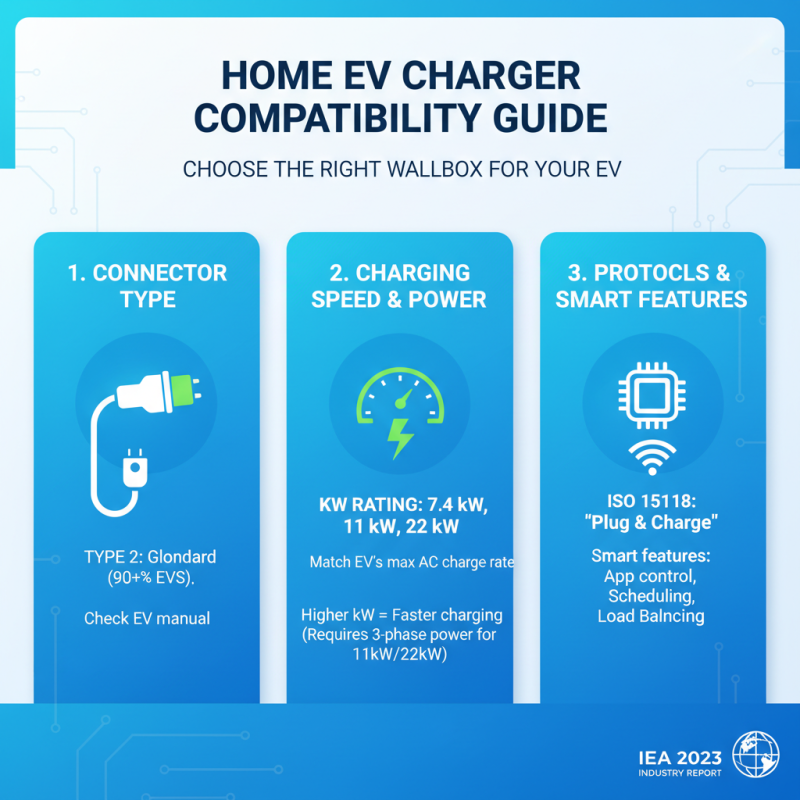
When selecting a wallbox electric car charger for your home, compatibility with your specific electric vehicle (EV) model is crucial. According to a 2023 industry report by the International Energy Agency (IEA), over 90% of electric vehicles produced are compatible with Type 2 connectors. However, notable variations exist among different car models, particularly regarding charging speeds and protocols. Ensure the charger you choose supports the necessary charging standards of your vehicle to maximize efficiency and reduce charging time.
Tip: Check your vehicle’s manual or manufacturer website for detailed specifications regarding charging connectors and speeds. This will help you identify chargers that can deliver optimal performance tailored to your EV’s requirements.
In addition to connector compatibility, some EVs support multiple charging protocols, such as CCS (Combined Charging System) and CHAdeMO. The 2023 EV Market Report indicates that CCS has become the most widely adopted fast charging standard in Europe and North America, accounting for over 70% of the charging stations. When choosing a wallbox charger, consider one that supports these protocols, ensuring you can access various charging networks and future-proof your home charging setup.
Tip: Research local charging infrastructure and trends when selecting a home charger. This ensures that your investment aligns with the broader market, providing flexibility as your charging needs evolve.
Installation Requirements: Preparing Your Home for a Wallbox Charger
When preparing your home for a Wallbox electric car charger, the first step is to assess your electrical system. Ensure that your home's wiring is adequate to support the charger's required voltage and amperage. An electrician can evaluate the capacity of your electrical panel and determine if any upgrades are needed to handle the additional load safely.
Tips: Before installation, check if your electrical service can support the increased demand. Look for a licensed electrician experienced in EV charger installations, as they can help you navigate any local codes or regulations.
Next, consider the location where you want to install the charger. Ideally, it should be close to your parking area for convenience and efficiency. Make sure there’s enough space to accommodate the charger and that the area is clear of obstructions. Additionally, think about including a weather-proof cover if the charger will be installed outdoors.
Tips: Plan the installation process carefully by marking the desired location and evaluating the distance to your electrical panel. Discuss with your electrician any potential challenges, such as trenching for underground wires or moving your electrical panel if necessary.
Budgeting for Your Charger: Costs and Incentives in 2025
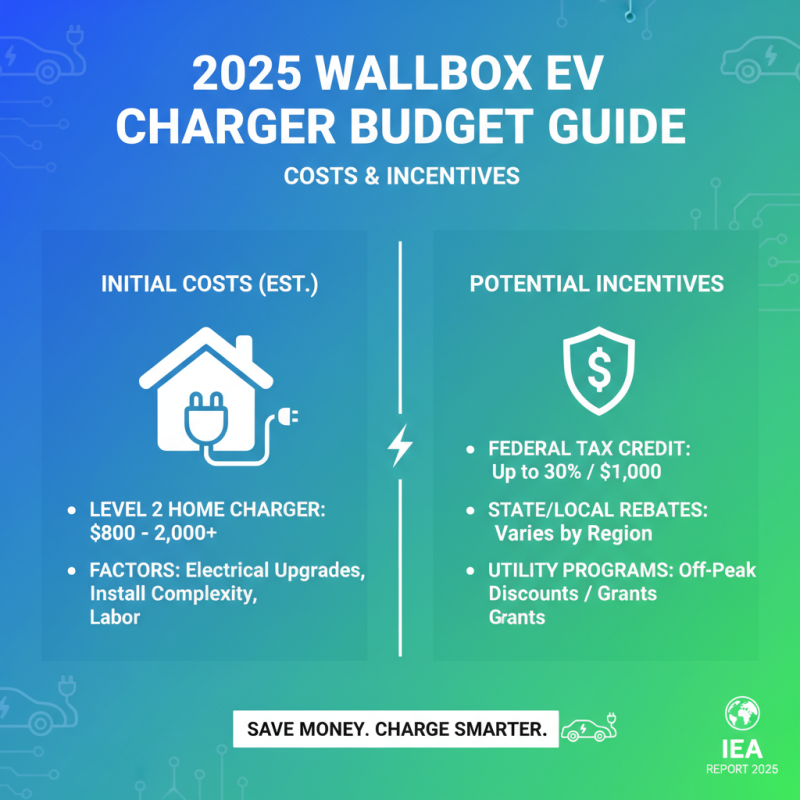
When budgeting for a wallbox electric car charger in 2025, it's essential to consider both the initial costs and the various incentives that can help offset these expenses. According to a recent report by the International Energy Agency (IEA), the average installation cost for a Level 2 home charger can range between $800 to $2,000, depending on factors such as electrical upgrades, installation complexity, and regional labor costs. As the demand for electric vehicles continues to rise, prospective buyers should prepare for potential fluctuations in installation costs, influenced by increased competition and technological innovations in charging equipment.
In addition to the installation costs, prospective EV owners should explore available incentives. Many governments are introducing tax credits and rebates to encourage the adoption of electric vehicles and their charging stations. For instance, in the United States, the federal government offers a tax credit of up to $1,000 for home charging equipment. Furthermore, state governments are implementing additional rebates that can cover a significant portion of installation costs, sometimes upwards of $500. Such financial incentives not only make the initial investment more manageable but also contribute to a growing ecosystem aimed at supporting sustainability and reducing carbon footprints.