Why Choose an EV Connector for Your Electric Vehicle Charging?
The rise of electric vehicles (EVs) is reshaping the automotive landscape. According to a report by the International Energy Agency (IEA), global electric vehicle sales surpassed 6.6 million in 2021. This growth emphasizes the need for efficient charging solutions, making the choice of an EV connector crucial. A reliable EV connector can significantly impact charging speed and safety.
Choosing the right EV connector ensures compatibility with various charging stations. The Society of Automotive Engineers (SAE) indicates that standardized connectors enhance user convenience. Currently, the CCS and CHAdeMO connectors dominate in North America and Europe, respectively. However, there is room for improvement in universal adoption and interoperability. As the sector evolves, challenges remain in achieving a uniform standard across regions.
Many users are still unaware of the importance of EV connectors. A survey from EVAdoption revealed that 45% of potential EV buyers consider charging infrastructure when making a decision. The complexities of EV charging can deter some consumers. Addressing these concerns through education on EV connectors can lead to wider adoption of electric vehicles. Ultimately, the right EV connector plays a pivotal role in a sustainable future.
Understanding the Different Types of EV Connectors Available Today
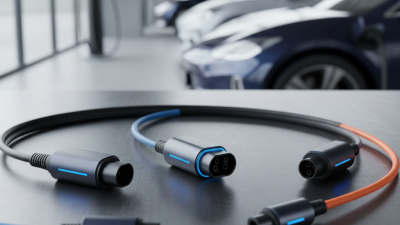
The rise in electric vehicles (EVs) has led to various types of EV connectors. Each type has its advantages. Understanding these connectors is crucial for effective charging.
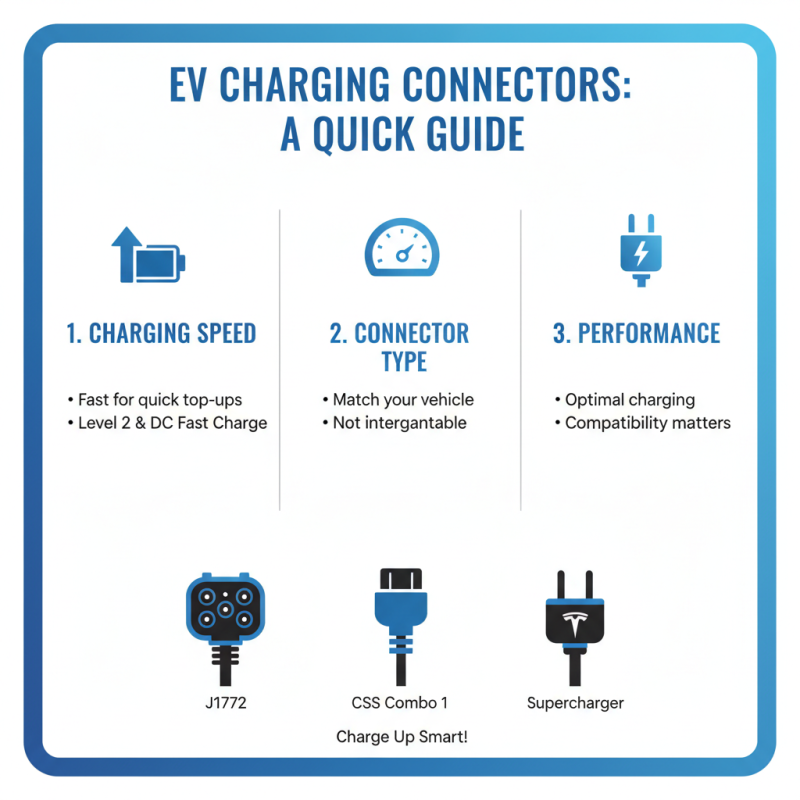
One common type is the Type 1 connector, popular in North America and Japan. It's straightforward, but it lacks the fast charging capability found in other types. On the other hand, Type 2 connectors are widely used in Europe. They offer higher power delivery and are compatible with many public charging stations.
Tips: Always check the connector type before purchasing. This ensures compatibility with your vehicle. Knowing the charging speed of each connector can save you time.
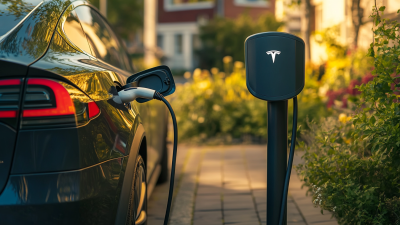
Another option is the CHAdeMO connector, mainly for DC fast charging. It's designed for quick energy exchanges. However, not all stations support this type. Tesla has its proprietary connector, focusing on rapid charging, but it limits compatibility with other EVs.
Tips: Consider future needs when selecting a connector. Charging infrastructure is evolving. A connector that seems suitable now may not be ideal later.
Connecting the right EV connector to your charging needs is essential. It influences efficiency and convenience. Remember, not all connectors are created equal. Consider your specific requirements carefully.
Compatibility and Standardization in EV Charging Connectors
When it comes to electric vehicle (EV) charging, compatibility and standardization of connectors play a crucial role. As the EV market expands, having a unified connector standard can minimize confusion for users. According to a report by the International Energy Agency, 15% of EV owners experience charging issues due to incompatible connectors. This is significant, considering that the global EV market is projected to exceed 54 million vehicles by 2040.
Standardized connectors can enhance user experience and simplify the charging process. A recent study indicated that regions with a common charging connector have seen a 25% increase in EV adoption rates. However, the transition to a unified standard has its challenges. Stakeholders in the industry must address concerns over existing infrastructure and make concerted efforts toward standardization.
Further complicating matters, manufacturers often design unique connectors. This can lead to frustration as users may need multiple adapters. Several industry experts argue that collaboration is essential for driving consistency. Without it, consumers could face more hurdles in the charging landscape. Addressing these discrepancies in connector technology is vital for the growth of the EV sector.
Benefits of Using a Quality EV Connector for Charging Efficiency
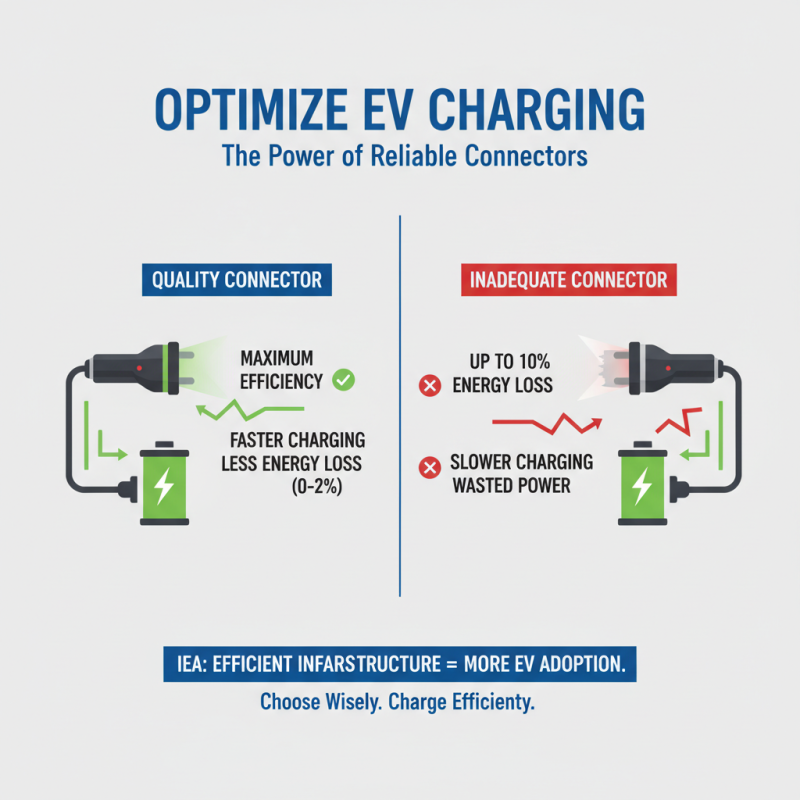
Choosing a reliable EV connector is crucial for maximizing charging efficiency in electric vehicles. Quality connectors can significantly impact the charging speed and overall performance. According to the International Energy Agency, efficient charging infrastructure is vital for increasing EV adoption. Inadequate connectors may result in energy losses of up to 10%, meaning slower charging and wasted power.
Using a high-quality EV connector enhances safety. Poor connections can lead to overheating. An estimated 30% of EV fires are linked to faulty connectors. Adopting quality connectors mitigates this risk. Moreover, they are built to withstand weather conditions, ensuring long-term service. A reliable connector can last for thousands of charging cycles, thus providing a better return on investment.
Tips: Always check for certification marks on connectors. This ensures adherence to safety standards. Also, consider the environment where you will charge. An outdoor connector needs extra protection against elements. Regular maintenance is also key. Inspect for wear and tear to maintain optimal performance.
Future Trends in EV Connectors and Charging Technologies
The market for electric vehicle (EV) connectors is evolving rapidly. According to a recent report by the International Energy Agency, global EV sales have reached 10 million in 2022, up 55% from the previous year. This trend drives innovation in charging technologies. Future connectors are likely to support faster charging and wider compatibility.
Emerging technologies like wireless charging show great potential. A study by World Economic Forum predicts that by 2030, up to 30% of all EVs could utilize wireless charging stations. This shift could transform how and where we charge our cars. However, the infrastructure must adapt quickly to keep pace. Challenges around installation and cost remain critical issues.
Tips: When selecting an EV connector, consider compatibility with various charging stations. Look for options that support future upgrades. Also, keep an eye on upcoming standards to ensure your choice remains relevant. The landscape is changing, and being informed helps you avoid choosing outdated technology. The technology might evolve, but understanding your needs will guide you through the choices.
Why Choose an EV Connector for Your Electric Vehicle Charging? - Future Trends in EV Connectors and Charging Technologies
| Connector Type |
Charging Speed (kW) |
Compatibility |
Global Adoption Rate (%) |
Future Outlook |
| Type 1 |
7.2 |
North America |
30% |
Stable |
| Type 2 |
22 |
Europe |
50% |
Increasing |
| CHAdeMO |
50 |
Japan |
25% |
Stable |
| CCS |
150 |
Global |
40% |
Rapid Growth |