2026 How to Choose the Right DC Charger EV Adapter for Your Electric Vehicle?
As the electric vehicle (EV) market grows, the importance of choosing the right DC Charger EV Adapter increases. In 2022, nearly 6.5 million EVs were sold worldwide, representing a 54% growth from the previous year (International Energy Agency). With more drivers looking for fast charging solutions, understanding adapter options is critical.
Selecting a suitable DC Charger EV Adapter often seems daunting. There are various compatibility issues with different EV models and charging stations. Reports indicate that mismatched adapters can lead to charging failures, wasting both time and resources. Research also shows that efficient charging can reduce overall electricity costs by up to 30%. As the landscape evolves, staying informed about recent advancements is vital for every EV owner.
Yet, many consumers remain unclear about their specific needs. Factors like charging speed, power output, and connector types are often overlooked. With 70% of drivers knowing little about adapter specifications, it's essential to reflect on personal charging habits. This knowledge gap could lead to suboptimal charging experiences, highlighting the need for proper guidance in selecting the right adapter. Understanding these elements can revolutionize how we think about EV charging.
Understanding the Basics of DC Chargers and EV Adapters
Understanding the basics of DC chargers and EV adapters is crucial for any electric vehicle owner. Direct current (DC) chargers provide faster charging compared to alternating current (AC) chargers. They convert power directly into a form that batteries can use. This efficiency means less waiting time for drivers. Reports indicate that DC fast chargers can deliver up to 350 kW, reducing charging time to under 30 minutes for many EVs.
Choosing the right EV adapter is equally important. Not all adapters are compatible with every vehicle. Different charging standards exist, such as CCS and CHAdeMO. A mismatch can lead to inadequate charging or even potential damage. According to data from the International Energy Agency, the demand for fast charging in urban areas is growing rapidly. By 2025, more than 20% of all EV chargers will likely be DC fast chargers. This shift presents an opportunity to rethink adapter choices.
However, navigating the options can be overwhelming. The rapidly changing technology means that what works today might not be suitable tomorrow. Drivers may face challenges in keeping up with charging infrastructure improvements. Furthermore, user experiences vary widely. Some adapters may promise high efficiency but offer inconsistent performance. It's essential to research and plan for future-proof solutions.
Types of DC Chargers for Electric Vehicles: An Overview
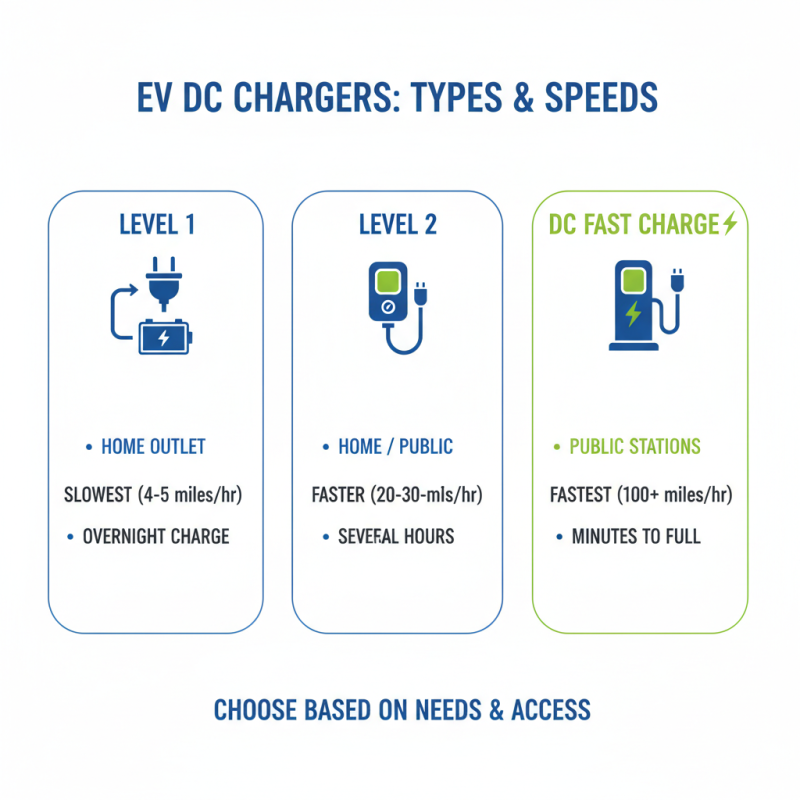
When choosing a DC charger for your electric vehicle (EV), understanding the types available is crucial. There are three main types of DC chargers: Level 1, Level 2, and DC fast chargers. Level 1 chargers generally use standard household outlets. They are slow and mainly for home use. Their efficiency is low, charging about 4-5 miles of range per hour.
Level 2 chargers are more efficient and often found in public charging stations. They require a 240-volt outlet and can add around 25 miles of range in an hour. DC fast chargers are the fastest, delivering a significant charge in 20 to 30 minutes. They use direct current, which enables rapid charging. According to the U.S. Department of Energy, DC fast chargers can charge an EV to 80% in 30 minutes, making them ideal for long trips.
**Tips:** Look for charging stations that offer multiple types of chargers. This ensures convenience and flexibility. Additionally, consider the location of charging stations on your daily routes. Some areas may have limited options. Always check the charging speed to maximize your time.
Having data on the charging speeds and types helps in making an informed decision. However, it’s essential to reflect on the infrastructure in your area. Some charge points may not operate efficiently 24/7. It's wise to have a plan B if your preferred charger is down.
Key Factors to Consider When Choosing an EV Adapter
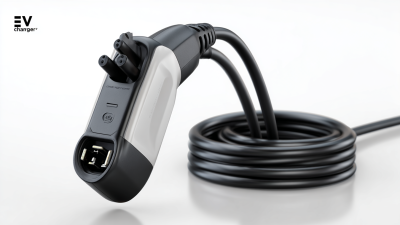
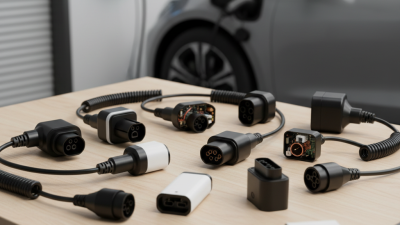
Choosing the right DC charger EV adapter is crucial for your electric vehicle. Several key factors impact your decision. Firstly, consider the compatibility. Ensure the adapter fits your vehicle’s make and model. It’s frustrating to purchase an adapter only to discover it doesn’t work.
Charging speed is another crucial factor. Different adapters offer varying charging speeds. Fast chargers can save time, especially for long trips. However, these may produce more heat. Overheating can harm the battery over time. Weight and portability matter as well. If you travel a lot, a lightweight adapter is more convenient.
Finally, think about safety features. Look for adapters with built-in protections against surges or short circuits. You want peace of mind when charging. While it’s easy to overlook these details, they can affect your EV experience considerably. Always read reviews and seek advice before purchasing.
2026 How to Choose the Right DC Charger EV Adapter for Your Electric Vehicle? - Key Factors to Consider When Choosing an EV Adapter
| Feature |
Description |
Considerations |
| Charging Speed |
The rate at which the EV battery can be charged, measured in kW. |
Choose based on your driving habits and charging time availability. |
| Compatibility |
Ensure the adapter is compatible with your electric vehicle model. |
Check the specifications of your EV to find compatible adapters. |
| Connector Type |
Types of connectors supported by the EV and charger. |
Consider the standard connector types like CCS, CHAdeMO, or Tesla. |
| Portability |
Ease of transportation and storage of the charger. |
If you travel frequently, look for compact and lightweight options. |
| Safety Features |
Includes over-current protection, temperature control, etc. |
Safety should be a priority to prevent any risks during charging. |
| Warranty |
Length and terms of warranty for the adapter. |
A longer warranty may indicate a more reliable product. |
Compatibility: Ensuring Your Adapter Fits Your Electric Vehicle
When choosing a DC charger EV adapter, compatibility is crucial. Electric vehicles (EVs) vary in their charging requirements. An adapter that fits one model may not work with another. According to a report by the International Energy Agency, 20% of EV owners face issues with charger compatibility. This statistic highlights the importance of choosing the right adapter.
Consider the charging standards of your vehicle. Most EVs follow CCS or CHAdeMO protocols. However, not all adapters cover both. Data shows that nearly 40% of EV owners report confusion over these standards. The wrong adapter can lead to longer charging times or even damage your vehicle’s battery.
Keep in mind that not all charging stations offer the same features. Some may not support rapid charging. In fact, a study by the U.S. Department of Energy indicates that only 18% of public charging stations provide fast DC charging. An adapter that is not tailored to your vehicle can limit your charging options, leading to frustration during travel. Consider investing time to research and verify compatibility.
Future Trends in DC Charging Technology for EVs
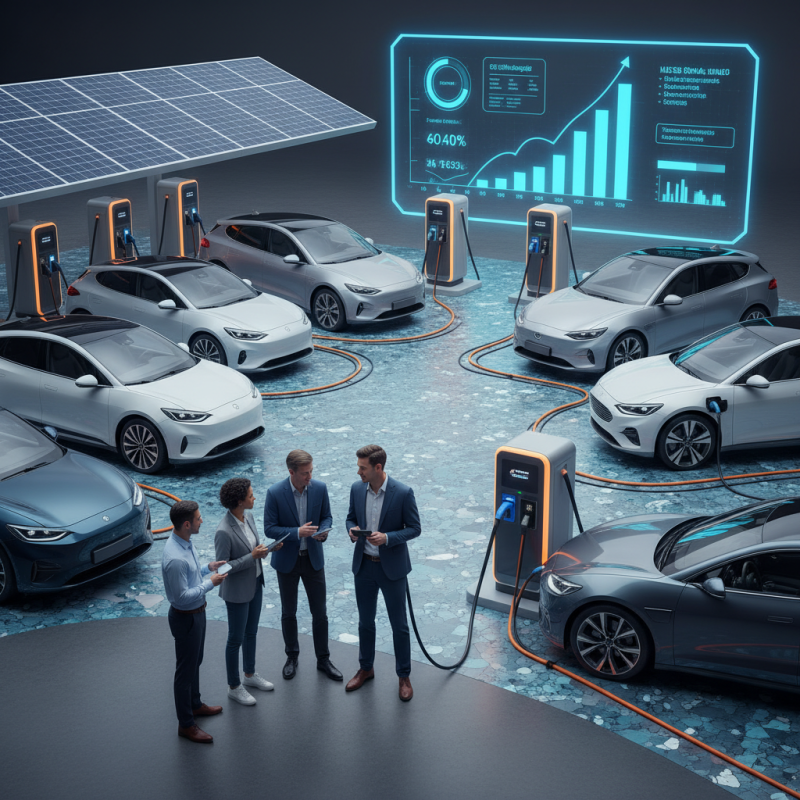
As electric vehicles (EVs) gain popularity, advancements in DC charging technology are transforming the landscape. Future trends indicate a move towards higher charging speeds. According to the International Energy Agency (IEA), global DC charging stations may reach 1.4 million units by 2030. This surge will significantly reduce charging times, enhancing user convenience. However, infrastructure must keep pace. Many regions lack sufficient charging stations.
Smart charging solutions are also on the rise. These technologies use data to optimize charging times and power usage. Reports from the Electric Power Research Institute (EPRI) suggest that smart charging can lower energy costs by as much as 25%. Yet, these systems can be complex and may not always be user-friendly. Thus, EV owners must remain informed about these technologies.
Moreover, sustainable materials in charger production are increasingly crucial. Eco-friendly manufacturing can minimize environmental impacts. A report from the Environmental Protection Agency (EPA) highlights the importance of sustainability in reducing carbon footprints. However, finding a balance between efficiency and environmental responsibility is a challenge that still needs to be addressed. As we approach 2026, these trends will profoundly shape the future of EV charging.