How to Choose the Right EV Connector for Your Electric Vehicle Charging Needs
In the rapidly evolving landscape of electric vehicles (EVs), selecting the appropriate EV connector for charging is a critical decision that can influence efficiency, compatibility, and overall user experience. Gregory Watson, a leading expert in EV infrastructure and founder of ChargeConnect, emphasizes the significance of this choice by stating, "The right EV connector can enhance your charging experience and ensure your vehicle is ready to hit the road when you are." With a variety of connector types available, understanding their differences and applications is essential for both individual consumers and businesses looking to invest in EV charging stations.
As the popularity of electric vehicles surges, the EV connector industry is responding to an ever-growing demand for effective solutions tailored to diverse consumer needs. Factors such as charging speed, plug compatibility, and network accessibility all play pivotal roles in the decision-making process. By considering these elements, EV owners can ensure that they choose a connector that not only meets their immediate needs but also adapts to future advancements in EV technology. In this guide, we will delve into the key considerations for selecting the right EV connector to empower drivers in making informed choices for their electric vehicle charging infrastructure.
Understanding Different Types of EV Connectors Available in the Market
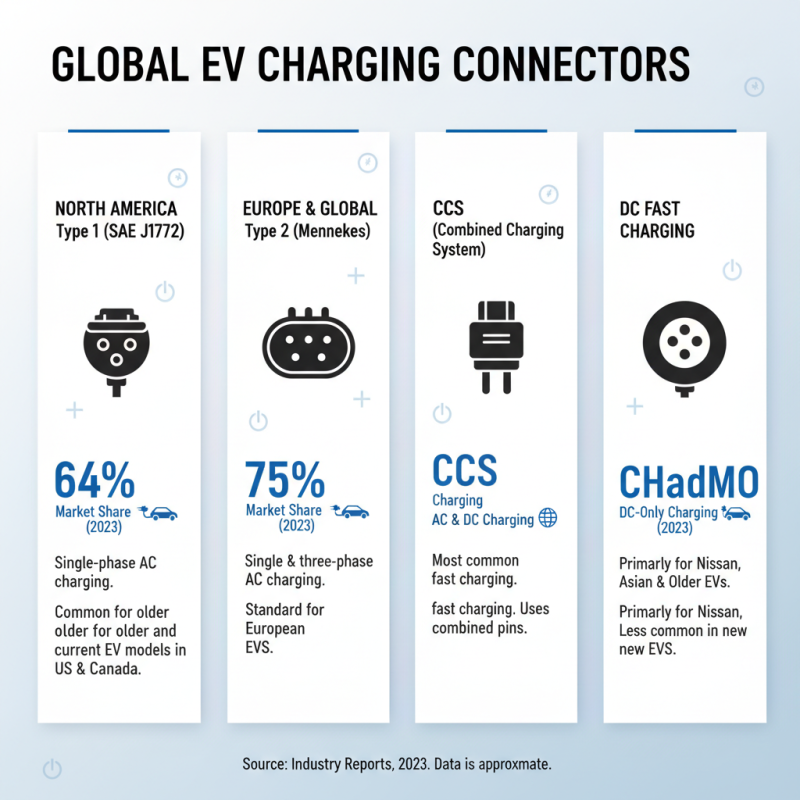
When selecting the right EV connector for your electric vehicle charging needs, it's essential to understand the different types of connectors available in the market. Currently, the primary types include Type 1 (SAE J1772), Type 2 (Mennekes), CCS (Combined Charging System), and CHAdeMO. Each of these connectors has its unique specifications and compatibility with various EV models. According to recent industry reports, approximately 64% of electric vehicles sold in North America are equipped with Type 1 connectors, while in Europe, Type 2 has gained significant traction, accounting for nearly 75% of the market.
When choosing a connector, consider the charging speed and capacity. For example, CCS connectors support both AC and DC charging, allowing for faster charging times, making them suitable for longer trips. On the other hand, CHAdeMO is mainly used in Japanese electric vehicles, providing rapid charging but with limited compatibility.
**Tips:** Always check your vehicle’s specifications to ensure compatibility with the chosen connector type. Additionally, if you plan on using public charging stations, it might be beneficial to invest in an adapter to accommodate different connectors you might encounter. Keep in mind that as the EV market continues to grow, newer charging technologies may emerge, so staying informed is key to making the best decision for your electric vehicle charging needs.
Factors to Consider When Choosing an EV Connector for Your Vehicle
When selecting the right EV connector for your electric vehicle (EV) charging needs, several critical factors should be taken into consideration. First and foremost, compatibility with your vehicle model is essential. According to the International Energy Agency (IEA), there are various connector types including Type 1, Type 2, CCS (Combined Charging System), and CHAdeMO, each tailored for specific vehicles and charging infrastructure. Ensuring that your chosen connector matches your EV's requirements will facilitate a seamless charging experience.
Additionally, charging speed is a vital factor to contemplate. The IEA reported that fast-charging stations, which utilize CCS and CHAdeMO connectors, can deliver power levels of up to 350 kW, drastically reducing charge times. This is significant for users looking for efficiency, especially during long trips. Moreover, the installation environment can influence your choice; for instance, residential installations may favor lower power levels suited for overnight charging, while public stations might prioritize higher outputs for quick turnaround times. Evaluating these factors will guide you toward a connector that meets both your daily and long-term charging needs effectively.
How to Choose the Right EV Connector for Your Electric Vehicle Charging Needs
| Connector Type |
Charging Speed (kW) |
Compatibility |
Availability |
Cost ($) |
| Type 1 |
1.4 - 7.2 |
North America |
Widely available |
200 - 400 |
| Type 2 |
3.7 - 22 |
Europe |
Widely available |
300 - 600 |
| CCS (Combo 1) |
50 - 350 |
North America, Europe |
Increasingly available |
500 - 1,200 |
| CHAdeMO |
40 - 100 |
Japan, some areas in Europe |
Moderately available |
400 - 800 |
| Tesla Supercharger |
120 - 250 |
Tesla Vehicles |
Extensively available |
100 - 200 per station |
Compatibility: Ensuring Your EV Connector Matches Your Car's Specifications
When selecting the right EV connector for your electric vehicle, compatibility is key. Ensuring that the connector matches your car's specifications can save you from a myriad of charging issues down the line. Different electric vehicles are equipped with various connector types, such as Type 1, Type 2, and CCS. Check your vehicle's manual or speak with your dealer to understand which connector is required.
**Tips:** Always opt for connectors that are certified and meet industry standards. This guarantees safety and efficiency during charging. Additionally, consider the charging speed that your vehicle supports, as some connectors offer faster charging capabilities than others.
Before making a purchase, it's also wise to look for flexible charging solutions. Some chargers come with interchangeable connectors, allowing you to switch between different types as needed. Doing proper research into your vehicle's specifications will ensure that you choose the best connection for your charging habits and preferences.
Evaluating Charging Speed and Power Requirements for Your Needs
When selecting the right EV connector for your electric vehicle (EV) charging needs, evaluating charging speed and power requirements is crucial. Charging speeds are typically categorized into three levels:
Level 1, Level 2, and DC fast charging.
Level 1 uses a standard household outlet, providing a slow charge suitable for overnight use or when you have limited driving needs. However, for those who drive longer distances daily or need quicker turnaround times, a Level 2 charger offers a significant upgrade, delivering faster charging capabilities and generally requiring a dedicated circuit.
Understanding your vehicle's power requirements is equally important. Each EV model has specific charging capabilities, which determine the maximum power it can accept. This includes assessing whether your home’s electrical infrastructure can support the desired charging level.
If you own multiple EVs or intend to share charging access, you might also consider connectors that offer flexibility and compatibility across different vehicles. By analyzing your driving habits and energy demands, you can make an informed choice about which EV connector will best suit your lifestyle and ensure efficient charging.
Future-Proofing: Selecting Connectors with Evolving EV Technologies in Mind
As the electric vehicle (EV) market experiences rapid evolution, choosing the right connector for charging becomes crucial for future-proofing. With the North American DC charger market projected to grow significantly, understanding the various connector types—such as NACS, CCS, and CHAdeMO—is essential. By 2025, analysts predict the market will expand exponentially, driven by advancements in charging technologies and increased EV adoption. Selecting connectors that not only meet current requirements but also adapt to emerging technologies is vital for both consumers and manufacturers.
Moreover, as developments in battery technology capture headlines, motors and drives remain integral to EV performance. Reports indicate that locations offering ultra-fast charging solutions are set to increase, potentially exceeding 250 kW and even reaching 500 kW in the near future. This evolution in charging infrastructure means that the choice of connector must align with expectations of higher power outputs and speed. With over 1.3 million public charging points added globally in 2024 alone, nearly a 30% increase year-over-year, the strategic selection of connectors becomes not just a matter of convenience, but a necessity for enhancing user experience and ensuring compatibility with forthcoming innovations in EV technology.
EV Connector Types and their Adoption Rates