What is Ev Charger Type 2 and Why is it Important?
Electric vehicles (EVs) are reshaping our transportation landscape. One crucial piece of this transition is the "EV Charger Type 2". This charger has become standard in Europe and many other regions. Its significance lies in its ability to power various electric vehicles effectively.
The EV Charger Type 2 supports faster and more convenient charging. It features a two-way communication system. This means it can adjust power delivery based on the vehicle's needs. Many EVs use this type of charger, making it essential for widespread adoption. However, not everyone understands its importance or functionality.
As the EV market grows, understanding the EV Charger Type 2 is vital. It ensures optimal performance while promoting sustainability. Consumers need to be aware of its role in their daily lives. The journey to cleaner energy is complex, and knowledge is a powerful tool.
What is an EV Charger Type 2?
Electric Vehicle (EV) Charger Type 2 is increasingly important in today's green energy landscape. This charger type supports higher power and faster charging for electric vehicles. It features a unique connector that is compatible with many EV models, providing versatility for users.
The typical Type 2 charger can deliver up to 22 kW of power. It is widely used in public charging stations across Europe. This compatibility helps to facilitate the expanding EV market. However, challenges still exist. Some charging stations may not support the full 22 kW, resulting in longer wait times. Users sometimes find it frustrating when chargers are out of service or occupied.
Understanding the significance of Type 2 Chargers is crucial for EV owners. Their adaptability to various models allows broader access to charging options. Still, the infrastructure's reliability requires ongoing improvement. As adoption increases, addressing these issues becomes vital for a sustainable future. Awareness and innovation in this sector can drive positive changes.
Key Features of EV Charger Type 2
EV Charger Type 2 offers a significant leap in electric vehicle charging technology. It is widely utilized in Europe, featuring a standardized plug design. This makes it compatible with various EV models, simplifying the charging process for users. According to a report from the European Commission, Type 2 chargers account for over 80% of public charging stations across Europe.
A key feature of EV Charger Type 2 is its capability for three-phase charging. This allows for faster charging rates, typically ranging from 3.7 kW to 22 kW. Depending on your EV's battery capacity, this can mean much shorter wait times to recharge. Furthermore, Type 2 connectors are designed with safety mechanisms to minimize risks during the charging process. Data from the International Energy Agency indicates that increasing the number of Type 2 chargers can facilitate a more sustainable transition to electric vehicles.
Tip: Ensure that your home charging station supports Type 2 to maximize charging efficiency.
Another notable aspect is the compatibility with smart charging technologies. Many Type 2 chargers can be connected to apps or smart systems. This enables users to schedule charging during off-peak hours, reducing electricity costs. However, not all infrastructures are ready for smart integration. A separate survey highlights ongoing challenges in urban areas, where grid capacity can limit the deployment of smart technologies.
Tip: Always check your local regulations, as charging station installations may vary by region.
Types of Electric Vehicles Compatible with Type 2 Chargers
The Type 2 EV charger is critical in the electric vehicle landscape. It features a seven-pin connector, allowing a faster, more efficient charging experience for many electric vehicles. According to the International Energy Agency (IEA), the global electric vehicle stock reached over 10 million units in 2020, highlighting a significant shift toward electric mobility.
Numerous electric vehicle models are compatible with Type 2 chargers. For instance, major manufacturers like Volkswagen, BMW, and Nissan have embraced this standard. In Europe, about 95% of public charging points support Type 2 connectivity, making it a practical choice for users. Notably, a report from Bloomberg New Energy Finance indicates that EV sales are expected to surpass 1 million units annually in Europe by 2025, emphasizing the urgency for efficient charging solutions.
However, challenges persist. Not every vehicle can utilize Type 2 chargers effectively. Variations in charging speeds and adapters often complicate the charging experience. Users may face confusion over compatibility, especially with various EV models entering the market. As the industry evolves, understanding the nuances of Type 2 chargers becomes essential for both manufacturers and drivers.
Significance of EV Charger Type 2 in Sustainable Transportation
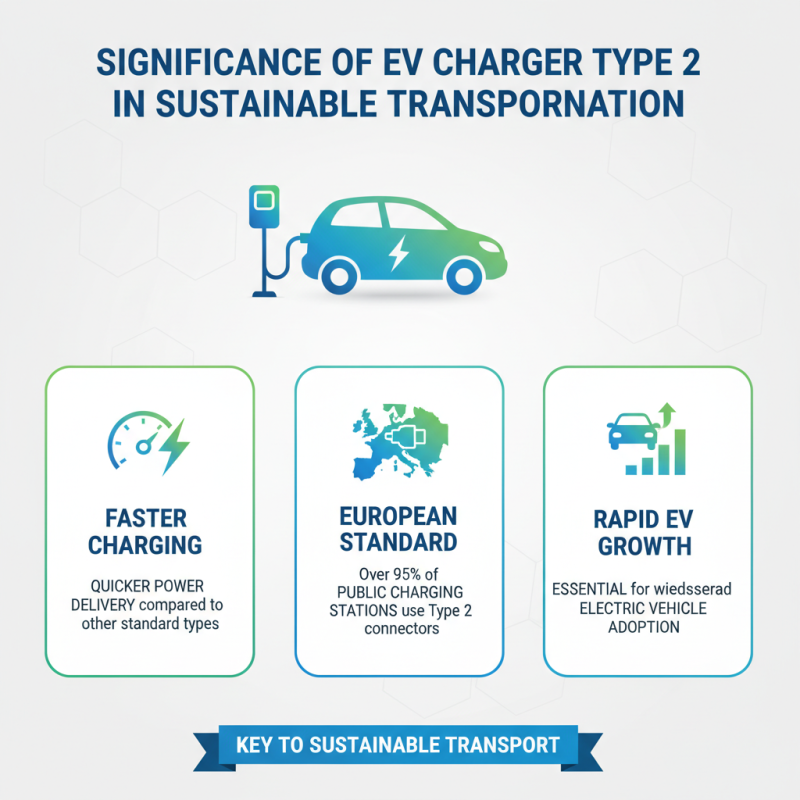
Electric vehicle (EV) Charger Type 2 plays a crucial role in sustainable transportation. This standard charger allows for faster charging compared to other types. In Europe, more than 95% of public charging stations use Type 2 connectors. This widespread adoption is essential for rapid EV growth.
The significance of EV Charger Type 2 cannot be overstated. According to the International Energy Agency, global electric car sales reached 6.6 million units in 2021, a 108% increase from 2020. As more drivers switch to electric, the demand for efficient charging solutions rises. EV Charger Type 2 supports higher power levels, typically up to 22 kW. This means shorter charging times, encouraging more individuals to adopt EVs.
Sustainable transportation relies on reliable infrastructure. However, challenges remain. Not all regions have easy access to Type 2 chargers. Some EV owners still face range anxiety due to limited charging options. Addressing this disconnect is vital for the success of electric mobility. Collaboration among stakeholders can help expand charging networks, making EVs more accessible. The future of sustainable transportation depends on meeting these needs.
Future Trends and Developments for Type 2 Charging Infrastructure
The rapidly evolving landscape of EV charging, particularly Type 2 chargers, is paving the way for a more sustainable future. As cities invest in greener infrastructures, Type 2 chargers are becoming a standard feature. By 2025, it’s predicted that over half of public charging stations will adopt this technology, according to industry reports. This shift is crucial, as Type 2 chargers support faster charging times and greater compatibility with various electric vehicles.
Innovations in charging technology are on the rise. Many companies are exploring ultra-fast charging solutions that could significantly reduce charge times. In response to an increasing number of EVs, the growth in Type 2 charging stations is essential. It’s estimated that current installation rates need to double to meet the 2030 EV adoption targets in several regions. Communities pushing for localized power solutions must navigate the challenges of installation, land use, and grid capacity.
Tip: For EV owners, using Type 2 chargers can enhance your charging experience by reducing wait times. Consider checking local government incentives for installing home charging solutions. Stay informed about developments in charging technology—it will benefit your charging strategy.
Type 2 EV Charger Usage Trends (2023)
This chart represents the estimated number of Type 2 EV chargers across various locations in 2023. Public charging stations lead the way in usage, reflecting the growing demand for accessible charging infrastructure as electric vehicle adoption rates continue to rise.