What is a Level 2 Car Charger and How Does It Work?
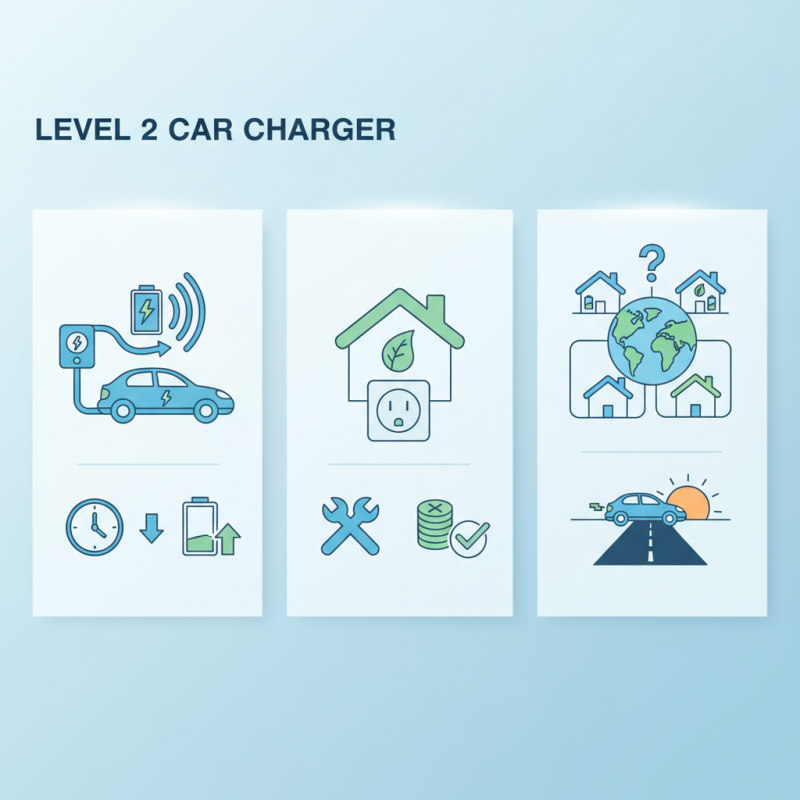
A Level 2 Car Charger is an essential tool for electric vehicle (EV) owners. It provides a faster and more efficient way to charge electric cars compared to standard home chargers. These chargers operate at 240 volts, enabling them to deliver a higher power output. As a result, users can enjoy shorter charging times, making them convenient for daily use.
Many people underestimate the significance of a Level 2 Car Charger. It can make or break the EV ownership experience. Picture an evening where you arrive home after a long day, park your car, and plug it in. With a Level 2 charger, your vehicle can gain significant range overnight. However, some may struggle with installation and costs. It's important to weigh the benefits against potential obstacles.
Investing in a Level 2 Car Charger opens doors to a new lifestyle. It promotes convenience and sustainability in transportation. Yet, reflecting on accessibility might reveal some limitations. How many homes are equipped for these chargers? Are they available to everyone? This consideration challenges the notion of progress in EV adoption.
What is a Level 2 Car Charger and Its Importance in EV Charging
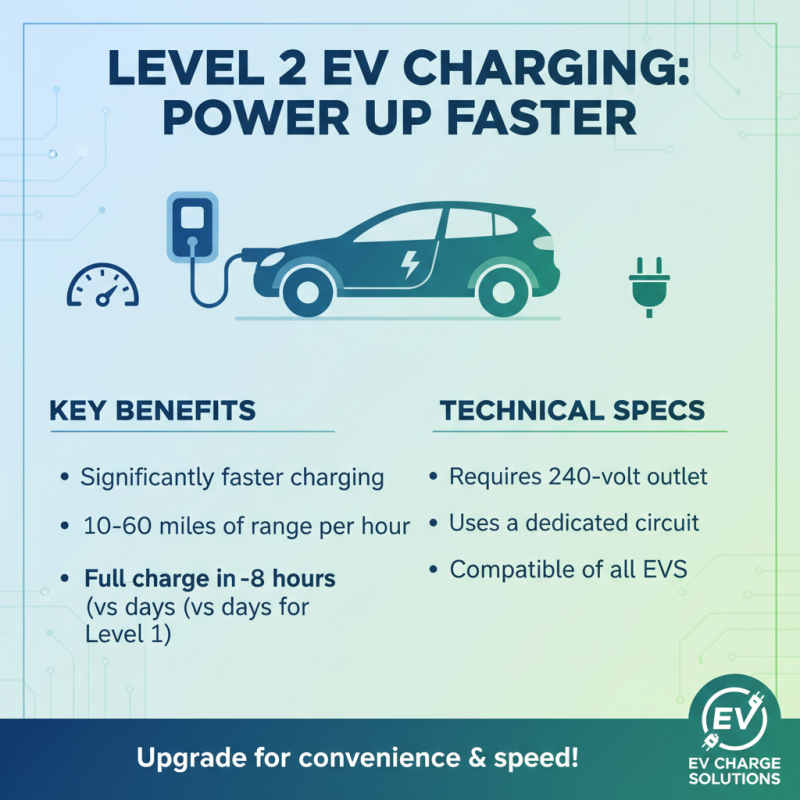
A Level 2 car charger plays a crucial role in electric vehicle (EV) charging. Unlike standard Level 1 chargers, Level 2 chargers provide faster charging capabilities, significantly reducing the time needed to recharge your EV. They operate on a 240-volt outlet, allowing for charging speeds of 10 to 60 miles per hour, depending on the vehicle and charger type.
When considering the importance of Level 2 chargers, think about convenience. For daily commuters, charging at home overnight can ensure a full battery each morning. It can be frustrating to start a day with a half-depleted battery. Additionally, public Level 2 charging stations can help you top off while running errands or at work, giving you peace of mind during longer trips.
Tips for maximizing your Level 2 charger experience: Always check your vehicle’s battery management system. Some EVs can handle faster charging better than others. Take note of charging times and adjust your routine as needed. It’s wise to have a dedicated circuit for your Level 2 charger to prevent electrical issues. Remember, not every location offers the same outlet power; plan ahead to avoid surprises.
The Technical Specifications of Level 2 Car Chargers Explained
Level 2 car chargers are essential for efficient electric vehicle (EV) charging. They operate on a 240-volt power supply, which is much stronger than standard home outlets. This higher voltage allows for faster charging, often adding about 25 miles of range per hour. Many homes and workplaces now feature these chargers for convenience.
When looking at technical specifications, several factors matter. Amperage plays a crucial role—commonly ranging from 16 to 80 amps. The higher the amperage, the quicker the charging. Typically, a 32-amp charger can replenish a standard EV battery in about four to six hours. Additionally, Level 2 chargers often require installation by a qualified electrician for safety and compliance.
**Tips:** Ensure you assess your home’s electrical capacity before purchasing. This can prevent overloads and enhance safety. Choosing a charger with adjustable amperage settings can be beneficial for various EV models. Lastly, don’t forget about compatibility; many Level 2 chargers have universal connectors, but checking is wise.
How Level 2 Chargers Improve Charging Speed Compared to Level 1 Options
Level 2 car chargers significantly enhance charging speed compared to Level 1 options. These chargers deliver 240 volts, allowing for faster charging and greater efficiency. Studies show that a Level 2 charger can replenish approximately 10 to 60 miles of electric vehicle (EV) range per hour. This is a remarkable improvement when Level 1 chargers only manage about 4 to 5 miles of range in the same timeframe.
The increased power output of Level 2 chargers enables drivers to charge their vehicles overnight or during work hours, making them a practical solution. With many EVs requiring around 30-40 kWh for a full charge, Level 2 chargers help reduce the time spent at charging stations. According to industry reports, the adoption of Level 2 chargers can lead to an average savings of 6 hours per charging cycle.
Tip: When installing a Level 2 charger at home, ensure you consult a professional electrician. Proper installation is crucial for safety and performance.
The transition to Level 2 charging may initially seem costly. However, the long-term benefits often outweigh these costs. Many EV owners find the reduced charging time invaluable. This efficiency helps drivers avoid long waits and enhances overall user experience.
Installation Requirements and Costs for Level 2 Electric Car Chargers
Installing a Level 2 car charger involves specific requirements and costs that vary by location. Typically, a dedicated 240V circuit is necessary for these chargers. This voltage allows for faster charging, making it ideal for electric vehicles. According to the Department of Energy, Level 2 chargers can deliver around 10 to 60 miles of range per hour, depending on the vehicle and charger output.
The installation cost can range significantly. Estimates often cite a range from $500 to $2,000. This variation depends on factors such as electrical upgrades, permits, and labor costs. Some homes may require additional wiring or a panel upgrade, which can increase expenses. It's important to consider local regulations and electrical codes when planning the installation. Not all garages are suited for such installations without modifications.
Space can also be a consideration. In some cases, homeowners may need to rearrange their garage layout. While it’s possible to install Level 2 chargers outdoors, harsh weather conditions pose challenges. Planning for weatherproofing and accessibility is crucial. A study by the California Energy Commission highlights that proper installation can enhance charging efficiency but requires foresight and planning from the homeowner.
What is a Level 2 Car Charger and How Does It Work? - Installation Requirements and Costs for Level 2 Electric Car Chargers
| Dimension |
Details |
| Charging Speed |
Typically delivers 10 to 60 miles of range per hour of charging |
| Voltage |
Usually operates at 240 volts |
| Amperage |
Commonly available from 16 to 80 amps |
| Installation Requirements |
Requires a dedicated circuit and possibly an electrical panel upgrade |
| Cost of Charger |
Ranges from $300 to $1,500 depending on features |
| Installation Cost |
Can range from $100 to $2,000 depending on complexity |
| Location |
Can be installed at home, workplace, or public charging stations |
| Compatibility |
Most Level 2 chargers are compatible with all electric vehicles |
| Safety Features |
Includes features like overcurrent protection and ground fault protection |
Industry Standards and Safety Features of Level 2 Charging Equipment
Level 2 car chargers are essential for electric vehicle (EV) owners. They provide a faster charging option compared to Level 1 chargers. These chargers operate at 240 volts and can charge an EV in a few hours. However, it's crucial to understand the industry standards and safety features that accompany them.
Most Level 2 chargers adhere to standards set by organizations like the SAE and UL. These standards ensure that the equipment is reliable and safe for everyday use. Safety features often include overcurrent protection, which prevents overheating. Additionally, ground fault detection is essential. It stops charging if it senses any electrical leaks. This minimizes risks such as electric shock or fire.
However, not all charging stations are created equal. Some may lack essential safety features. This can lead to potentially dangerous situations. Users must do their research before choosing a charger.
Proper installation is also vital. A qualified electrician should handle it to ensure compliance with local codes. Taking these precautions can enhance safety during the charging process.