Top 10 Commercial Ev Charger Solutions for Businesses Today?
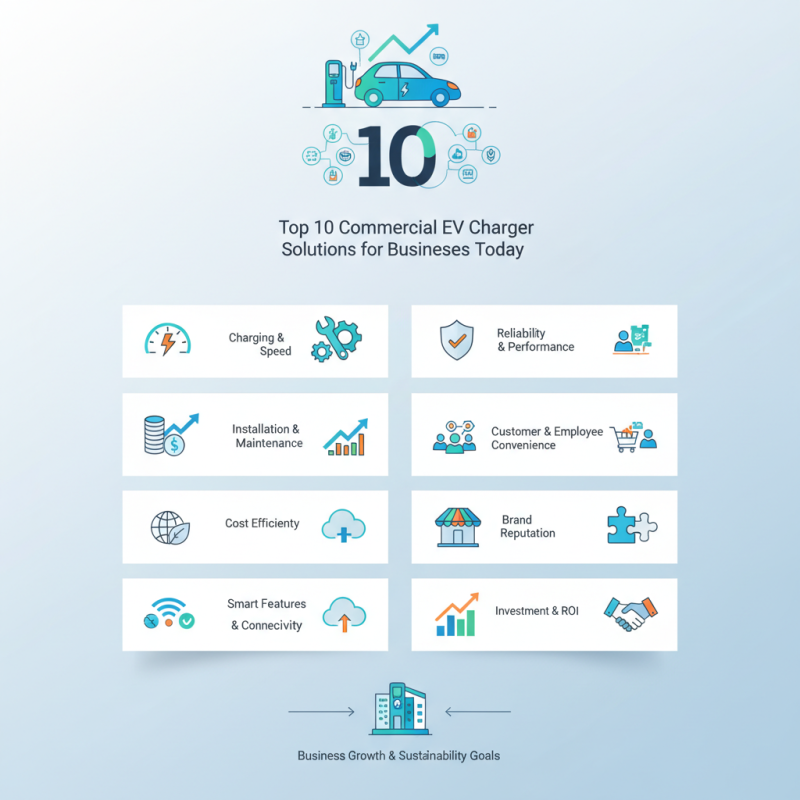
As the demand for electric vehicles (EVs) grows, the need for efficient charging solutions is becoming urgent. Businesses are seeking reliable Commercial EV Chargers to cater to their customers and employees. These chargers offer convenience and promote eco-friendly practices. However, selecting the right solution can be confusing.
When exploring options, companies must consider factors like charging speed, installation costs, and maintenance. Not all chargers are created equal; some may require more frequent repairs or offer inconsistent performance. Recognizing these details is crucial for making informed decisions.
Ultimately, choosing the best Commercial EV Charger greatly impacts the business’s reputation and sustainability goals. It’s essential to reflect on how these choices align with the company's vision and customer expectations. Making the right investment can foster customer loyalty and enhance brand value.
Overview of Commercial EV Charger Solutions for Businesses
In today's fast-paced world, businesses are increasingly adopting commercial EV chargers. These solutions cater to the growing demand for electric vehicles. Many companies view charging stations as an investment. They enhance customer satisfaction and improve sustainability profiles.
Various types of charging stations are available. Level 2 chargers are common, providing a balance between charging speed and cost. DC fast chargers, while more expensive, offer rapid charging solutions for busy locations. However, their installation can be complex and requires careful site assessment. Safety and accessibility must also be prioritized, which can sometimes complicate installations.
Choosing the right solution involves evaluating specific needs. Consider the number of intended users and their charging habits. Some businesses may struggle with maintaining the equipment. This leads to downtime, which ultimately impacts service quality. Regular maintenance checks are necessary but often overlooked, making it a critical area for improvement. Each solution has its pros and cons, and reflection on past choices can help businesses make better decisions.
Key Features to Consider When Choosing EV Chargers for Businesses
When selecting EV chargers for businesses, several key features stand out. The charging speed is essential. Fast chargers reduce downtime and keep vehicles on the road. Consider options that offer Level 2 or DC fast charging to meet varying needs.
Accessibility is another crucial factor. Chargers should be user-friendly and easy to navigate. Clear signage and visible placement can enhance the user experience. Additionally, ensure that the chargers accommodate different vehicle types. Some businesses may face challenges with compatibility.
Connectivity options also matter. Many modern chargers offer smart technology features. This can include remote monitoring and usage analytics. However, businesses must consider their own technological capabilities. Some may struggle with integrating these systems. It’s vital to evaluate your infrastructure before making a decision.
Top 10 Commercial EV Charger Solutions for Businesses Today
| Charger Type |
Charging Speed |
Connector Type |
Key Features |
Average Cost |
| Level 2 AC Charger |
4-8 hours |
Type 1, Type 2 |
Smart grid connectivity, Remote monitoring |
$500 - $1,500 |
| DC Fast Charger |
30 minutes - 1 hour |
CHAdeMO, CCS |
High power output, Short charging times |
$10,000 - $40,000 |
| Solar-Powered Charger |
Varies |
Type 1, Type 2 |
Eco-friendly, Off-grid capabilities |
$2,000 - $10,000 |
| Wall-Mounted Charger |
4-8 hours |
Type 1, Type 2 |
Space-saving, Easy installation |
$300 - $1,200 |
| Fleet Charging Station |
30 minutes - 2 hours |
Multiple options |
Optimized for multiple vehicles, High power |
$25,000 - $100,000 |
| Public Charging Station |
30 minutes - 2 hours |
CHAdeMO, CCS, Type 2 |
Accessible location, User-friendly interface |
$10,000 - $50,000 |
| Mobile EV Charger |
Varies |
Universal |
Portable, Quick access |
$1,000 - $3,000 |
| Smart Charger |
4-8 hours |
Type 1, Type 2 |
Network connectivity, Load management |
$700 - $2,500 |
| Residential/Commercial Charger |
4-8 hours |
Type 1, Type 2 |
Dual usability, Cost-effective |
$500 - $2,000 |
Top Brands and Models of EV Chargers for Commercial Use
The shift towards electric vehicles (EVs) necessitates reliable charging solutions for businesses. Various brands offer a range of commercial EV chargers tailored to meet diverse needs. The right charger enhances convenience for employees and customers alike.
Consider chargers with adjustable power output. This feature allows businesses to cater to different EV models. Level 2 chargers are popular in commercial settings. They provide a balanced charging speed at a manageable cost. Fast chargers may seem appealing; however, they can strain electric infrastructure.
Tip: Assess your energy capacity before installation. Upgrading your electrical system might be necessary for powerful chargers.
When choosing models, look for user-friendly interfaces. A simple display can streamline operation and reduce frustration. Reliability is also crucial. Investing in chargers that come with warranties can add peace of mind.
Tip: Don’t overlook the importance of maintenance. Regular checks ensure chargers operate efficiently over time. Consider arranging periodic service reviews to stay ahead.
Top 10 Commercial EV Charger Solutions for Businesses
This chart showcases the distribution of charging speeds (in kW) of the top 10 commercial EV charger solutions available today.
Integration of EV Chargers with Renewable Energy Sources
The integration of electric vehicle (EV) chargers with renewable energy sources is gaining attention. This combination not only provides clean energy but also enhances efficiency. Businesses that adopt this model can lower their carbon footprint significantly.
Solar panels are a popular choice for powering EV chargers. They harness sunlight, offering a sustainable energy source during peak hours.
Finding the right balance between energy production and consumption is tricky. Regular assessments are essential to ensure optimal output. Implementing smart charging solutions can help in this regard. These systems monitor energy flow and can adjust based on availability.
Tips: Consider adding battery storage systems. These can store excess energy for later use. Another approach is to time the charging sessions for off-peak hours. This can help in managing energy costs effectively. Businesses should remain flexible and willing to adapt as technology evolves. As the demand for EVs rises, keeping pace with changing needs is crucial.
Cost Analysis and Return on Investment for Businesses Implementing EV Chargers
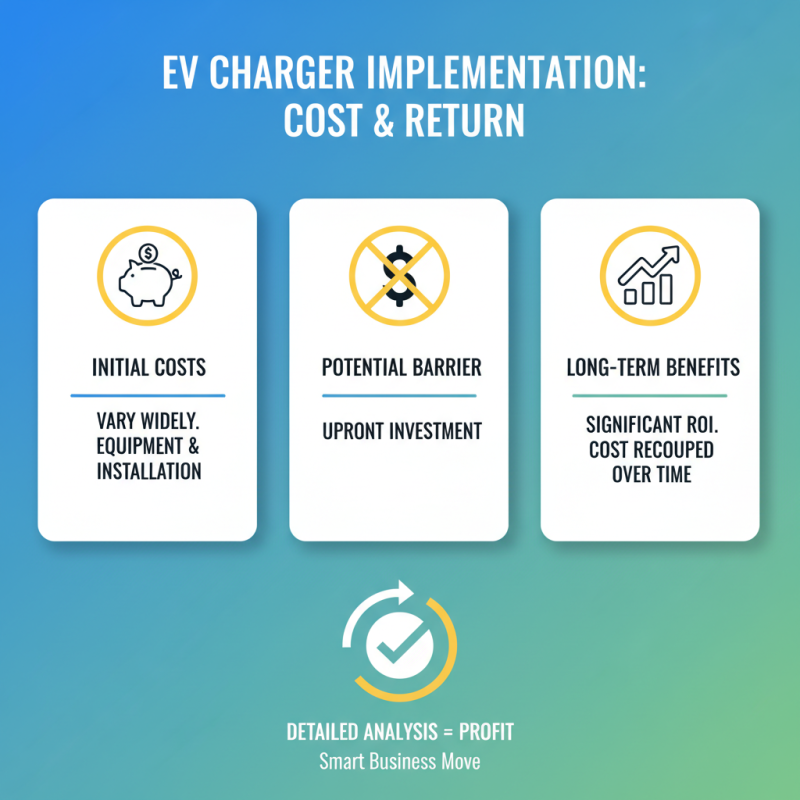
Implementing EV chargers can seem like a daunting task for many businesses. Initial costs may deter some from making the switch. However, a detailed cost analysis reveals the potential for significant returns. Installation costs can vary widely. Yet, many businesses find that the installation pays for itself over time.
Consider the energy savings. Businesses often report lower energy bills after installing EV chargers. Charging stations can attract more customers, increasing foot traffic. This means potential higher sales for businesses. Investment in EV infrastructure aligns with sustainability goals, improving brand reputation.
However, not all businesses see immediate benefits. Some struggle to draw in EV drivers. It's crucial to evaluate location and demand. The upfront investment may take years to pay off for certain establishments. Regular assessment of charging station usage is necessary to ensure value. A thoughtful approach will yield the best outcomes in the long run.