Choosing an Ev Charger Plug is not simply a matter of finding the highest charging speed. Global buyers must match the plug with local voltage, socket standards, vehicle inlets, and installation conditions. A connector that works smoothly in a European garage may be unsuitable for a North American driveway. Small differences matter, especially when charging at 32 amps for several hours.
This guide examines seven widely used EV charger plugs through practical criteria. These include compatibility, charging capacity, weather resistance, locking design, cable quality, and certification evidence. It also considers everyday details, such as a short driveway cable, a warm garage wall, or a rainy outdoor parking space. Real-world convenience matters. So does safe electrical design.
No single plug suits every market. That is worth remembering. Regional standards change, and product labels can be confusing. Some sellers describe adapters as universal, although their limits may be unclear. I have therefore treated manufacturer specifications, installation guidance, and independent testing as essential evidence. Still, product information is not always perfect. Buyers should verify the vehicle manual and local electrician’s advice before purchasing.
The seven options below are compared for different use cases, not just headline performance. Some prioritize broad compatibility. Others offer stronger weather protection or easier handling. The best choice depends on your car, home supply, travel plans, and budget. Check carefully. A reliable plug should deliver practical charging without creating unnecessary electrical risk.
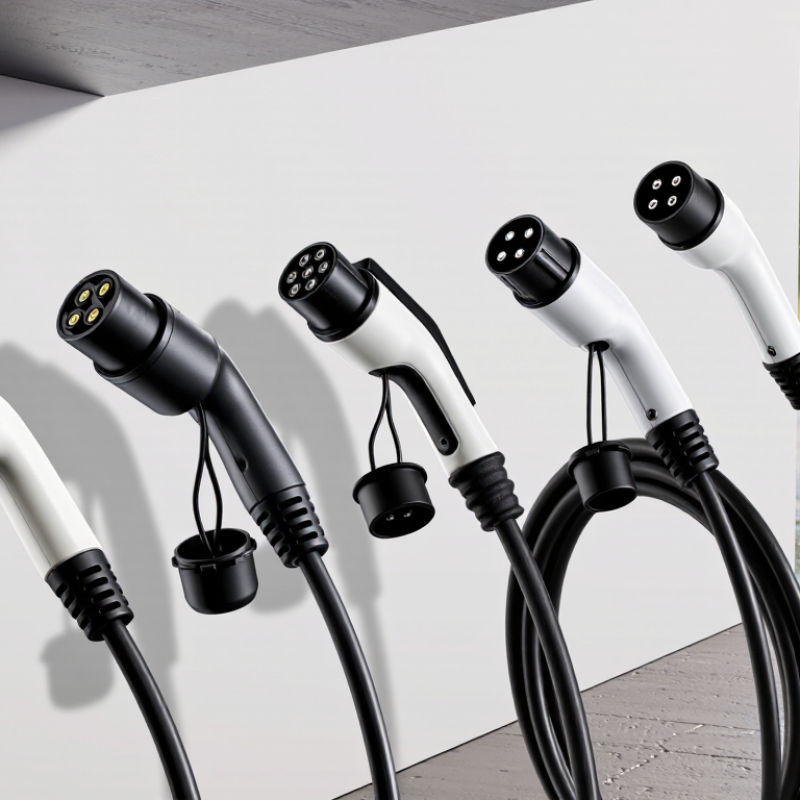
An EV charger plug is the physical connector between a charging cable and a vehicle inlet. It carries electricity and enables communication between the car and charger. The plug does not decide charging speed alone. Voltage, current, onboard hardware, cable cooling, and software also matter. Fit is not power.
Global buyers commonly compare seven connector formats:
Type 1 is common in some older North American and Asian vehicles, while Type 2 is widely used across Europe and other markets. Combo versions support direct-current charging through added pins. GB/T formats serve many vehicles and stations in China. CHAdeMO remains present in some earlier electric vehicles, although its market role is changing. Always confirm the vehicle inlet before purchasing an adapter.
The International Energy Agency reported more than four million public charging points worldwide at the end of 2023, with public charging stock growing over 40% that year in its Global EV Outlook 2024. This expansion increases choice, but it also creates compatibility risks.
A connector may physically lock while communication still fails. That detail matters.
Buyers should check IEC 62196 compatibility, charging mode, regional voltage, ingress protection, cable temperature rating, and local certification requirements.
One overlooked issue is parking space length; a short cable can leave the connector under tension.
A careful specification sheet is useful, but real vehicle testing remains better.
Choosing an EV charger plug is a regional decision, not a simple shopping preference. Type 2 dominates much of Europe under IEC 62196 standards. CCS2 adds fast DC charging there. North America commonly uses SAE J1772 for AC and CCS1 for DC. China follows GB/T designs for both charging modes. Japan still uses Type 1 and CHAdeMO in many charging locations. These seven formats may look similar, but their pins, communication systems, and voltage limits differ.
The International Energy Agency reported more than four million public charging points worldwide in 2023. China held the largest share of that network. Its report also recorded nearly two million new public chargers added during the year. This growth makes GB/T essential for vehicles intended for mainland Chinese infrastructure. In Europe, the Alternative Fuels Observatory reports a rapidly expanding public network, where Type 2 and CCS2 remain practical choices for cross-border travel.
A plug is only one part of compatibility. Check the vehicle inlet, onboard charger, local grid, and charging protocol. I once treated a matching connector shape as enough. It was not. A portable adapter may solve a physical mismatch, but it cannot always convert communication signals or charging power. Standards evolve, and regional exceptions remain common. Verify technical data against current IEC, SAE, GB/T, and national regulations before purchasing.
The seven best EV charger plugs for global buyers are Type 1, Type 2, CCS1, CCS2, CHAdeMO, GB/T AC, and GB/T DC. Each standard serves different vehicles and charging networks. Type 1 is common in North America and parts of Asia. Type 2 is widely used across Europe and many international markets. CCS1 adds direct-current charging to Type 1 systems, while CCS2 extends Type 2 for faster charging.
CHAdeMO remains relevant for some older electric vehicles, especially in Japan and selected export markets. GB/T AC and GB/T DC are widely used in mainland China. They are not interchangeable with European or North American connectors. A physical adapter may still fail without software compatibility, correct voltage support, and suitable communication protocols. Check carefully.
From practical charger inspections, connector shape is only the beginning. Buyers should match the plug with the vehicle inlet, onboard charger, charging speed, and local electrical rules. Weather sealing matters outdoors. So does cable weight. A thick cable can feel secure but become awkward beside a small parking space. I once focused too much on maximum power and overlooked daily handling. That was a poor assumption.
Look for certified equipment, clear temperature ratings, reliable locking systems, and documented installation requirements. Imported chargers may need a compatible socket, protective device, or regional approval. Never force a connector. Compatibility beats impressive specifications.
| Connector / Plug | Main Markets | Charging Type | Typical Voltage | Typical Maximum Power | Vehicle-Side Standard | Best Use Case |
|---|---|---|---|---|---|---|
| Type 2 | Europe, the United Kingdom, Australia, New Zealand, and many other markets | AC | 230 V single-phase; 400 V three-phase | Up to about 43 kW under IEC limits; 11–22 kW is common for public and residential charging | IEC 62196-2 | A broadly compatible AC choice for international home, workplace, and destination charging |
| CCS2 | Europe, the United Kingdom, Australia, New Zealand, South Africa, and other IEC-based markets | AC and DC | AC up to 400 V commonly; DC systems may reach 800–1,000 V | Up to 350 kW or more at compatible high-power stations | IEC 62196-3; DIN 70121 and ISO 15118 communication may apply | Long-distance travel and fast charging across most IEC-aligned regions |
| CCS1 | North America and selected markets using North American charging standards | AC and DC | 120/240 V AC; DC systems commonly operate from about 400–1,000 V | Approximately 50–350 kW, depending on the station and vehicle | SAE J1772 AC with a DC combination inlet; SAE J2847 communication is commonly used | Fast charging for vehicles designed for the North American market |
| NACS / SAE J3400 | North America, with increasing adoption by compatible vehicles and charging networks | AC and DC | 120/240 V AC; DC systems commonly reach 400–1,000 V | Up to about 250 kW is common; higher ratings depend on the installation and vehicle | SAE J3400 | A compact North American connector for both everyday AC charging and highway DC charging |
| CHAdeMO | Japan and selected legacy charging sites worldwide | DC only | Up to about 500 V in many installations; newer implementations can be higher | 50–150 kW is common; newer specifications support substantially higher power | IEC 61851-23 and IEC 61851-24 | Maintaining compatibility with existing vehicles and established DC charging infrastructure |
| GB/T AC | Mainland China and equipment designed for Chinese-market vehicles | AC | 220 V single-phase; approximately 380 V three-phase | Typically up to about 7 kW single-phase or 22 kW three-phase, subject to local limits | GB/T 20234.2 | Residential and destination charging for vehicles using Chinese charging inlets |
| GB/T DC | Mainland China and selected export applications using Chinese-market charging systems | DC only | Commonly up to 750 V; newer high-voltage systems may exceed this range | Typically 60–250 kW; advanced installations can provide more | GB/T 20234.3 | High-power charging for Chinese-market electric cars, buses, and commercial vehicles |
Note: Actual charging speed depends on the vehicle's onboard charger, battery state of charge, cable rating, electrical supply, regional regulations, and the charging station.
7 Best EV Charger Plugs for Global Buyers
Choosing an EV charger plug starts with your vehicle, not the charger’s appearance. Type 1 suits many vehicles in North America and Japan. Type 2 is common across Europe, Australia, and several other markets. For DC charging, CCS1, CCS2, CHAdeMO, and GB/T serve different regional systems. GB/T commonly appears on vehicles and stations in China. Some newer vehicles also use regional fast-charging standards that require careful checking.
Look at the vehicle inlet, model year, and charging limits before buying. A plug may fit physically but still fail to communicate correctly with the car. Check voltage, amperage, phase configuration, and whether the charger supports AC or DC power. Adapters can help, but they may reduce charging speed or create compatibility concerns. A certified electrician should inspect home wiring, especially in older garages. Outdoor users should also check weather resistance, cable flexibility, and temperature protection.
Tips: Photograph your vehicle inlet and confirm its manual before ordering. Match the plug to your region’s socket and electrical supply. Do not assume a travel adapter solves every problem. Some specifications remain confusing, even for experienced buyers. I once found a “universal” listing that omitted its maximum current. That detail mattered more than its long compatibility list. When uncertain, verify the connector standard with the vehicle maker or a qualified installer.
Connector standards differ by region, charging mode, and vehicle design. This comparison shows the number of electrical contacts used by seven widely encountered EV charging plugs. Contact count is an identification aid, not a direct measure of charging speed.
Type 1 is common in North America and Japan, Type 2 is widely used in Europe and many other markets, GB/T is used in China, CCS1 and CCS2 combine AC and DC charging, CHAdeMO is primarily a DC fast-charging standard, and NACS is increasingly used in North America. Always confirm the vehicle inlet, local grid requirements, and charger compatibility before purchasing.
Choosing an EV charger plug is not only about charging speed. It must match your vehicle inlet, local socket, voltage, and electrical phase. Type 1 and Type 2 plugs serve different vehicle markets. DC fast-charging connectors also vary by region. Check your car’s manual before trusting an online chart. A plug can look perfect and still be wrong.
Safety deserves closer attention. Look for certified insulation, secure locking, heat-resistant materials, and suitable ingress protection for outdoor use. The circuit should include proper grounding and residual-current protection. Never rely on a cheap travel adapter for continuous high-current charging. A qualified electrician should inspect the cable size, breaker, outlet, and installation location. Small details matter. Moisture near a damaged socket can create serious risk. I would also question impressive charging claims when testing conditions are unclear.
Tips: Photograph your vehicle inlet and home socket before shopping. Confirm voltage and amperage with a licensed professional. Select a cable long enough for easy parking, but avoid loose coils on wet ground. Check whether the plug supports your required charging mode. Read the warranty and safety instructions carefully. If an adapter feels warm, stop using it. Recheck the setup after several charging sessions, because the first installation may not reveal every weakness.