Why Choose the Right EV Adapter for Your Electric Vehicle?
Choosing the right EV adapter for your electric vehicle is crucial. This decision impacts your charging efficiency and overall experience. An appropriate EV adapter ensures that your vehicle charges effectively. It also influences your vehicle's performance and lifespan.
Many adapters exist, each designed for specific conditions. A wrong choice can lead to slower charging or even damage. Understanding your vehicle's requirements and the adapter's features is essential. Consider compatibility, portability, and safety features when selecting.
Investing in the right EV adapter maximizes your investment in the vehicle. Rely on trusted brands and reviews to guide your choice. Remember, this selection process is not just about convenience; it significantly affects your electric vehicle journey. Choose wisely, and enjoy the benefits of seamless charging.
The Importance of Choosing the Right EV Adapter for Optimal Charging
Selecting the right EV adapter is crucial for maximizing charging efficiency in electric vehicles (EVs). According to industry reports, nearly one-third of EV owners experience slower charging due to incompatible or suboptimal adapters. This inefficiency can lead to increased charging times and frustration for users. Proper adapters can support higher amperages, directly impacting charging speed.
Data from the Electric Vehicle Association indicates that using the right adapter can enhance overall battery lifespan. When EVs are charged at optimal levels, the risk of overheating and battery degradation decreases. This connection is vital for both performance and longevity, with studies showing that batteries last significantly longer when charged correctly.
However, many users overlook the importance of adapter specifications. Understanding voltage levels, amperage ratings, and connector types is essential for safe charging. Many owners use adapters without fully comprehending these details. This oversight can lead to potential safety risks or equipment failure. Therefore, educating oneself about these critical aspects is crucial for any EV user.
Understanding Different Types of EV Adapters and Their Compatibility
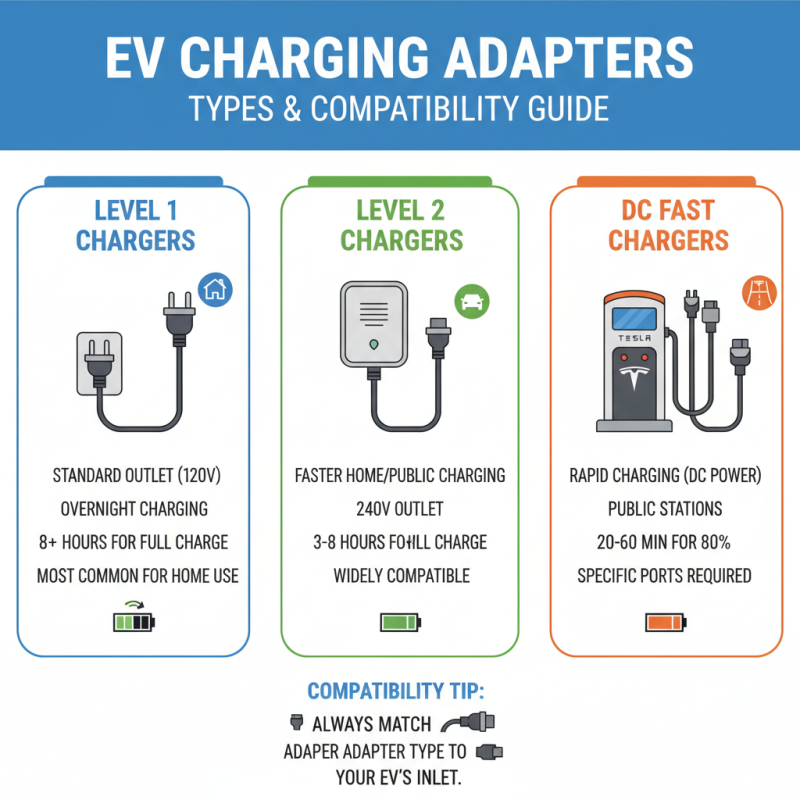
When choosing an electric vehicle (EV) adapter, compatibility is crucial. EV adapters come in various types, each serving unique needs. Level 1 chargers plug into standard outlets and are ideal for overnight charging. Reports indicate these chargers are widely used due to their convenience. However, they charge slowly, often requiring more than eight hours for a full battery, which may not suit all drivers' lifestyles.
Level 2 adapters provide faster charging options. They utilize a 240-volt outlet and can typically replenish an EV's battery in four to six hours. According to recent industry data, over 70% of EV owners prefer Level 2 chargers for daily use. This choice often reflects the need for efficiency in urban settings. However, not all homes have the necessary infrastructure for these adapters. Therefore, thorough compatibility checks are essential before installation.
The DC fast chargers represent another category and are essential for long-distance travel. They can charge an EV to 80% in just 30 minutes. Yet, the availability of such chargers can be limited. In rural areas, finding a compatible DC fast charger can be challenging. This gap underscores the importance of understanding adapter requirements and local infrastructure to maximize the benefits of electric vehicle ownership.
Industry Standards and Specifications for Electric Vehicle Charging
When selecting an EV adapter, understanding industry standards is crucial. The specifications for electric vehicle (EV) charging vary across regions. Different countries impose distinct voltage and amperage levels. Adhering to these standards ensures that your vehicle charges efficiently and safely.
Many adapters are designed to accommodate multiple charging standards. However, compatibility can sometimes be a concern. Not all adapters will work with every model. This creates the risk of potential damage or inefficiency. Always refer to the specifications of both the vehicle and adapter. Lack of compliance may lead to subpar performance or safety hazards.
While many options are available, not all are made equal. Some adapters may not meet rigorous safety tests. Poor-quality products can result in overheating or electrical failures. Opting for a certified adapter is essential for reliable charging. Investigating the manufacturer's reputation helps ensure quality. Remember, a thorough review of adapters will lead to a better informed decision.
Impact of Charging Speed on EV Performance and Battery Life
Choosing the right EV adapter significantly impacts charging speed, which in turn affects overall vehicle performance and battery longevity. For instance, charging at a high rate can heat up the battery. This heat can lead to accelerated wear. According to a study by the National Renewable Energy Laboratory, batteries charged at higher speeds degrade faster than those charged slowly. This degradation reduces the life cycle of the battery, which can pose a long-term financial burden on EV owners.
Charging speed also influences vehicle performance. Higher charging rates can mean quicker turnarounds for drivers. However, frequent high-speed charging can lead to thermal stress. The Department of Energy reports that consistently using high-power chargers can reduce a battery’s capacity by up to 30% over its lifespan. It's essential to balance convenience with battery health to ensure optimal performance. Many users underestimate the long-term effects of their charging habits on both performance and battery life.
Selecting the appropriate EV adapter matters. An adapter that supports the right power level can enhance charging efficiency without compromising battery integrity. However, not all adapters achieve this balance. Users must consider their driving patterns and charging habits. The right adapter can be a pivotal factor in maintaining both speed and battery health. More awareness and understanding are needed when it comes to making the best choice for an EV adapter.
This chart illustrates the relationship between different charging speeds for electric vehicles and their corresponding charging times, highlighting the impact of choosing the right charger on EV performance and battery life.
Cost Considerations and Long-Term Savings of Proper Adapter Selection
Choosing the right EV adapter can significantly impact your overall costs. A proper adapter is an investment. It ensures efficient charging, reducing energy waste over time. Poorly designed adapters can lead to longer charging times and higher electricity bills. Therefore, investing in quality is essential.
Long-term savings can be achieved by selecting the correct adapter. For instance, a durable, high-quality adapter may have a higher upfront cost. However, it can last longer and perform better than cheaper alternatives. Cheaper models might need frequent replacements. That adds up over the years. Additionally, some adapters can even optimize charging speed, contributing to quicker trips on the road.
Using the wrong adapter can lead to frustrations and potential damage to your vehicle. It is crucial to assess your needs and compatibility. Reflect on your driving habits and charging frequency. Remember, making an informed choice today can lead to savings tomorrow. Evaluate your options carefully to achieve a balance between cost and functionality. Your pursuit of efficiency should not compromise quality, nor should it lead you down the wrong path.