How to Choose a Commercial EV Charger in 2026?
Choosing a Commercial Ev Charger in 2026 is not about buying the fastest plug. It is about matching charging capacity to traffic, site limits, and driver expectations. A reliable Commercial Ev Charger should support predictable uptime, transparent pricing, and simple maintenance. These needs seem obvious. They are often overlooked.
Start with real operating evidence. Review vehicle arrivals, dwell times, peak electricity demand, and seasonal temperatures. A depot serving 40 vans needs a different layout from a hotel with occasional overnight users. Measure twice. Compare AC and DC charging speeds, connector compatibility, payment tools, network software, warranties, and service response times. Ask suppliers for efficiency data, installation requirements, and references from similar sites. A polished presentation is not proof.
Qualified electricians and charging specialists should inspect the electrical panel, trenching, drainage, lighting, ventilation, and expansion space. In 2026, load management and remote diagnostics may matter as much as maximum power. A charger that balances simultaneous output can protect site capacity without frustrating every driver. Still, software promises require testing. Connectivity can fail. Maintenance access can be awkward. The cheapest quote may create higher costs through downtime, repairs, or poor user support. This guide examines those trade-offs with practical judgment, not idealized assumptions. Some recommendations will depend on local technical requirements and utility policies. Confirm them before procurement.
Define Your Commercial EV Charging Requirements
How to Choose a Commercial EV Charger in 2026?
Define Your Commercial EV Charging Requirements
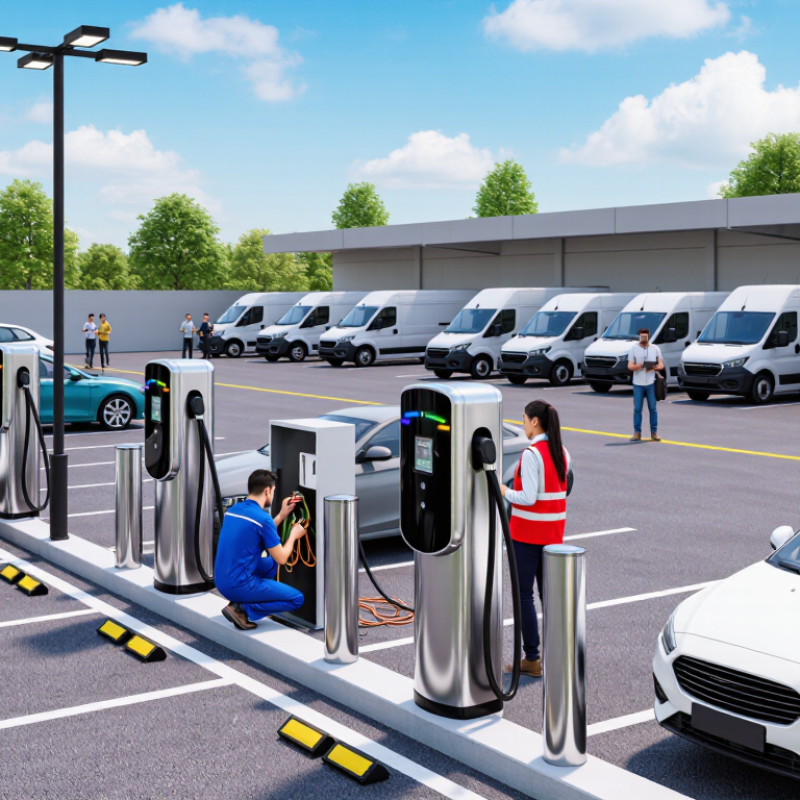
In commercial charging projects, the charger should follow the work, not the other way around. Start by recording vehicle numbers, battery sizes, daily mileage, and parking duration. A delivery van parked for eight hours needs a different solution from a taxi waiting twenty minutes. Review weekday peaks, seasonal demand, and future fleet growth. Real measurements beat guesses. A simple spreadsheet can reveal whether overnight charging or high-power daytime charging fits operations.
Then assess the site. Check electrical capacity, cable routes, drainage, lighting, bollard protection, and network connectivity. Ask who will use each connector and how access will work. Drivers need clear screens and safe cable handling. Managers need usage records, fault alerts, and remote support. In site assessments, overlooked trenching and switchgear costs often change the preferred charger. The hardware is rarely the whole budget.
Set performance targets before requesting quotations. Define acceptable charging time, connector types, uptime, warranty response, and maintenance access. Confirm support for recognized safety and communication standards in your region. Leave spare capacity where practical, but avoid paying for unused power. Our first demand forecast is often wrong. Recheck it against real charging data after several months. A flexible plan may outperform an impressive specification. Ask difficult questions early.
Compare Charger Types, Power Levels, and Charging Speeds
How to Choose a Commercial EV Charger in 2026?
Choosing a commercial EV charger means matching charging speed with parking time, vehicle needs, and site capacity. AC Level 2 units commonly deliver 7 to 22 kW. They suit offices, hotels, and retail sites where vehicles remain for several hours. A 90-minute stop may add useful range, but rarely fills a large battery.
DC fast chargers often deliver 25 to 150 kW. High-output systems can exceed 200 kW. They fit fleets and short-stay locations.
Faster is not automatically better.
Actual charging speed depends on the vehicle, battery temperature, state of charge, and charger output. A vehicle limited to 100 kW cannot use a 200 kW charger fully. DC charging can reduce waiting time because it sends power directly to the battery. AC charging relies on the vehicle’s onboard converter.
This distinction matters. Compare delivered energy during a typical visit, not only the number printed on the equipment.
Before selecting a system
Before selecting a system, arrange a professional electrical load assessment. Check transformer capacity, cable routes, simultaneous charging, and future expansion. Small details matter.
In field evaluations, cable length and connector handling often affect daily usability more than expected. A long cable should reach side parking spaces without blocking walkways. Clear displays, weather protection, fault reporting, and accessible maintenance also support reliable operation.
I would not choose maximum power without reviewing demand costs and real parking patterns. That decision can look impressive, yet perform poorly during quieter hours.
Evaluate Site Infrastructure, Installation, and Grid Capacity
How to Choose a Commercial EV Charger in 2026?
Evaluate Site Infrastructure, Installation, and Grid Capacity
A commercial charger is only as reliable as the site supporting it. Check the main switchgear, transformer rating, panel space, and available voltage before selecting equipment. A 400-amp service may already carry lighting, HVAC, refrigeration, and elevators. Its spare capacity can disappear quickly. Measure peak demand for several weeks, not just one quiet afternoon. This creates a more realistic electrical profile.
Installation details can change the project cost dramatically. Walk the cable route before approving a charger location. Long runs may require larger conductors, extra conduit, trenching, drainage work, or protective barriers. Keep cables away from vehicle paths where possible. Leave room for maintenance access. Plan for rain. Poor drainage can damage equipment and create unsafe working conditions.
Grid capacity deserves a formal review. Ask the utility about transformer limits, connection upgrades, demand charges, and approval timelines. A load-management system may reduce simultaneous charging, but it cannot fix an undersized service. Consider future expansion, even if only two chargers are needed today. Installing spare conduit now may cost less than reopening concrete later. I once underestimated site preparation on a small parking project; the electrical hardware was affordable, but civil work consumed the budget. That mistake still matters. Get drawings, load calculations, permits, and inspection requirements in writing before ordering equipment.
Check Smart Features, Software, Safety, and Accessibility
How to Choose a Commercial EV Charger in 2026?
Smart features should solve real operating problems, not decorate a sales sheet. The IEA reported over four million public charging points worldwide at the end of 2023, more than double the 2022 figure. That expansion makes software quality increasingly important. Choose chargers with load balancing, remote diagnostics, user authentication, energy metering, and open communication protocols. These tools can prevent several vehicles from charging at full power during expensive peak periods. Keep it observable. Operators should see connector status, session errors, energy use, and maintenance alerts from one dashboard. Offline payment and automatic data recovery also matter when a network connection fails.
Safety requires more than emergency-stop buttons. Check leakage detection, thermal monitoring, cable protection, surge control, and clear fault messages. U.S. National Electric Vehicle Infrastructure standards require a 97% uptime target for qualifying fast-charging sites, showing how reliability has become a measurable responsibility. Accessibility deserves equal attention. Inspect screen height, text contrast, cable weight, parking clearance, tactile controls, voice guidance, and payment options. Requirements vary by location, so confirm local rules before installation. Test failure modes. A charger may pass a demonstration and still frustrate a wheelchair user, a driver with poor vision, or staff responding to an overnight fault.
Ask for independent test records, cybersecurity procedures, software update policies, and service-response times. Do not accept “smart” as proof of value. A complicated dashboard can hide weak support. The imperfect choice is sometimes the more repairable one. Evaluate it during rain, peak demand, and a simulated network outage.
How to Choose a Commercial EV Charger in 2026?
Compare the charging-power ranges commonly used for different commercial applications, then verify smart features, software interoperability, safety compliance, and accessibility before selecting equipment.
Selection guidance: Workplace and destination sites commonly use AC charging from 7–22 kW, while public, fleet, and highway sites often require DC charging from 50–350 kW. Prioritize dynamic load management, remote diagnostics, energy scheduling, user authentication, billing support, and OCPP interoperability. Confirm compliance with applicable IEC 61851, IEC 60364-7-722, electrical, fire, and local accessibility requirements. Accessible bays should provide suitable clearance, reachable controls, readable displays, manageable cable weight, and convenient payment or authentication options.