How to Choose the Best DC Charger EV Adapter for Your Needs?
When transitioning to electric vehicles, choosing the right DC Charger EV Adapter becomes crucial. The market offers various options, and each has unique features. Understanding these can enhance your charging experience.
Consider the compatibility with your vehicle. Not all adapters work with every model. Some may charge faster but come at a higher cost. Assessing your driving habits is also essential. If you frequently take long trips, investing in a high-capacity adapter may be wise.
Price can be another consideration. A more expensive DC Charger EV Adapter might offer extra features. However, not all high-priced options guarantee better performance. Reflecting on your actual needs can steer you toward the most suitable choice.
Types of DC Charger EV Adapters Available in the Market
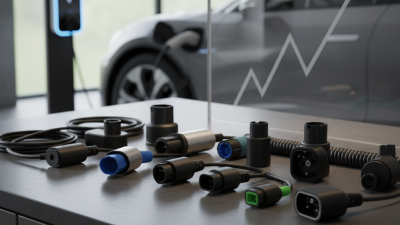
When choosing a DC charger EV adapter, understanding the types available is vital. Generally, there are several types: fast chargers, ultra-fast chargers, and portable chargers. Fast chargers typically offer a charging rate of around 50 kW. They work well for commercial use or during quick stops. Ultra-fast chargers, on the other hand, can provide over 150 kW, allowing rapid charging for compatible vehicles. These are ideal for long road trips, but they may not be available in all locations.
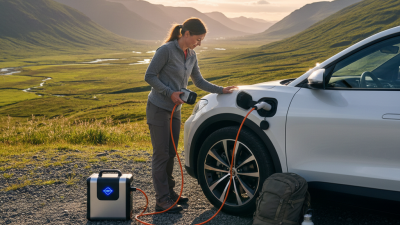
Portable chargers offer flexibility and convenience. They are lightweight and easy to use, making them a popular choice for personal electric vehicles. However, they generally deliver slower charging speeds. Users should consider their charging habits before selecting a portable option. Some may find it a hassle to wait for the vehicle to charge at home. Others might appreciate the versatility it offers.
Not all adapters will suit everyone's needs. The choice should reflect vehicle compatibility, charging location, and speed requirements. Some models may have compatibility issues with older vehicles. Others may not deliver the expected performance. Users should research carefully and read reviews before making a decision. A well-informed choice will lead to greater satisfaction in the long run.
Factors to Consider When Choosing a DC Charger EV Adapter
Choosing the right DC charger EV adapter can be a daunting task. There are various factors to consider to ensure you select a reliable and efficient option. One key factor is the charging speed. The average DC fast charger can deliver about 80% charge in 30 minutes. Understanding your vehicle's charging capabilities is essential. According to a recent report by the International Energy Agency, a mismatched charger can result in significantly longer charging times.
The adapter's compatibility with your EV model is also crucial. Not all adapters work with every vehicle. As reported by Electrek, about 20% of EV users experience issues due to incompatible chargers. This can lead to frustration and increased charging costs. Evaluating the power output is vital too. Many adapters offer different power levels, from 50 kW to over 350 kW. Selecting the right level can enhance your charging efficiency.
Additionally, consider the build quality and safety features of the adapter. Reliable construction ensures durability in various environments. Safety measures like overcurrent and overheating protection are critical to avoid potential hazards. Reviews and industry feedback can provide insights into the performance and reliability of different models. Always gather information from multiple sources to make an informed decision.
Compatibility with Your Electric Vehicle Model
Choosing the right DC charger EV adapter is crucial. Compatibility with your electric vehicle (EV) model must be the top priority. Different EVs utilize varied charging standards. For instance, most electric cars in North America use the SAE J1772 standard. However, Tesla vehicles require a specific adapter to connect with non-Tesla charging stations.
According to a recent report by the International Energy Agency, over 10 million electric cars were sold globally in 2022. Nearly 40% of these vehicles were from Asia. Thus, understanding your vehicle's specific needs becomes essential to ensure optimal performance. If you select the wrong adapter, charging can be inefficient and frustrating. Some adapters may not support higher charging speeds, impacting your overall charging time.
Accurate data is vital. Research indicates that charging speeds vary widely based on the adapter's capabilities. Sometimes, a fast charger may not be compatible with slower EV models, resulting in wasted energy and increased costs. Testing different adapters can help, but not every model offers the same reliability. Sometimes, you might find that a cheaper option does not hold up as well, causing inconvenience and sparking doubts.
Compatibility of DC Charger EV Adapters with Various Electric Vehicle Models
Charging Speed and Performance Specifications
When selecting a DC charger EV adapter, consider charging speed and performance. The efficiency of the adapter significantly affects your charging experience. Look for adapters compatible with your vehicle’s charging capacity. Higher power output leads to faster charging times. Check if your adapter supports multiple charging levels, which adds flexibility.
Performance specifications matter. Evaluate the charge time for various battery levels. Some adapters offer rapid charging, while others provide slower options. Understand your daily driving needs and charging behavior. If you often drive long distances, a fast adapter is crucial. For city driving, a standard charger might suffice.
Reflect on the certifications of the charger. Reliable products often meet industry standards. Quality assurance plays a crucial role in safety and effectiveness. Look for adapters that have undergone rigorous testing. Avoid options that lack clear specifications. Make informed choices to enhance your EV experience.
Safety Features and Certifications to Look For
When selecting a DC charger EV adapter, safety features are critical. Look for adapters with over-current protection. This prevents the charger from supplying too much power, which can damage your vehicle. A temperature control feature is also essential. It will shut down charging if the device overheats, providing peace of mind.
Certifications matter when choosing an adapter. Check if it meets international safety standards. UL or IEC certifications indicate that an adapter has passed rigorous tests. While some products may claim safety without certification, this can be misleading. An unverified adapter might fail, posing serious risks.
Reflect on what your needs are. What type of driving do you do? Frequent long trips may require a more robust solution, while urban driving might not need extensive features. Assessing your own habits will help narrow down choices. Your safety is paramount, so do thorough research.
How to Choose the Best DC Charger EV Adapter for Your Needs?
| Feature |
Description |
Importance |
| Safety Certifications |
Look for UL, CE, and IEC certifications to ensure compliance with international safety standards. |
High |
| Overcurrent Protection |
Ensures that the charger automatically cuts off in case of excessive current draw. |
High |
| Temperature Control |
Monitors and manages the charger’s operating temperature to prevent overheating. |
Medium |
| Surge Protection |
Protects the charger and vehicle from voltage spikes. |
High |
| User Manual Availability |
Comes with clear instructions and troubleshooting tips. |
Medium |