Leave Your Message

What Is an EV Charging Station and How Does It Work?

An electric vehicle charging station supplies power to an EV’s battery through a cable and connector. The process looks simple: plug in, wait, drive. Behind that routine, the station and vehicle communicate to manage power safely and effectively. Charging speed depends on the station’s output, the vehicle’s onboard equipment, battery condition, and temperature.

NREL researcher Eric Wood has studied how drivers charge electric vehicles. A practical takeaway from his work is that charging habits depend on where vehicles are parked, not just on charger speed. This is a paraphrase, not a verified direct quotation. It matters because many drivers charge at home or work, while public fast chargers can help during longer trips.

The phrase Electric Charging Station Ev Car Charger often refers to several different pieces of equipment. A home wall unit, a curbside public charger, and a highway fast charger may all serve EVs, but they do not deliver power in the same way. Some provide AC power that the car converts; others supply DC power directly to the battery. Small details matter. A cold battery may charge more slowly, and a powerful station cannot exceed a vehicle’s charging limits. This guide explains what an EV charging station is, how power reaches the battery, and what drivers should know when choosing a charger. The technology is useful, but not magic; charging time still takes planning.
What Is an EV Charging Station and How Does It Work?

What an EV Charging Station Is and Its Main Components

What Is an EV Charging Station and How Does It Work?

What an EV Charging Station Is and Its Main Components

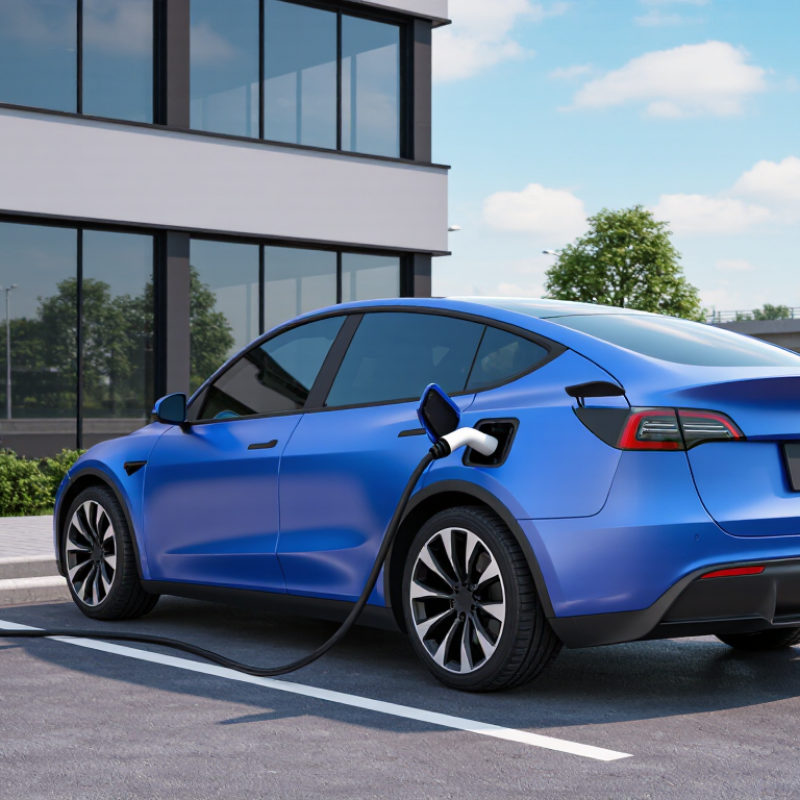
An EV charging station is equipment that safely connects an electric vehicle to an electrical supply. It is often called electric vehicle supply equipment, or EVSE. That name can be confusing. With many AC stations, the vehicle’s onboard charger converts incoming AC power into battery-ready DC power. A DC fast-charging station performs that conversion inside the station instead.

The visible parts include a sturdy enclosure, a charging cable, and a connector that fits the vehicle’s inlet. Inside, control electronics manage the connection and communicate with the car. Safety components monitor current, grounding, and temperature, then can stop power if they detect a fault. These protections matter in ordinary settings, too, such as a wet parking area or a cable bent around a curb. No single component works alone.

Some stations also include a display, status lights, or equipment for measuring energy use. Network connections may let operators monitor the station or manage access, though not every charger has the same features. A green light can indicate readiness, but the display or vehicle should confirm charging has begun. Details vary by station type and electrical installation. Even familiar labels can be imprecise, so checking the station’s rated output and the vehicle’s charging limits gives a clearer picture.
How Charging Stations Deliver Power to an Electric Vehicle

An EV charging station is the link between the electrical grid and a vehicle’s battery. With AC charging, the station supplies alternating current, and the car’s onboard charger converts it into battery-ready direct current. With DC fast charging, conversion happens inside the station, so power can reach the battery directly. That difference matters. The car still controls how much power it accepts, based on its limits, battery temperature, and state of charge. A high-rated charger cannot make every vehicle charge at its maximum rate.

A typical session starts when the cable connects and the vehicle and station communicate. They check compatibility and safety, then adjust power as charging proceeds. Near a full battery, charging usually slows to protect battery health. The International Energy Agency’s Global EV Outlook 2024 reports more than four million public charging points worldwide in 2023, with fast chargers growing 55% that year. More chargers help, but access and charging speed can vary greatly by location. A dashboard estimate may also change mid-session; that can feel frustrating, and it is worth checking the vehicle’s manual rather than trusting one number.

Tips: For a smoother stop, check the station’s power rating and your vehicle’s charging limit before setting out. Plug in with the connector seated firmly, and avoid repeated unplugging if the display shows a brief delay. Cold batteries can charge slowly. Give them time.

What Is an EV Charging Station and How Does It Work? — How Charging Stations Deliver Power to an Electric Vehicle

Topic How It Works Typical Details What Affects the Result
EV charging station A unit that connects an electrical supply to an electric vehicle and manages the charging connection. It may provide AC power or convert power to DC before it reaches the vehicle. Charging equipment can be installed at homes, workplaces, public parking areas, and along roads. Equipment rating, electrical supply, installation, and vehicle compatibility.
AC charging The station supplies alternating current (AC). The vehicle’s onboard charger converts it into direct current (DC) for the battery. Common in home and workplace charging. In North America, Level 1 commonly uses a 120 V supply; Level 2 commonly uses a 208–240 V supply. The onboard charger’s maximum power, circuit capacity, and charging losses.
DC fast charging The station converts AC from the grid into DC and supplies it to the vehicle’s battery system, avoiding the vehicle’s onboard AC charger. Public equipment may be rated from tens to several hundred kilowatts. The vehicle determines how much power it can accept. Battery temperature, state of charge, vehicle limits, station output, and power sharing.
Connection and communication After the connector is plugged in, the vehicle and charging equipment exchange information and check that the connection is safe before power flows. Checks can include connector status, grounding, and charging limits. The exact communication method depends on the equipment and vehicle. Connector type, communication standard, and whether the vehicle and station are compatible.
Power control The vehicle’s battery management system monitors the battery and communicates charging limits. The station adjusts delivery within those limits. Charging power is not necessarily constant throughout a session. Battery temperature, battery condition, state of charge, and the station’s available power.
Charging speed Power is measured in kilowatts (kW); energy added to the battery is measured in kilowatt-hours (kWh). Approximate charging time can be estimated by dividing energy added (kWh) by average charging power (kW). Actual charging takes longer than an ideal calculation because power varies and energy is lost during conversion.
Illustrative time estimate Adding 30 kWh at a steady average of 7.2 kW would take about 4.2 hours in an ideal calculation. Calculation: 30 kWh ÷ 7.2 kW ≈ 4.2 hours. This is an estimate, not a guaranteed session time; real charging power can vary.
Charging taper Many EVs reduce charging power as the battery approaches a high state of charge, particularly during DC fast charging. Charging from a low to a moderate state of charge is often faster than charging near full. Vehicle charging strategy, battery temperature, and battery state of charge.
Session completion Charging stops when the user ends the session, the vehicle reaches its target, or a safety or equipment condition interrupts charging. The connector can be removed after the vehicle or station releases it, following the equipment’s instructions. Vehicle settings, station controls, payment or access requirements, and safety status.

Charging Levels, Connector Types, and Charging Speeds

An EV charging station supplies electricity to a vehicle through a compatible cable and connector. Charging levels describe how quickly that energy can arrive. Level 1 uses a standard household outlet and is slow, often adding only a few miles of range per hour. Level 2 uses higher-voltage equipment and is common at homes and public parking areas. It can add useful range during a workday or overnight. DC fast charging can replenish a battery much faster on suitable vehicles. Actual speed varies.

Tips: Check your vehicle’s manual for its connector and maximum charging rate. A station’s advertised power is not a promise. Battery temperature, current charge, and the vehicle’s limits can all reduce speed. Leave extra time on cold days.

Connector types differ by vehicle and region. Some cars accept AC charging through one connector and use a separate connection for DC fast charging; others combine these functions. Confirm compatibility before choosing a station. For example, two chargers may display similar power ratings, yet your car may draw less from one because of its own limits. Charging also tends to slow as the battery approaches full. Planning around the time you need, rather than expecting a fixed number of minutes, is more dependable. It can still be a little confusing.

EV Charging Levels and Typical Power Output

Representative charger output in kilowatts. Actual charging power varies by vehicle, charger, and conditions.

Level 1 and Level 2 use AC power, while DC fast charging supplies DC power directly to the vehicle’s battery. Connector types differ by region and charging method; the vehicle and charger must use compatible connectors. Higher power can shorten charging time, but the vehicle’s maximum charging rate and battery conditions also matter.

How the Vehicle and Station Coordinate a Safe Charging Session

What Is an EV Charging Station and How Does It Work?

How the Vehicle and Station Coordinate a Safe Charging Session

A charging session is a conversation, not simply a flow of electricity. After the connector clicks into place, the vehicle and station check their connection and exchange control signals. The station confirms that the cable is attached and conditions are suitable before its internal switch allows power to flow. Small detail, big consequence. If a fault appears, the system can stop the session.

During AC charging, the vehicle’s onboard charger converts incoming power for the battery. With DC fast charging, conversion happens in the station, and the vehicle’s battery management system helps set acceptable charging limits. Current and voltage can change as the battery fills or warms. The International Energy Agency’s Global EV Outlook 2024 reports that public charging points worldwide grew by over 40% in 2023, reaching more than four million. More chargers make dependable communication even more important. Standards such as IEC 61851 define key charging-control requirements, but real-world cables, weather, and equipment wear still matter. A connector that looks secure is not proof that everything is working; the station’s checks are essential.

How EV Charging Stations Connect to Buildings and the Power Grid

An EV charging station connects a vehicle to a building’s electrical system, which draws power from the local grid. At a home or workplace, wiring usually runs from the electrical panel through a dedicated circuit to the charging unit. The panel distributes power and includes protective devices that can disconnect a circuit if a fault occurs. The station also communicates with the car, allowing charging to begin only when the connection is ready. It may measure energy use, too. Small details matter.

For AC charging, the vehicle’s onboard equipment converts incoming AC power into battery-ready DC power. A DC fast charger performs that conversion in the station, so it needs a much higher-capacity electrical connection. In either case, the building’s available capacity can limit how quickly vehicles charge. Load management can adjust charging rates when other equipment, such as heating systems, is using power. Planning is not always neat: an older panel may have little spare capacity, even when the parking area seems ideal. A qualified electrical professional can assess the wiring, panel, grounding, and expected demand before installation. Afterward, charging performance may still vary with building use and grid conditions.