What Are the Top EV Charger Plug Types in 2026?
Choosing an Ev Charger Plug in 2026 means looking beyond the shape of the connector. It affects which public stations a vehicle can use, how charging equipment fits a home, and whether travel plans need a backup. The International Energy Agency’s Global EV Outlook 2025 reports that more than 17 million electric cars were sold in 2024, exceeding one-fifth of new car sales worldwide. The same report says public charging points surpassed five million. More cars, more plugs, and more chances for confusion.
The main connector families include CCS1 and J3400 in North America, CCS2 and Type 2 in much of Europe, and GB/T in China. CHAdeMO remains relevant to some vehicles and charging networks. These names are not interchangeable. SAE International’s Frank Menchaca, discussing its J3400 standardization work, emphasized enabling “any supplier or manufacturer” to use, manufacture, or deploy the connector. That goal matters when drivers face a station cable that simply will not fit.
Still, plug compatibility is only part of the decision. Charging speed, vehicle model year, adapter support, and local network coverage can change the practical answer. A connector chart helps, but it cannot promise a smooth trip. That is an imperfect shortcut. This guide compares the leading Ev Charger Plug types, explains where each is common, and highlights the details worth checking before choosing a vehicle or charger. A small port can shape a long journey.
How EV Charger Plug Types Differ by Design and Charging Level
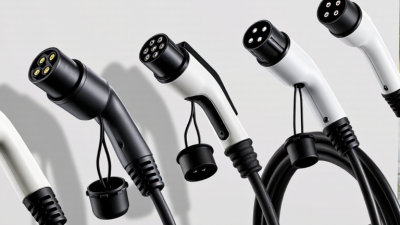
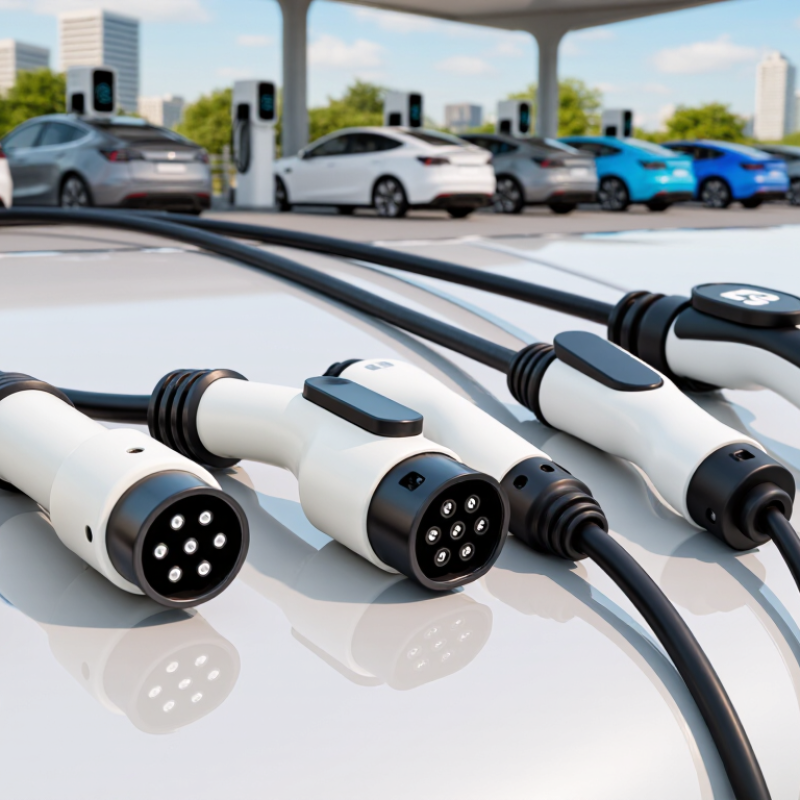
EV charging plugs differ in both shape and the current they carry. For home and workplace charging, Type 1 connectors have a round body and five main contacts, while Type 2 plugs use a broader, seven-contact design. The exact inlet depends on the vehicle and region. Fit matters: a plug that looks close is not necessarily compatible.
AC plugs serve slower charging, often overnight or during a workday. In North America, Level 1 uses a standard household outlet; Level 2 uses dedicated equipment and can deliver more power. Yet the vehicle’s onboard charger sets a limit, so a higher-rated wall unit does not guarantee faster charging. Small detail, big difference.
DC fast charging uses different connector designs because power bypasses the onboard AC charger. Combined Charging System plugs add two large DC contacts beneath an AC section; other regional standards use distinct layouts. This design supports higher charging rates, but the car, cable, station, and battery temperature all affect actual speed. A cold battery may charge slowly, even at a powerful station. It is tempting to compare plugs by appearance alone, but checking the vehicle manual and station specifications is more reliable. Connector availability can also vary by location and model year.
AC Charging Plugs: Type 1, Type 2, and GB/T
AC charging plug choice shapes everyday convenience more than peak speed. Type 1 uses a single-phase connection and is commonly associated with charging up to about 7.4 kW. Actual power depends on the vehicle’s onboard charger, the supply, and the cable. A plug rating cannot promise a fast charge.
Type 2 supports single- and three-phase AC charging. In suitable installations, it commonly serves charging needs up to 22 kW. GB/T 20234.2 is China’s AC connector standard, with configurations that vary by current and phase. A home unit may deliver around 7 kW on single phase, while three-phase installations can provide more. Check the vehicle inlet and site supply before choosing a cable. Small detail. It matters.
The International Energy Agency’s Global EV Outlook 2024 reports that public charging points grew by about 40% in 2023; slow chargers made up over 70% of the global public stock. That makes AC compatibility especially relevant for overnight parking and workplace charging. Yet connector labels alone do not reveal charging speed. I have seen comparisons overlook phase availability and onboard-charger limits. That is an easy mistake: two cars with the same plug may charge at very different rates.
What Are the Top EV Charger Plug Types in 2026? - AC Charging Plugs: Type 1, Type 2, and GB/T
| AC Plug Type |
Standard |
Common Use |
AC Supply |
Common Current |
Approximate Charging Power |
Connector Pins |
Practical Notes |
| Type 1 |
SAE J1772 |
Common in North America and some other markets, particularly on single-phase AC installations. |
Typically 120–240 V AC; single-phase |
Often 16–32 A in everyday installations |
About 3.7–7.7 kW at 230–240 V and up to 32 A |
5 |
Uses a latch to secure the connector. Charging power is limited by the vehicle’s onboard charger and the electrical supply. |
| Type 2 |
IEC 62196-2 |
Common across Europe and widely used in other regions. |
Typically 230 V single-phase or 400 V three-phase |
Often 16–32 A per phase |
About 3.7–7.4 kW single-phase at 16–32 A, or up to about 22 kW three-phase at 32 A |
7 |
Supports both single-phase and three-phase AC charging. The connector is generally secured by a locking mechanism in the vehicle inlet or charging equipment. |
| GB/T AC |
GB/T 20234.2 |
Common in mainland China. |
Typically 220 V single-phase or 380 V three-phase |
Often 16–32 A in everyday installations |
About 3.5–7 kW single-phase at 16–32 A; some three-phase setups can provide around 11–21 kW |
7 |
Available power depends on the supply, charging equipment, and the vehicle’s AC charging capability. GB/T connectors are not automatically interchangeable with other plug types. |
Note: Power figures are approximate examples based on common voltage and current combinations. Actual charging speed depends on the vehicle’s onboard charger, the charging equipment, the electrical supply, and local installation limits. Always check connector and vehicle compatibility before charging.
DC Fast-Charging Plugs: CCS, CHAdeMO, and NACS
DC fast-charging plugs differ in shape, communication, and regional availability.
CCS combines an AC connector with two large DC pins; many stations use it for high-power charging. CHAdeMO uses a separate DC connector and supports bidirectional charging on compatible vehicles. NACS, standardized as SAE J3400, uses a compact connector for both AC and DC.
Compatibility is not automatic.
Check the vehicle’s inlet and the station’s cable before a long trip.
Infrastructure is expanding, but plug choice still matters. The International Energy Agency’s Global EV Outlook 2024 reports that
public fast-charging points grew by about 55% in 2023.
That growth does not mean every plug is available on every route. A charger may have the right power rating yet still require an adapter or a compatible vehicle port.
Small detail, big delay.
For fleet managers, compare connector availability along actual routes, not just charger counts. IEA figures describe global infrastructure; local networks can look very different.
That gap deserves attention.
How to Match a Plug Type to an EV and Charging Station
Choosing a plug starts with the car, not the charging station. Check the owner’s manual or the label near the charge port for its connector standard and supported charging methods. In North America, common options include Type 1 for AC charging, CCS1 for DC fast charging, and NACS. Type 2 and CCS2 are widely used in Europe. Regional availability varies, so a connector common at home may be uncommon on a trip.
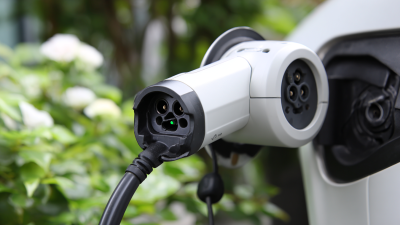
Then compare the car’s inlet with the station’s cable. The plug must match, and the vehicle must support the charger’s power type: AC or DC. A plug that fits does not guarantee fast charging; the car’s onboard charger, battery limits, and station output all affect speed.
Small detail. Big difference.
If an adapter is needed, confirm that it is approved for that vehicle and charging method, and check its power rating. Don’t rely on a product photo alone. Read the station listing, inspect the connector, and keep a backup route in mind. Compatibility charts can simplify the choice, but they may be outdated or unclear about regional variations. Verify the details before driving out of your way.