What Is the Best EV Cable for Your Electric Car?
Choosing the right Ev Cable is less about buying the thickest or longest option. It is about matching the cable to your car, charger, and daily routine. The International Energy Agency’s Global EV Outlook 2024 reports that electric car sales approached 14 million worldwide in 2023, or about 18% of all new car sales. More drivers now face a practical question: which cable fits their actual charging setup?
Start with compatibility. Check the connector type and charging limits in your vehicle manual, then compare them with the wall charger or public charging equipment you plan to use. For AC charging, the car’s onboard charger, power supply, charging unit, and cable all affect the available charging rate. A higher-rated cable cannot make a car charge faster than its onboard system allows. It can, however, help ensure the cable is suitable for the equipment.
Length matters, too. A cable that reaches across a driveway may be handy, but extra length can mean more weight and clutter in the trunk. Look for clear ratings, durable construction, and credible safety certification, and avoid relying on vague product claims. Small details matter. Connector fit should feel secure, and the cable should be easy to coil after a rainy commute. This guide compares the main options and explains what to check before buying. One caveat: charging standards and connector availability vary by market, so there is no single best cable for every driver.
Understanding the Role of an EV Charging Cable
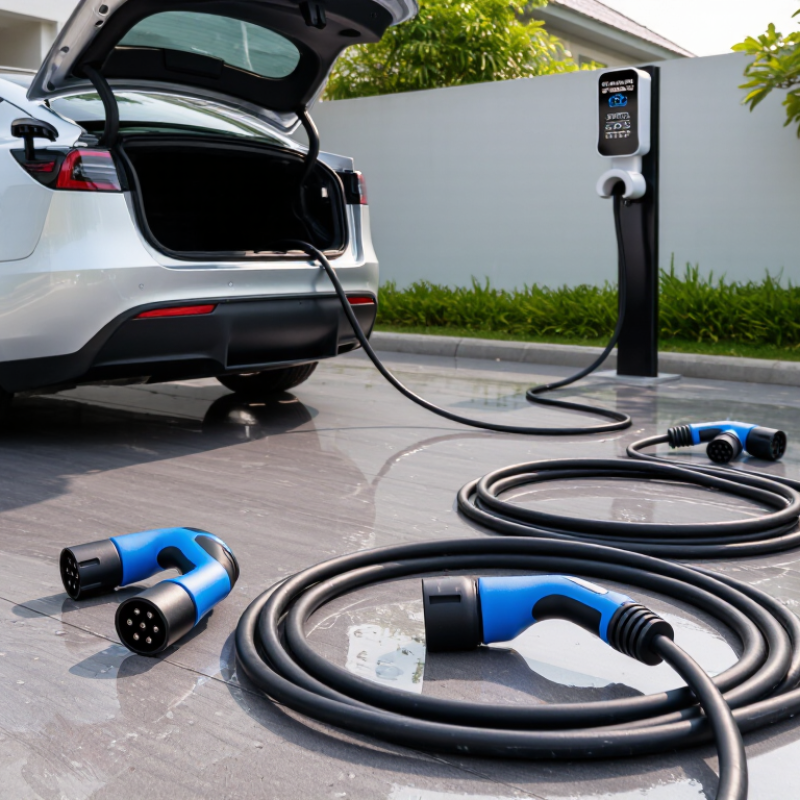
An EV charging cable does more than connect a car to a power source. It carries electricity and, in many charging systems, signals that help the vehicle and charger confirm a safe connection. Only then does power begin to flow. Small details matter. A loose plug, damaged insulation, or incompatible connector may interrupt a session.
The right cable must match the car’s connector and charging method. During home AC charging, the car’s onboard charger helps determine how quickly energy enters the battery. A cable with a higher rating will not automatically make charging faster; the car, charger, and electrical setup all matter. Check the cable’s rated current, voltage, and connector type against the vehicle manual. Length matters, too. A longer cable can reach a driveway outlet, but it may be heavier to handle and store.
Pay attention to how the cable feels and looks over time. Check for cuts, bent pins, discoloration, or unusual heat, and stop using a damaged cable. Keep it dry and avoid pulling it by the cord. It is easy to focus on charging speed and overlook everyday handling. Cable labels can also be confusing, so a quick check of the manual is worth the effort.
Checking Vehicle and Charger Compatibility
Choosing an EV cable starts with the connection at both ends. Check the vehicle’s inlet and the charger’s socket or plug; matching one side is not enough. Connector shapes can differ by region and charging standard, so compare the exact types listed in the vehicle and charger manuals. A close-looking plug may still be incompatible.
Then check the cable’s rating. For AC charging, confirm its maximum current and power suit the charge point and the car’s onboard charging capacity. The system may limit the actual rate, but an unsuitable cable can prevent charging altogether. Small mismatch, big pause. DC rapid chargers usually have their cables attached, so drivers generally do not choose a separate cable for them.
Length matters, too. Measure the route from the charging point to the inlet, allowing room around a parked car without leaving coils across a walkway. A longer cable is convenient, but it can be heavier to handle. I would not assume that one cable works everywhere, even if it fits once. Check the manual, inspect the cable for its rating label, and ask a qualified installer when the charger setup is unclear. One detail is easy to overlook: the socket may look right while the electrical rating is not.
Evaluating Cable Length, Power, and Safety Ratings
Cable length affects both convenience and handling. Measure the route from the charging point to your car’s inlet, including the distance around parked vehicles. A cable that is too short may pull on the connector. An excessively long one can become heavy, clutter a walkway, or collect dirt. A little slack helps. Keep the cable off sharp edges and avoid tight coils while charging.
Check the cable’s rated current and power against both your car and charging equipment. The lowest compatible limit determines what the setup can safely deliver; a higher-rated cable cannot make a vehicle charge faster than its onboard system allows. For example, a car limited to a certain AC charging rate will not benefit from a cable rated far above that level. It is easy to focus on maximum power and overlook connector compatibility. That is a mistake worth avoiding.
Safety ratings deserve close attention. Choose a cable with recognized electrical safety certification for your market, and confirm its voltage, current, and temperature ratings suit the equipment. An IP rating describes resistance to dust or water, but it does not replace electrical certification. Before use, check for cracked insulation, bent pins, unusual heat, or loose connections. If anything looks damaged, stop using the cable and seek qualified advice. A quick inspection is simple, though it is also easy to skip when you are in a hurry.
Matching a Cable to Your Charging Habits
The best EV cable is the one that fits your routine, not simply the one with the highest rating. Check your car’s connector type and maximum AC charging rate, then compare them with the power available where you usually charge. A cable cannot make a car charge faster than its onboard charger allows. More capacity is not always more useful.
Think about where the cable will live. If you charge in a driveway, measure the distance from the outlet or charging unit to the car’s inlet, including the path around parked vehicles. A little extra reach helps, but a very long cable can be heavy and awkward to store. Convenience matters. For regular outdoor use, choose a cable rated for the conditions it will face, and keep its connectors clean and dry according to the manufacturer’s guidance.
Your schedule matters, too. Overnight home charging may make a shorter, easy-to-handle cable perfectly adequate. If you often use different charging points, portability and a practical length may matter more. I have found that cable weight is easy to overlook until you are winding it up in the rain. Not ideal. Inspect the cable and plugs for visible damage, and stop using them if anything looks worn or cracked. Check the vehicle and charger instructions before buying; compatibility details can vary.
What Is the Best EV Cable for Your Electric Car?
Match the cable’s capacity to your charging habits and your vehicle’s AC charging limit.
How to use this chart: For overnight home charging, a 16 A cable may be sufficient. A 32 A cable can support faster charging when the vehicle, charging equipment, and electrical supply allow it. Three-phase cables can deliver more power, but only if your car and installation support three-phase charging. Actual charging speed is limited by the lowest-rated part of the system.
Approximate maximum AC power at nominal 230 V single-phase or 400 V three-phase. Real-world charging rates may be lower.