Leave Your Message
Choosing the best Ev Charging Cable for 2026 will require more than checking plug shape and price. Charging speed, thermal safety, weather resistance, vehicle compatibility, and daily handling will matter equally. A cable lying in a wet driveway faces different demands from one used in a heated garage.
The International Energy Agency reported that global electric car sales exceeded 17 million in 2024. Electric vehicles also represented more than 20% of new car sales worldwide. That growth increases pressure on charging equipment, especially home and destination charging systems. The IEA expects public charging infrastructure to expand sharply this decade, but cable quality will remain a practical limitation.
CharIN’s Claas Bracklo has repeatedly stressed the importance of interoperability across charging systems. His central message is simple: “Interoperability is essential for convenient electric mobility.” That principle applies directly to cable selection. A cable should connect reliably, communicate correctly, and deliver its rated current without excessive heat.
The best choice may not be the thickest or most expensive cable. A 22 kW Type 2 cable can be unnecessary for a vehicle limited to 11 kW. Conversely, undersizing a cable can create slower charging and avoidable frustration. Users should examine connector standards, amperage, length, flexibility, certifications, and warranty coverage.
There is no universal winner.
This guide compares the leading Ev Charging Cable options for 2026 using published industry data, practical charging needs, and safety-focused criteria. Some recommendations remain imperfect, because vehicle software, local electricity supply, and future charging standards can change quickly.
The best EV charging cable in 2026 is defined by dependable performance, not flashy packaging. In daily use, I look for a cable with the correct connector, current rating, and charging mode for the vehicle. A cable rated for higher power cannot make an incompatible car charge faster. That mistake remains common.
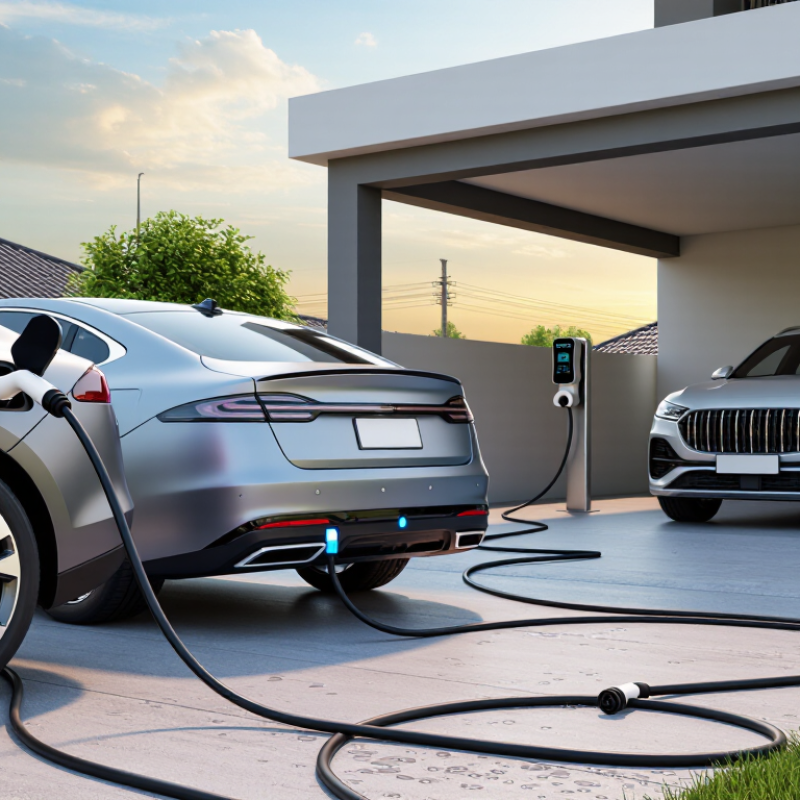
Safety comes first. Quality cables should manage heat, resist moisture, and protect against overcurrent conditions. Strong insulation matters when the cable rests on cold concrete or crosses a damp driveway. Flexible materials also reduce strain near the plug. Short cables are easier to store, but longer ones provide better parking freedom. Choose carefully. More length can also mean more weight.
Durability now includes useful design details. Clear markings should show capacity and operating limits without forcing guesswork. Secure connector seals help prevent dust and water entry. A reliable cable should support recognized electrical standards and independent safety testing. That evidence is more valuable than vague claims. I also prefer a replaceable storage strap and a visible status indicator, although indicators can fail over time. My own buying mistake was choosing a very thick cable that felt reassuring but became awkward in winter. The best option balances safety, weather resistance, handling comfort, and verified compatibility. It should perform quietly beside the car, charge after charge.
| Charging Cable Category | Connector Standard | Typical Rated Current | Maximum Typical Power | Best Use Case | Key Selection Criteria |
|---|---|---|---|---|---|
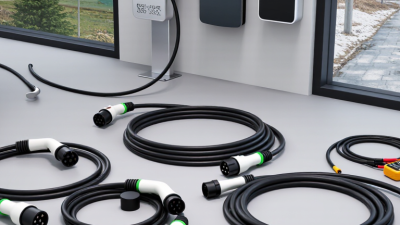
| Single-Phase AC Cable | IEC 62196 Type 2 or Type 1 | 16–32 A | Up to about 7.4 kW at 230 V | Home charging and overnight charging | Correct connector, vehicle compatibility, flexible insulation, and suitable cable length |
| Three-Phase AC Cable | IEC 62196 Type 2 | 16–32 A | Up to about 22 kW at 400 V | Public AC stations and vehicles with three-phase charging | Three-phase support at both the vehicle and charging point, adequate conductor size, and temperature resistance |
| Portable Mode 2 Charging Cable | Vehicle connector plus household or industrial plug | Typically 8–16 A, depending on the supply plug | Typically 1.8–3.7 kW | Travel, emergency charging, and locations without dedicated EV equipment | Built-in residual-current protection, adjustable current control, plug temperature monitoring, and weather resistance |
| High-Power DC Cable | CCS Combo 2, CCS Combo 1, or another region-approved DC standard | Commonly 125–500 A, depending on the system | Approximately 50–350 kW or higher in suitable systems | Rapid public charging and long-distance travel | Vehicle and station compatibility, liquid cooling where required, locking mechanism, cable weight, and thermal monitoring |
| Long-Reach AC Cable | Type 2 or Type 1, according to vehicle region | 16–32 A | Up to about 22 kW for three-phase use | Charging points with difficult parking positions | Low voltage drop, robust strain relief, manageable weight, and a suitable storage method |
| Evaluation Dimension | Recommended 2026 Standard | Why It Matters |
|---|---|---|
| Electrical Compatibility | Match the vehicle inlet, charging station, regional voltage, phase configuration, and current rating | A cable cannot deliver more power than the lowest-rated component in the charging system |
| Safety Protection | Compliant control-pilot communication, protective earth monitoring, over-temperature protection, and residual-current protection where applicable | These functions reduce the risk of overheating, electric shock, and incorrect charging |
| Weather Resistance | Outdoor-rated construction with an appropriate IP rating when specified by the manufacturer | Outdoor charging exposes the cable and connectors to rain, dust, temperature changes, and road debris |
| Thermal Performance | Low-resistance conductors, reliable contact pins, and temperature sensing for high-current applications | Stable thermal performance helps maintain charging speed and limits heat buildup |
| Durability | Flexible low-temperature insulation, reinforced strain relief, abrasion resistance, and corrosion-resistant contacts | Frequent bending, dragging, coiling, and exposure to sunlight can shorten cable life |
| Usability | Comfortable handle, manageable cable weight, clear current markings, and practical storage | A technically capable cable is less useful if it is difficult to handle or store |
| Certification and Compliance | Relevant IEC, SAE, regional electrical-safety, and vehicle-charging requirements | Verified compliance provides evidence that the cable has been designed and tested for its stated application |
| Length Selection | Use the shortest length that comfortably reaches the charging inlet without tension | Excess length adds weight and storage difficulty, while insufficient length can place stress on connectors |
Note: Actual charging power depends on the vehicle’s onboard charger, battery condition, charging station, supply voltage, cable rating, and local electrical regulations. The listed power values are typical theoretical limits and are not guaranteed charging speeds.