How to Choose a Portable Home EV Charger?
Choosing a Portable Home Ev Charger is not simply a matter of finding the lowest price. Your vehicle, household wiring, parking location, and charging habits all affect the right choice. A compact charger may fit neatly in a trunk, but its cable could feel too short beside a driveway outlet. Another model may charge faster, yet require electrical upgrades or a dedicated circuit.
EV charging expert Tom Moloughney often says, “The best EV charger is the one that fits your needs.” That practical view guides this article. We will examine charging speed, connector compatibility, power ratings, cable length, weather resistance, safety certifications, and warranty support. A 120-volt unit may suit occasional overnight charging. A 240-volt Portable Home Ev Charger can be better for daily driving, especially after a long commute. Check your car’s maximum AC charging rate first. More output does not always mean faster charging.
Small details matter. Look for clear temperature protection, leakage detection, sturdy plugs, and an easy-to-read display. UL or ETL certification can provide useful reassurance. Still, certification alone is not a complete buying decision. Reviews may reveal stiff cables, confusing controls, or weak customer service.
There is no perfect charger.
Your garage may stay dry, while your outdoor outlet faces rain and winter cold. I would not pretend every recommendation works everywhere. This guide helps you compare real conditions with product claims, so your final choice is safer, more practical, and easier to live with.
Identify Charger Levels: 1.4 kW Level 1 Versus 19.2 kW Level 2
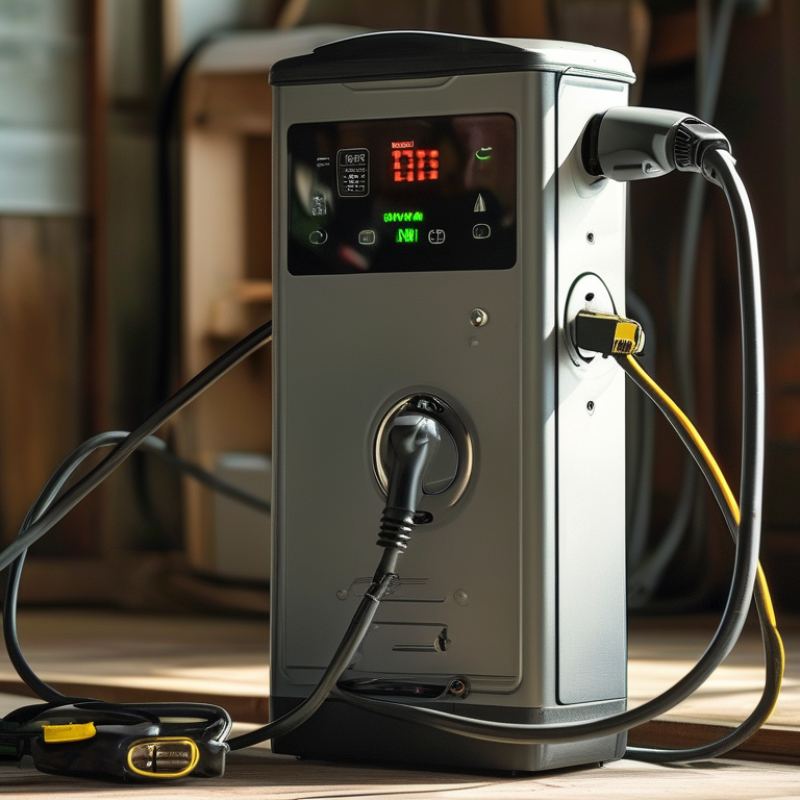
Choosing a portable home EV charger starts with its power level, not its cable length.
The U.S. Department of Energy’s Alternative Fuels Data Center lists Level 1 charging at about 1.4 kW. It normally uses a standard 120-volt household outlet. A compact Level 1 unit can add roughly 3 to 5 miles of range per hour, depending on vehicle efficiency. Overnight charging works well for short daily commutes. It is slow, though. A large battery may need more than 24 hours after a long trip.
Level 2 changes the daily routine.
The DOE identifies Level 2 equipment across a broad range, reaching 19.2 kW with a 240-volt, 80-amp circuit. SAE J1772 charging requirements support this higher-power category. In real homes, many portable units operate below 19.2 kW because the outlet, wiring, or vehicle limits current. A 7.2 kW setup may add about 25 to 30 miles per hour. Check the vehicle manual, circuit rating, and plug temperature during the first few sessions. Warm hardware deserves attention.
A portable Level 2 charger suits drivers who travel frequently or return home with low battery levels.
Level 1 may be enough for light use and simpler electrical setups. The faster option is not automatically better. Installation limits, charging schedules, and actual mileage matter more than the maximum number on the label. I would recheck the calculation before buying; advertised speed can feel optimistic beside a cold battery or a shared circuit.
Check Electrical Capacity: Apply the NEC 80% Continuous-Load Rule
How to Choose a Portable Home EV Charger?
Check Electrical Capacity: Apply the NEC 80% Continuous-Load Rule
A portable EV charger should match your home’s electrical capacity, not only your vehicle’s charging speed. Under the NEC, EV charging is usually treated as a continuous load because it may run for three hours or longer. The circuit should normally use no more than 80% of its breaker rating. For example, a 40-amp circuit generally supports a 32-amp continuous charging load. This calculation is only a starting point.
Check the panel’s total capacity, wire size, outlet rating, and charging voltage. Existing appliances may already consume significant power. A charger that appears suitable can still overload a circuit during peak household use. Heat, loose connections, or an aging outlet deserve attention. I once underestimated how much small household loads could matter. That was a useful correction.
Tips: Ask a qualified electrician to verify the circuit before buying. Confirm the breaker and wiring match the charger’s maximum current. Avoid relying on an extension cord or a warm, discolored outlet. Leave capacity for other appliances. Local rules may add requirements beyond the NEC, so check the current code adopted in your area. A lower charging current may be slower, but it can be the more responsible choice for an older electrical system.
How to Choose a Portable Home EV Charger? - Check Electrical Capacity: Apply the NEC 80% Continuous-Load Rule
| Single-Phase Circuit Voltage |
Breaker Rating |
Maximum Continuous Load at 80% |
Approximate Maximum Charging Power |
Typical Portable Charger Setting |
Electrical Capacity Check |
| 120 V |
15 A |
12 A |
1.44 kW |
8–12 A |
Suitable for low-power overnight charging when the circuit is dedicated and in good condition. |
| 120 V |
20 A |
16 A |
1.92 kW |
12–16 A |
Verify that no other continuous or high-load appliances share the circuit. |
| 240 V |
20 A |
16 A |
3.84 kW |
12–16 A |
Provides more charging power than 120 V at the same allowable current. |
| 240 V |
30 A |
24 A |
5.76 kW |
16–24 A |
Confirm receptacle type, wiring, overcurrent protection, and charger plug compatibility. |
| 240 V |
40 A |
32 A |
7.68 kW |
24–32 A |
A common capacity range for faster home charging, subject to load calculation. |
| 240 V |
50 A |
40 A |
9.60 kW |
32–40 A |
Requires a correctly sized circuit and a receptacle rated for the intended continuous load. |
| 240 V |
60 A |
48 A |
11.52 kW |
40–48 A |
May require hardwiring or specialized equipment; confirm service capacity before selection. |
Calculation basis: maximum continuous charging current = circuit breaker rating × 80%; approximate charging power = voltage × allowable continuous current. EV charging is generally treated as a continuous load under NEC requirements. Actual allowable current also depends on the service load calculation, conductor ampacity, receptacle rating, installation method, voltage drop, GFCI requirements, ambient conditions, and local code adoption. Do not increase charger current beyond the circuit rating; consult a qualified electrician when the circuit capacity is uncertain.
Confirm Compatibility: Compare J1772, NACS, Type 2, and CCS Connectors
How to Choose a Portable Home EV Charger?
Connector compatibility is the first detail to verify before buying a portable home EV charger. A J1772 connector commonly serves older and many current electric vehicles in North America. NACS connectors may support both AC home charging and DC fast charging, depending on the vehicle. In Europe and many other regions, Type 2 is widely used for AC charging. CCS connectors combine an AC connector with two additional DC pins. The CCS version must match the vehicle and charging network.
Check your vehicle’s inlet, not only the charger’s product photo. They can look surprisingly similar. I recommend comparing the owner’s manual with the charger specifications, then confirming whether an adapter is approved for that charging method. An adapter may change the shape, but it cannot always provide communication or safe current control. This is where many buyers become too confident.
Your home supply matters just as much. A charger with the correct connector can still be unsuitable for a weak outlet or undersized circuit. Check voltage, maximum amperage, grounding, and required protection such as residual-current detection. A qualified electrician should inspect fixed wiring before regular high-load charging. Portable does not mean risk-free. I once focused too heavily on connector names and overlooked the outlet rating; that mistake changed my checklist. Leave space for uncertainty, especially when the vehicle manual and charger instructions disagree.
How to Choose a Portable Home EV Charger?
Confirm the vehicle inlet, regional electrical supply, charging phase, and circuit capacity before selecting a portable charger.
The chart shows common nominal AC voltage classes for home charging. J1772 and NACS are commonly used with 120/240 V single-phase supplies in North America, while Type 2 and CCS with a Type 2 AC base may support 230 V single-phase or 400 V three-phase supplies in many European installations. CCS is primarily a combined DC fast-charging interface, so portable home AC charging compatibility depends on its Type 1 or Type 2 AC base. Actual charging power also depends on the vehicle, charger current rating, and household circuit.
Evaluate Safety and Portability: Seek GFCI, IP65 Protection, and Adjustable Amperage
A portable home EV charger should balance electrical safety with easy handling.
Look for built-in GFCI protection, which can help detect leakage and reduce shock risks. This feature matters near driveways, garages, and damp outdoor surfaces. Choose equipment with clear safety markings and instructions from recognized testing authorities. Do not assume every portable charger offers equal protection.
IP65 protection helps shield the charger from dust and low-pressure water jets. It does not make the unit waterproof. Keep connectors away from puddles, snow, and standing water.
Adjustable amperage is equally important. Lower the current when using an older outlet or a long extension-free cable run. Higher settings may shorten charging time, but they can stress unsuitable circuits. Check your outlet rating and household wiring before changing settings. An easy-to-read screen can prevent careless adjustments, especially at night.
Tips:
Test the GFCI function before regular use. Stop immediately if the charger, plug, or outlet feels unusually hot. Store the cable loosely, not in tight bends. A common driveway mistake is leaving the control box on wet ground. Portability is useful, but convenience can encourage rushed choices. Reflect on your actual parking space, weather, and outlet condition before buying.