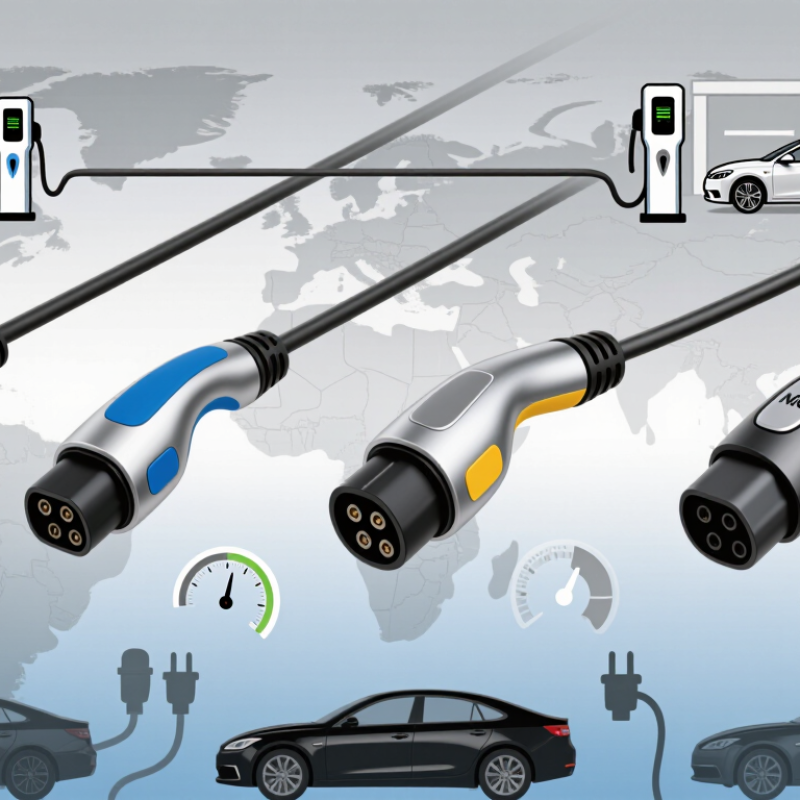
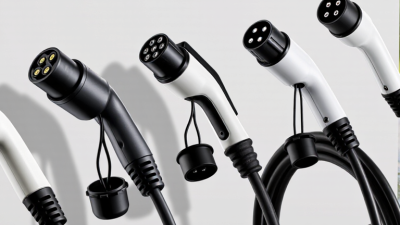
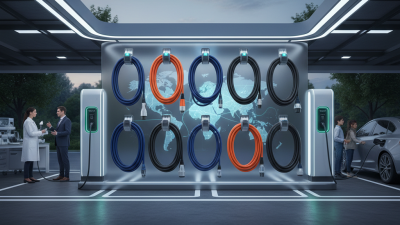
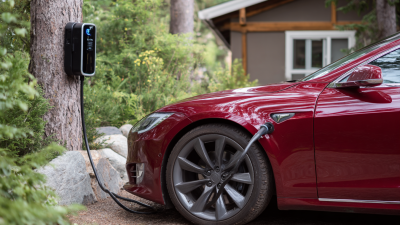
Choosing an Ev Charger Plug can feel confusing, especially when several connectors look almost identical. A plug is not merely a cable end. It affects charging speed, vehicle compatibility, safety, and installation cost. Type 1, Type 2, CCS, and NACS connectors serve different vehicles and charging systems. Regional standards also matter.
This guide explains how each plug works in practical terms. It connects technical details with real charging situations, such as parking overnight or stopping at a fast-charging station. A Type 2 connector may suit many European vehicles, while a NACS connector is common on selected North American models. CCS plugs combine AC charging pins with larger DC contacts. Small differences matter.
The safest choice begins with your vehicle manual and the charger’s specifications. Check the connector shape, charging phase, maximum amperage, and supported power. A plug that fits physically may still charge slowly or fail to communicate correctly. An adapter can help, but it does not automatically increase charging speed or remove electrical limits. That is an easy mistake to make.
Professional installation advice remains valuable, particularly for home chargers and high-current circuits. Certified electricians can assess wiring, protection devices, and local requirements. Manufacturer guidance should support that assessment. Online charts are useful, but they can oversimplify changing standards. This article aims to be clear and practical, while acknowledging one limitation: EV charging technology continues to change, so current vehicle and charger documentation should have the final word.
An EV charger plug is the physical connector between a vehicle and an electricity supply. It carries power, communication signals, and safety checks through separate contacts. The plug is not the charger itself. I once underestimated that difference. The wall unit controls current, while the vehicle may convert alternating current through its onboard charger. With direct current charging, conversion equipment outside the vehicle sends power more directly to the battery.
Connector choice depends on the vehicle inlet, regional standard, and charging speed. Type 1 and Type 2 connectors commonly support AC charging, while combined connectors add DC charging contacts. Some high-power systems use separate DC connectors designed for faster energy delivery. A compatible plug still does not guarantee maximum speed. Battery temperature, state of charge, cable rating, and vehicle limits can reduce actual power.
The International Energy Agency reported more than 4 million public charging points worldwide at the end of 2023, with public charger additions rising by about 40% that year. The U.S. Department of Energy also distinguishes Level 1, Level 2, and DC fast charging by voltage, equipment, and delivery method. Check the inlet label and vehicle manual before buying an adapter. Small details matter. An adapter may change physical fit, but it cannot create missing communication or power capacity. I still think plug selection is explained too simply online; electrical compatibility deserves more attention than appearance.
An EV charger plug is the connector linking a charging cable with the vehicle inlet. The plug type does not decide charging speed alone. Battery capacity, charger output, and vehicle limits also matter.
Regional standards vary. In Europe, Type 2 is common for AC charging, while CCS2 usually handles rapid DC charging. North America widely uses Type 1 for AC charging and CCS1 for DC charging, although the North American Charging Standard is expanding across newer vehicles and stations. China mainly uses GB/T connectors for both AC and DC charging. Japan commonly combines Type 1 AC charging with CHAdeMO DC charging. These differences can make cross-border travel inconvenient. Adapters help, but compatibility is never guaranteed.
Check the vehicle inlet first. Then confirm the station’s connector and rated power. The International Energy Agency’s Global EV Outlook 2024 reported more than four million public charging points worldwide at the end of 2023, with about 1.3 million added during that year. The U.S. Department of Energy’s Alternative Fuels Data Center also tracks rapid growth in public equipment, but availability remains uneven between urban and rural areas. A familiar plug may still lead to a slow session. That is easy to miss. Standards are evolving, and published compatibility lists can become outdated. For regular charging, match the regional plug, vehicle inlet, and electrical rating before buying a cable.
Main EV charger plug types and their typical regional uses
The chart uses a regional prevalence index from 0 to 3, where 0 means the connector is not typical in that region and 3 means it is widely used. Type 1 is common for AC charging in North America and Japan, while Type 2 is dominant in Europe. GB/T is the main charging standard in China. CCS1 is mainly used in North America, CCS2 is common in Europe and many other markets, and CHAdeMO is strongly associated with Japan and some earlier fast-charging networks.
What Is an EV Charger Plug and Which One Do You Need?
An EV charger plug connects your vehicle to an AC or DC charging source. The plug standard affects compatibility, but it does not decide speed alone. On household AC charging, common standards support roughly 3.7 to 22 kilowatts. Your car’s onboard charger may accept less than the station provides. A 22-kilowatt post cannot force a 7-kilowatt vehicle to charge faster.
DC charging bypasses the onboard charger and sends power directly to the battery. Some DC standards commonly deliver 50 kilowatts, while newer high-power systems can exceed 150 kilowatts. Actual speed changes with battery temperature, state of charge, cable limits, and station output. Charging often slows sharply after the battery reaches about 80 percent. That final portion may take longer than expected. I once treated the advertised peak as a normal speed; that assumption was wrong.
Tips: Check your vehicle manual before choosing a cable or station. Match the plug standard, power rating, and charging location. Use AC for overnight charging and DC for longer trips. Inspect the connector for moisture, cracks, or heat marks. A loose fit can interrupt charging. Also, compare the station’s rated power with your vehicle’s maximum intake. The lower figure usually controls the session. Temperature matters too, especially during very cold mornings. Real charging data is more useful than a large number on a sign.
Matching a charger plug to an electric vehicle starts with the car’s inlet, not the cable’s appearance. AC charging commonly uses Type 1 or Type 2 connectors, depending on the region and vehicle design. DC fast charging uses dedicated high-power connectors, often combining AC contacts with two larger DC pins. Check the vehicle manual, inlet label, and charging-port diagram together. A plug chart is not enough.
The charger’s electrical rating must also match the vehicle. A car accepting 7.4 kW cannot charge faster from an 11 kW AC station. Single-phase and three-phase systems can also change charging performance. At home, inspect the socket, circuit protection, cable length, and maximum current before buying equipment.
The International Energy Agency reported more than four million public charging points worldwide by the end of 2023, with additions rising by nearly 40% that year. More choice can mean more confusion.
Adapters need careful judgment. They should support the correct voltage, current, communication protocol, and safety certification. Never assume a physical fit guarantees safe charging. The U.S. Department of Energy’s Alternative Fuels Data Center separates AC Level 1, AC Level 2, and DC fast charging because their power requirements differ significantly.
In practical checks, I would photograph the car inlet and charger label before ordering. I have seen compatibility advice fail when it ignores regional wiring. Recheck everything.
An EV charger plug is the connector between your vehicle and charging equipment. It is not always interchangeable. The International Energy Agency reported more than 4 million public charging points worldwide by the end of 2023. Yet connector standards still vary by region, vehicle, and charging speed. Check your vehicle manual first. Confirm the plug shape, current rating, and charging type. A perfect-looking connector can still be electrically incompatible.
Before buying, inspect your home supply and installation location. The U.S. Department of Energy identifies Level 1 charging as typically 120 volts, while Level 2 commonly uses 240 volts. Level 2 can charge faster, but it may require a dedicated circuit, suitable wiring, and professional inspection. Check the panel capacity, cable length, outdoor protection, and residual-current safety. The plug should match the charger, vehicle inlet, and local electrical requirements. Do not rely on an adapter without verifying its rated load.
Small details matter. Measure the distance to the parking space. Check whether rain, snow, dust, or direct sunlight will reach the connector. IEC 62196 and SAE J1772 provide useful technical references, but regional rules still control installation. Smart load management may prevent household circuits from becoming overloaded. It sounds simple. It is not always. Buyers often focus on charging speed and overlook heat, cable weight, or future vehicle compatibility. A qualified electrician should verify the final setup before daily use.
| Plug or Connector Standard | Charging Type | Typical Electrical Supply | Common Rated Power Range | Typical Application | Where It Is Commonly Used | What to Check Before Buying | Important Limitations |
|---|---|---|---|---|---|---|---|
| Type 1 / J1772 | AC charging | Single-phase, approximately 120–240 V AC | About 1.4–19.2 kW, depending on voltage, current, and vehicle limits | Home and workplace AC charging for compatible vehicles | North America, Japan, and selected other markets | Confirm that the vehicle has a Type 1 inlet and that the charger uses the correct current rating and electrical plug for the installation. | It is an AC connector only. DC fast charging requires a compatible combined DC connector or a separate DC inlet. |
| Type 2 / IEC 62196-2 | AC charging | Single-phase or three-phase, commonly 230 V AC | Typically 3.7–22 kW for AC charging; the actual limit depends on the vehicle and circuit | Residential, workplace, and public AC charging | Europe, Australia, New Zealand, and many other regions | Check whether the vehicle inlet and charging cable are Type 2, whether single-phase or three-phase charging is supported, and whether the electrical service can supply the selected current. | A Type 2 inlet does not automatically mean that the vehicle can accept three-phase power or 22 kW. |
| CCS1 | AC and DC charging | AC section based on Type 1; DC supply from a dedicated fast-charging station | AC power varies by vehicle; DC charging commonly ranges from approximately 25 kW to more than 200 kW | Combined home, public AC, and public DC charging for compatible vehicles | Primarily North America and selected markets | Confirm that the vehicle has a CCS1 inlet, verify the station's DC voltage and current range, and check whether the vehicle supports the advertised DC charging rate. | High DC power requires suitable thermal management, cable cooling where applicable, and a properly rated charging station. |
| CCS2 | AC and DC charging | AC section based on Type 2; DC supply from a dedicated fast-charging station | AC power varies by vehicle; DC charging commonly ranges from approximately 25 kW to 350 kW | Combined AC and DC charging for compatible vehicles | Europe, Australia, New Zealand, and many other regions | Check the vehicle inlet, charging station connector, DC voltage range, maximum current, and the vehicle's maximum DC acceptance rate. | The station's maximum output is not the same as the vehicle's charging speed. Battery temperature and state of charge can reduce power. |
| GB/T AC | AC charging | Single-phase or three-phase AC, commonly around 220–380 V | Commonly up to approximately 7 kW for single-phase or 22 kW for three-phase installations | AC charging for compatible vehicles | China and vehicles or equipment designed for that market | Confirm that both the vehicle inlet and the charging equipment use the GB/T AC standard and that the local electrical supply matches the equipment rating. | It is not mechanically interchangeable with Type 1 or Type 2 without approved, standard-compliant equipment. |
| GB/T DC | DC fast charging | Dedicated DC charging-station output | Power varies widely by vehicle and station; many systems operate from tens of kilowatts to well above 100 kW | Public DC fast charging for compatible vehicles | China and vehicles or equipment designed for that market | Check the vehicle's DC inlet, station voltage and current range, connector compatibility, and communication protocol support. | Adapters are not universally compatible and must support the required electrical and communication functions. |
| North American compact AC/DC connector standard | AC and DC charging | AC supply for normal charging; dedicated DC output for fast charging | AC output commonly up to approximately 19.2 kW; DC output varies from low-power fast charging to more than 250 kW | Vehicles designed with a compact combined AC/DC inlet | North America and selected newer vehicle or charging deployments elsewhere | Verify the exact vehicle inlet, charging-network compatibility, connector approval for the region, and the maximum AC and DC rates supported by the vehicle. | Connector availability and public-station compatibility can vary by vehicle model, model year, software, and adapter approval. |
| Portable Mode 2 charging cable | AC charging | Standard household outlet or approved industrial outlet | Usually about 1.4–3.7 kW from a household outlet; higher values require a correctly rated circuit | Occasional or emergency charging when a dedicated wall charger is unavailable | Most regions, with the correct local mains plug | Check outlet condition, continuous current rating, residual-current protection, cable temperature monitoring, and whether the outlet is dedicated to EV charging. | Charging is slow. Avoid extension cords, multi-socket adapters, or damaged outlets unless specifically permitted by the equipment instructions and local regulations. |
| Fixed wall charger / Mode 3 | AC charging | Dedicated circuit, commonly 208–240 V AC or 230 V AC; some installations support three-phase power | Commonly 3.7–22 kW | Regular home, apartment, workplace, and fleet charging | Worldwide, with region-specific connector and electrical requirements | Check service capacity, breaker size, cable routing, grounding, residual-current protection, load management, outdoor rating, and installer qualifications. | The charger cannot exceed the vehicle's onboard AC charger limit. Installation may require an electrical upgrade. |
| DC fast charger / Mode 4 | DC charging | Three-phase AC input to the charging station, converted to regulated DC output | Commonly 25–350 kW, depending on station design and vehicle capability | Highway, fleet, destination, and public rapid charging | Worldwide, using region-specific DC connector standards | Check DC connector type, voltage and current range, installation capacity, grid connection, cooling requirements, accessibility, and payment or communication functions. | It is generally unsuitable for ordinary residential installation because of high power demand, cost, space, and permitting requirements. |
| Vehicle compatibility | AC or DC, depending on the inlet | Must match the vehicle's voltage, current, connector, and communication requirements | Limited by the lowest-rated component in the charging system | Any EV or plug-in hybrid charging installation | All markets | Read the vehicle manual or inspect the inlet. Confirm connector standard, maximum AC power, maximum DC power, charging phase, and approved adapters. | A plug that fits physically may still be electrically or electronically incompatible. |
| Electrical capacity | Primarily AC installation planning | Depends on supply voltage, available amperage, phase configuration, and local electrical rules | Approximate single-phase relationship: power in kW = voltage × current ÷ 1,000 | Home, workplace, and fleet charger selection | All markets | Check the main service rating, spare capacity, circuit length, conductor size, breaker, voltage drop, grounding, and whether dynamic load management is needed. | Increasing charger amperage without verifying the circuit can create overheating, nuisance trips, or fire risk. |
| Outdoor installation | AC or DC charging | Must be protected against moisture, dust, impact, and temperature extremes | Use the equipment's certified operating range | Driveways, car parks, commercial sites, and public locations | All markets | Check enclosure protection rating, cable storage, UV resistance, drainage, mounting height, impact protection, residual-current protection, and local weather conditions. | Do not install indoor-only equipment outdoors or place connectors where they can sit in standing water. |
| Cable length and handling | AC or DC charging | Not an electrical supply specification, but it affects installation and usability | Common cable lengths are approximately 4–7.5 m, depending on equipment design | Home, workplace, and public charging | All markets | Choose enough length to reach the vehicle inlet without excessive slack. Check cable weight, bend radius, storage hooks, and trip hazards. | An excessively long or heavy cable may be harder to manage and can experience greater voltage drop if not correctly designed. |
| Final selection rule | Choose by compatibility first | Vehicle inlet + charging standard + available electrical supply | Select the lowest maximum rating among the vehicle, cable, charger, circuit, and site supply | Reliable and safe charger installation | All markets | Match the connector standard, confirm vehicle charging limits, obtain an electrical assessment, and use equipment approved for the installation location. | Higher advertised power does not guarantee faster charging and does not replace professional electrical design. |