Leave Your Message

Why Choose a Level 2 Charger for Faster EV Charging?

A Level 2 Charger can turn an ordinary overnight parking space into a useful daily charging point. The U.S. Department of Energy’s Alternative Fuels Data Center estimates that Level 2 equipment typically adds about 10–20 miles of range per hour, compared with roughly 2–5 miles for Level 1. That difference matters when a car arrives home nearly empty and leaves again before sunrise.

The International Energy Agency’s Global EV Outlook 2024 documents the continued growth of electric-vehicle adoption and charging needs. But faster charging is not automatically better for every household. EV charging specialist Tom Moloughney’s practical guidance is to match charger capacity to the vehicle, available electrical service, and real driving routine. A 40-mile commute and a long overnight parking window may need less hardware than the charger’s maximum rating suggests. Check the details.

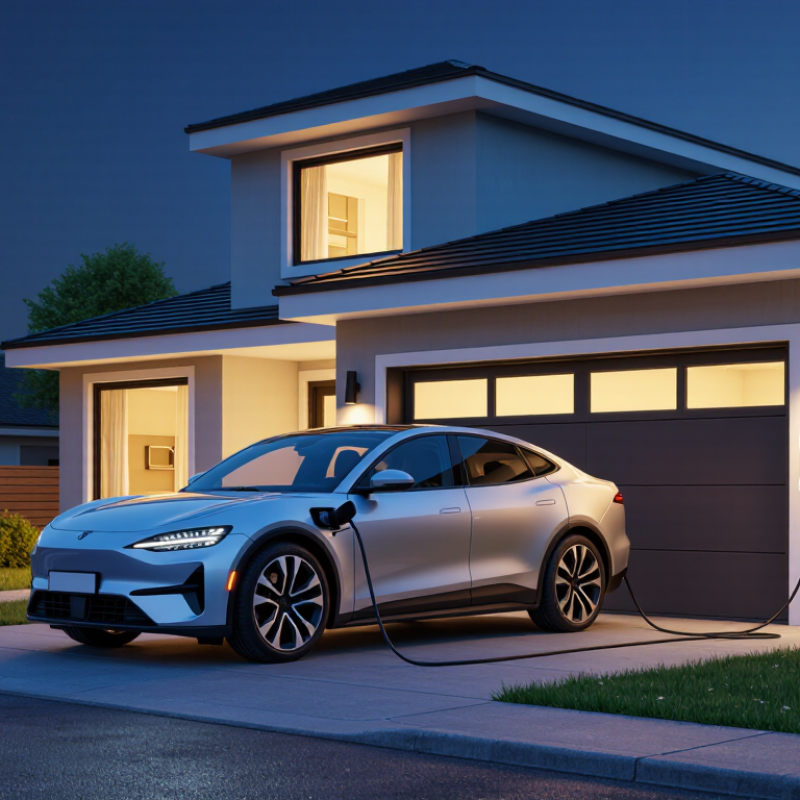
A Level 2 Charger can also make charging more predictable: plug in after dinner, then start the day with more range. Installation conditions, vehicle limits, and charging schedules all affect results. A qualified installer can assess the home’s electrical capacity before equipment is selected. The numbers help, but they do not tell the whole story. A charger that suits one garage may be an awkward fit in another. That is worth considering before choosing speed alone.
Why Choose a Level 2 Charger for Faster EV Charging?

What Defines a Level 2 EV Charger?

A Level 2 EV charger is an AC charging system that typically uses a 208- or 240-volt supply in North America. The U.S. Department of Energy’s Alternative Fuels Data Center identifies this voltage range as a defining feature. Unlike DC fast charging, Level 2 equipment sends alternating current to the vehicle, where its onboard charger converts it for the battery. The charger’s label alone does not determine speed. Your vehicle’s onboard charger and the electrical circuit also set the limit.

The AFDC reports that Level 2 charging can typically take about four to ten hours, depending on the vehicle and battery. That broad range matters: a compact EV plugged in overnight may be ready by morning, while a larger battery may need longer. One detail is easy to overlook. Cold weather and a nearly full battery can also slow charging, so advertised rates are not guaranteed in every situation.

Tips: Check your vehicle manual for its maximum AC charging rate before choosing equipment. Confirm the outlet and circuit can support the charger’s rated current; a qualified electrician can assess the installation. Keep the cable within easy reach of the parking spot. Small practical details matter.

Why Choose a Level 2 Charger for Faster EV Charging? — What Defines a Level 2 EV Charger?
Feature Level 1 Charging Level 2 Charging DC Fast Charging
Power source 120 V AC in North America 208 or 240 V AC in North America AC electricity is converted to DC by the charging station
Typical power About 1.2–1.9 kW, depending on current Commonly about 3.3–11.5 kW; some installations and vehicles support higher power Often about 50–350 kW, subject to the station and vehicle limits
How charging works The vehicle’s onboard charger converts AC power to DC for the battery The vehicle’s onboard charger converts AC power to DC; its capacity can limit charging speed The station supplies DC power directly to the vehicle’s battery system
Approximate range added per hour About 3–5 miles (5–8 km) About 10–30 miles (16–48 km) Potentially hundreds of miles (kilometres) per hour under suitable conditions
Typical charging setting Overnight charging when daily driving needs are modest Home, workplace, and public destination charging Highway stops and situations requiring a rapid charge
Installation considerations Often uses a suitable standard household outlet Usually requires a dedicated circuit and installation by a qualified electrician Requires specialized, high-power electrical equipment and site infrastructure
Why choose it? A simple option when slower charging is sufficient Much faster than Level 1 and practical for regular overnight or destination charging Best suited to fast top-ups during longer trips; generally less convenient for routine home use
Important note Charging speed varies with the vehicle’s onboard charger or DC charging capability, battery state of charge, temperature, electrical supply, and charging-station output. Range estimates are approximate and depend on vehicle efficiency.

How Level 2 Charging Delivers Power Faster

Level 2 charging delivers power faster by using a higher-voltage AC supply than a standard household outlet. In many North American homes, that means a 208–240-volt circuit. The charger sends AC power to the vehicle, where its onboard equipment converts it for the battery. More available power can add driving range in less time. The exact rate depends on both the charger and the car’s onboard charger.

Picture plugging in after a commute and waking to a much fuller battery. That convenience is real, but advertised charging rates are not guarantees. A vehicle may accept less power than the charger can provide, and charging often slows as the battery fills. Cold weather can slow it too. It is easy to overestimate what a faster charger will change; your daily routine and vehicle limits matter just as much. A qualified electrician can check whether your home’s wiring and circuit can support installation.

Tips: Check your vehicle’s maximum AC charging rate before choosing a charger. Use a dedicated, properly installed circuit, and keep the connector dry and unobstructed. Track a few charging sessions. Real results may differ from the estimate.

Which EVs and Homes Can Use Level 2 Charging?

Level 2 charging can suit most plug-in vehicles that accept AC charging, including many battery-electric cars and plug-in hybrids. The connector must match the vehicle, or a compatible adapter must be approved for that setup. Check the owner’s manual before buying equipment. A car’s onboard charger sets the maximum AC charging rate, so a higher-rated home unit may not make every vehicle charge faster. Plug-in hybrids often have smaller batteries and may gain less from a high-power unit.

A home needs a suitable 208- or 240-volt supply, depending on the region, and enough electrical capacity for the charger. An electrician can check the panel, wiring, and proposed circuit. This matters in older houses, where the panel may already be near its limit. Not every outlet will work. A dedicated circuit and properly installed equipment are typically needed; some homes may require electrical upgrades. People in apartments or shared housing also need reliable access to a suitable parking space and permission to install equipment. The details are easy to underestimate: cable reach, weather exposure, and where the car parks affect daily use. A careful site check can prevent an expensive mismatch.

How a Level 2 Charger Fits Everyday Driving

A Level 2 charger suits everyday driving because it can replenish a typical day’s travel while the car sits at home. The Federal Highway Administration’s 2022 National Household Travel Survey reports average daily travel of roughly 30 miles per person. The U.S. Department of Energy’s Alternative Fuels Data Center says Level 2 charging can add about 10 to 20 miles of range per hour. So an overnight connection may cover routine errands and commuting. No daily detour.

The convenience is easy to picture: park in the driveway after work, connect the cable, and start the next morning with more range. Drivers can set a charging schedule to match their routine and, where available, their utility’s off-peak hours. But charging speed varies with the vehicle, temperature, and battery level. A busy week or a cold snap can change the plan. It is worth checking your own energy use instead of assuming every night will fully recharge the battery.

Tips: Track your daily miles for a week, then compare them with your vehicle’s charging rate. Keep the cable path clear and check the connector regularly. Leave extra time before a long trip; home charging is convenient, not instant.

What to Consider Before Choosing a Level 2 Charger

Before choosing a Level 2 charger, check how much range you actually use each day. The U.S. Department of Energy’s Alternative Fuels Data Center says Level 2 equipment typically adds about 10–20 miles of range per hour. That can replenish a weekday commute overnight. It may be more power than a low-mileage driver needs, though.

Your home’s electrical supply matters just as much. Level 2 units use 208- or 240-volt circuits, and installation may require a dedicated circuit or panel work. Ask a qualified electrician to assess available capacity and estimate installation costs before buying. A charger’s advertised output is not the whole story: the vehicle’s onboard charger can limit how quickly its battery accepts power. Check both ratings.

Think about the parking spot, too. Measure the distance from the electrical panel to the car, and make sure the cable reaches without stretching across a walkway. For outdoor parking, verify the unit is rated for the conditions where it will be mounted. Wi-Fi schedules can help shift charging to quieter hours, but they add little value if the signal drops in the garage. I would not pay extra for features I’m unlikely to use. That judgment can change with a new car or routine.