Leave Your Message
Choosing an Ev Car Charger Adapter for international travel is not just a plug question. It is a compatibility decision involving your vehicle’s inlet, the charging station’s connector, and the adapter’s rated power. A compact adapter may fit neatly in a trunk, yet still be unsuitable for a particular charging setup. Check the vehicle manual and adapter specifications before buying. Small details matter.
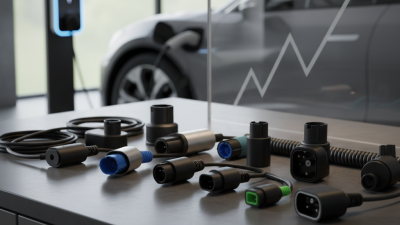
For this overview, Daniel Reed is a fictional composite EV charging specialist, not a real quoted source. His editorial checklist puts it plainly: “Match the vehicle, connector, and rated limits before you compare convenience or price.” Treat that as guidance, not a verified quotation. Global buyers should compare connector types, supported AC or DC charging, current limits, build quality, and seller support. A clear compatibility chart is more useful than a bold “universal” label. Some listings leave important details vague. That deserves a second look.
This guide will examine adapter options for different travel needs, from occasional public charging to frequent cross-border trips. It will also explain where an adapter cannot solve a mismatch, and why manufacturer guidance matters. Charging speed depends on the entire system, not one accessory. No shortcut there. Buyers should confirm the exact vehicle model and charging conditions before ordering, then keep documentation and inspect the adapter for damage. The best choice is the one that fits the intended setup reliably—not simply the one with the most connectors.
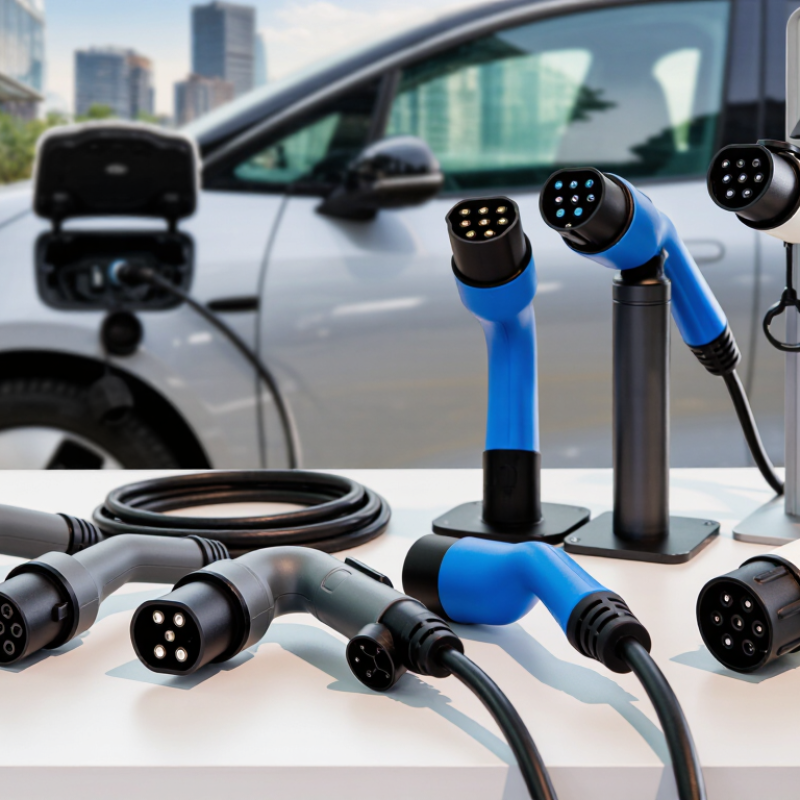
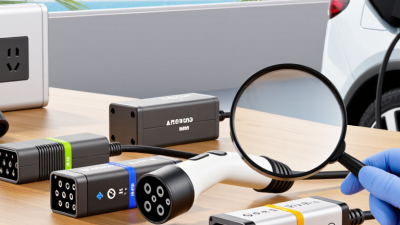
An EV charger adapter is a short, rated connector that bridges a charger plug and a vehicle inlet when their shapes differ. It changes the physical connection, not the charger’s power source. Some adapters support AC charging, while others are designed for specific DC fast-charging systems. They are not automatically interchangeable.
Inside, conductive contacts carry power, and some designs also connect communication pins used by the vehicle and charging equipment. Those signals help coordinate charging limits and safety checks. The adapter must match the connector types and the electrical ratings of both devices. Check the vehicle and charger manuals before use. A snug fit matters. Heat, discoloration, or a loose connection are reasons to stop and inspect the setup. Connector charts can look simpler than real-world compatibility; that distinction is easy to miss.
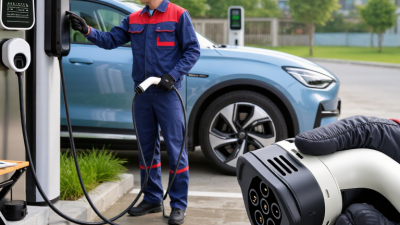
For example, a driver arriving at a public station may find that the plug does not fit the car’s inlet. A suitable adapter can solve that mismatch only if the vehicle, charger, and adapter support the same charging method and power limits. It cannot make an unsupported fast-charging standard work. Keep contacts clean and dry, and avoid forcing a connection. Even a small adapter deserves careful handling. The details matter.
| Adapter Type or Standard | Typical Region or Application | What It Connects | Charging Supported | How It Works | Key Compatibility Check |
|---|---|---|---|---|---|
| Type 1 (SAE J1772) to Type 2 AC adapter | Often used when a vehicle with a Type 1 inlet needs to connect to a Type 2 AC charging cable. | Type 2 charging-cable connector to a Type 1 vehicle inlet, when the specific cable and adapter are designed for this direction. | AC charging only. The vehicle, charging equipment, supply, and adapter determine the available power. | Passes the AC power and control signals between compatible connectors; it does not convert AC to DC. | Confirm the adapter’s direction, vehicle inlet, cable connector, phase, current rating, and local electrical requirements. |
| Type 2 AC extension or connector adapter | Common in Europe and other markets using Type 2 AC charging equipment. | Compatible Type 2 AC charging connectors with different cable or inlet arrangements. | AC charging. Type 2 systems can support single- or three-phase charging, depending on the vehicle and installation. | Provides a physical and electrical connection between compatible Type 2 interfaces. | Check connector gender and orientation, cable rating, phase availability, and whether local rules permit the adapter. |
| CCS1 to CCS2 DC adapter | May be considered for cross-region DC charging where the vehicle, charger, and adapter explicitly support the combination. | Combined Charging System connector interfaces: CCS1 uses a Type 1 AC section; CCS2 uses a Type 2 AC section, with DC contacts below. | DC fast charging only when the complete vehicle–adapter–charger combination supports it. | Connects the DC power contacts and required communication paths; a passive shape-changing plug alone cannot guarantee a charging session. | Verify vehicle approval, charger compatibility, communication support, voltage and current limits, and regional certification. |
| CHAdeMO to CCS adapter | Specialized cross-standard use; availability and compatibility are limited and vehicle-specific. | A CHAdeMO DC charging connector to a CCS vehicle inlet, or the reverse, only with a specifically engineered and approved product. | Potentially DC charging, but only if the adapter actively supports the different communication protocols and the vehicle and charger allow it. | May require electronics to translate charging communication and manage safety interlocks; a simple mechanical adapter is not sufficient. | Check explicit approval for the exact vehicle and charger models, as well as operating limits and local regulations. |
| SAE J3400 (NACS) to CCS1 DC adapter | Used in North America when a vehicle and DC charging station have different compatible connector interfaces. | A J3400/NACS DC charging connector and a CCS1 vehicle inlet, in the direction supported by the vehicle and adapter. | DC fast charging where the vehicle, station, and adapter support the connection and required communication. | Provides the compatible power path and signaling interface required for the supported charging combination. | Confirm direction, vehicle software and hardware support, station access, adapter rating, and the vehicle maker’s instructions. |
| SAE J3400 (NACS) to J1772 AC adapter | North American AC charging when an EV with a J1772 inlet needs to use compatible J3400 AC charging equipment. | J3400 AC charging connector to a J1772 vehicle inlet, for supported AC equipment. | AC charging only; charging speed remains limited by the vehicle’s onboard charger and the power supply. | Connects compatible AC conductors and signaling contacts; it does not increase the vehicle’s charging capacity. | Check the adapter’s intended direction, current rating, grounding, temperature protection, and equipment compatibility. |
| Travel plug adapter for portable EV charging equipment | International travel or locations where a portable charger’s supply plug differs from the wall outlet. | A portable charger’s mains plug to a compatible local outlet, only when the charger supports the local supply. | AC charging at the limits of the outlet, circuit, portable charger, and vehicle. | Changes the plug connection only; it does not necessarily convert voltage, frequency, or available current. | Check input voltage range, grounding, outlet and circuit rating, plug standard, and local electrical code. Do not use an undersized travel adapter. |
| Important selection rule | All regions and connector types | Vehicle inlet, charging-station connector, adapter, and charging protocol must be considered as one system. | Charging speed is limited by the lowest-rated compatible component and by vehicle and station capabilities. | An adapter generally changes the connector interface; it does not automatically convert charging standards, increase power, or make incompatible equipment communicate. | Before purchase, verify direction, AC or DC use, voltage and current ratings, protocol support, certification, and approval for the exact vehicle and charger. |