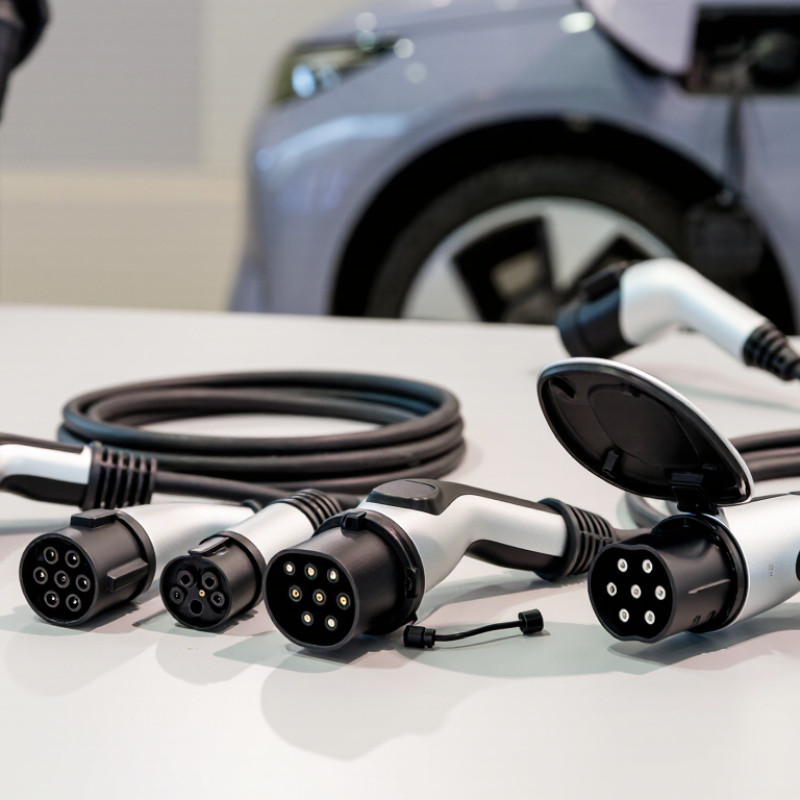
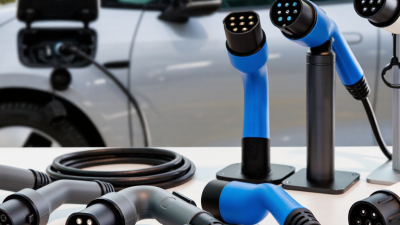
Choosing a Charger Ev Adapt product for global buyers is not just a matter of matching plug shapes. The adapter must suit the vehicle, the charging station, and the intended charging speed. A connector can appear compatible yet still fail to support the car’s charging protocol. Small details matter: pin layout, cable rating, build quality, and clear product documentation.
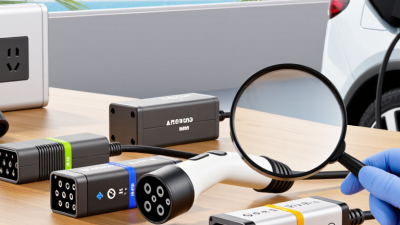
This guide examines what buyers should check before choosing an adapter made in China. It considers compatibility claims, materials, testing records, warranty terms, and supplier communication. A reliable seller should explain which vehicle and charger combinations have been verified. Ask for specific model details, not a broad promise that an adapter works “worldwide.” That wording is too vague.
No source material was provided with a verified expert’s name or quotation, so I will not invent either. That matters. A false attribution would weaken buyer confidence, not strengthen it. Global use also brings real variation in charging standards and equipment, so no single adapter fits every situation. Buyers should confirm compatibility with their vehicle and charger documentation before purchase. The guide offers practical checks, while recognizing that product listings can leave important questions unanswered.
An EV charger adapter is a device that connects two different plug types. It may let an electric vehicle connect to a charging cable or station with a compatible electrical interface. It does not create power or make incompatible equipment safe. A physical fit is only one part of compatibility.
Inside, metal contacts carry current between the connectors, while the housing helps shield them from touch and impact. Some charging systems also exchange control signals before charging begins. The adapter must suit the connector design, current rating, and communication method on both sides. That detail is easy to miss.
Tips: Check the vehicle inlet and charger connector before buying. Compare voltage and current ratings, and confirm the relevant charging standard. Keep contacts dry, and inspect them for looseness or discoloration. Stop using the adapter if it becomes unusually hot. Reading the manual can feel repetitive, but it matters.
For global buyers, check compatibility with the exact vehicle and charging equipment, not just the country. Charging standards can vary within a region, and household outlets have their own limits. Look for clear specifications, test information, and instructions from a traceable supplier. If details are unclear, ask a qualified installer. Adapters are useful, but they are not universal.
Global buyers should compare the vehicle inlet, charger connector, and charging protocol—not just the adapter’s visible shape. China’s GB/T 20234 family covers AC and DC connectors, while many overseas vehicles use Type 1 or Type 2 for AC. For DC charging, buyers may encounter GB/T, CCS1, CCS2, or CHAdeMO. They are not automatically interchangeable.
Small details matter. Check rated voltage, current, power, and whether the adapter supports the charger’s communication handshake. A passive adapter may change the physical connection but cannot necessarily translate charging protocols. The International Energy Agency’s Global EV Outlook 2024 reports that public charging points grew by over 40% worldwide in 2023; fast chargers grew by 55%. That expansion makes cross-standard compatibility more relevant, but it also increases the chance of confusing connector availability with actual compatibility.
A common buying mistake is treating plug shape as proof of fit. It is an understandable shortcut, but an incomplete one. Confirm the vehicle’s charging limits and the charger’s output before purchase, especially for DC fast charging. Also verify whether the adapter is designed for the specific standard pair and operating conditions. The comparison is not always tidy. Check the technical documentation, not only product photos.
Global buyers should start with the exact vehicle inlet and charging-equipment connector, not a product photo. Confirm whether the setup uses AC or DC charging, then compare connector type, voltage, current, and phase requirements. Check the vehicle manual and charger documentation. An adapter usually changes the physical connection; it does not convert power or guarantee compatible communication. A perfect fit is not enough.
Inspect the housing, contact pins, cable strain relief, and weather seals. Look for clear ratings and test documentation relevant to the destination market. Certification marks should be verifiable, not just printed on a label. A glossy shell proves little. Ask whether the adapter is designed for the specific connection direction and charging use. Avoid stacking adapters, since extra connections can increase resistance and heat.
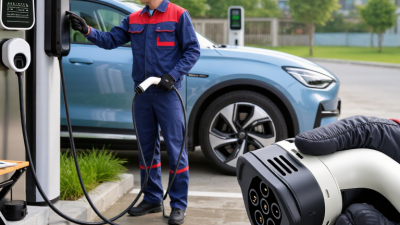
Before regular use, check that the connector seats firmly without force and that the vehicle reports normal charging. Stop if you notice warning messages, unusual heat, discoloration, or a burning smell. These checks are practical, but they cannot replace proper electrical testing. I might still miss a detail on a first inspection; a qualified installer can help confirm a doubtful setup.
Global buyers should treat an EV charger adapter as a tested electrical interface, not a simple plug converter. The IEA’s Global EV Outlook 2024 reports nearly 4 million public charging points worldwide in 2023, over 40% more than in 2022. More charging options also mean more connector combinations. Compatibility is not automatic. Check the vehicle inlet and charger output, including AC or DC type, voltage, continuous current, and pin mapping.
Look for test reports covering relevant standards, such as IEC 62196 for plugs and vehicle connectors and IEC 61851 for conductive charging systems. Required conformity marks vary by destination market, so confirm that documentation applies where the adapter will be used. A tidy label is not proof. Check for clear ratings, suitable insulation, secure locking, and evidence of protection against overheating. For outdoor use, review the stated IP rating and temperature range. Small details matter.
Tips: Ask the supplier for reports from a qualified testing body, not just a certificate image. Confirm whether the adapter supports the charger’s full rated current continuously. If the documentation is vague about pin mapping or operating limits, pause before buying. An adapter may look compatible and still be unsuitable.
| Check Area | What Buyers Should Verify | Relevant Standards or Evidence | Why It Matters |
|---|---|---|---|
| Connector and charging standard | Confirm the connector at both ends and whether the adapter is for AC or DC charging. Common systems include Type 1 and Type 2 for AC; CCS1, CCS2, CHAdeMO, GB/T, and SAE J3400 (NACS) for different markets and vehicles. | Check the applicable connector standard, such as IEC 62196 for many IEC-style connectors, SAE J1772 for North American charging interfaces, SAE J3400 for NACS, and the applicable GB/T or CHAdeMO specifications. | A matching physical plug does not by itself guarantee that the vehicle, adapter, and charger can communicate or operate together. |
| Vehicle and charger compatibility | Ask for a compatibility list that identifies both the vehicle inlet and the EVSE connector, plus the supported charging mode. For DC adapters, confirm that the vehicle and charger support the required communications and adapter arrangement. | Obtain written compatibility information from the vehicle or charging-equipment manufacturer where available. Confirm the adapter is intended for the specific charging direction and use case. | DC fast charging involves control and communication requirements; a simple passive connector change may not be sufficient. |
| Electrical ratings | Check rated voltage, current, AC or DC use, phase configuration where relevant, and the rating of each connector and cable. The usable limit must not exceed the lowest-rated part of the complete charging setup. | Look for ratings marked on the product and in its technical datasheet. Request test evidence for the stated continuous operating current and voltage. | An adapter cannot increase the capability of the vehicle, charger, or electrical supply. Exceeding the lowest applicable rating can cause overheating or failure. |
| Safety certification and market access | Check which approvals or conformity requirements apply in the destination market and whether they cover the adapter itself—not only a charger or individual connector component. | In the US and Canada, look for an applicable certification or listing from an accepted testing organization, such as an NRTL, against relevant product standards. In the EU, request the applicable Declaration of Conformity and supporting documentation; CE marking is a manufacturer’s conformity mark, not a third-party certification. UK requirements should be checked separately. | Requirements depend on product type and sales market. A logo or certificate for a different product category does not establish that the adapter complies. |
| Connector and coupler safety | Verify that the plugs, vehicle connectors, inlets, and couplers are designed and tested for their intended EV charging use, including contact retention and electrical safety. | Relevant standards may include IEC 62196 for charging plugs, socket-outlets, vehicle connectors, and inlets, or UL 2251 for EV plugs, receptacles, connectors, and inlets in North American applications. | Component-standard references should match the actual product design and intended market; they should not be treated as proof of complete-system compatibility. |
| Control signals and interlocks | For AC charging, check that required control and proximity functions are correctly supported and that any locking or interlock features work as intended. The adapter must not bypass charging safety controls. | Ask for the applicable design and test documentation for the charging interface, including relevant IEC 61851 or SAE J1772 requirements where applicable. | Control signals help coordinate safe charging and can prevent unsafe disconnection or operation outside permitted conditions. |
| Grounding and contact protection | Check protective-earth continuity, contact insulation, touch protection, and secure connection. Confirm that the product has no exposed live parts during normal connection and disconnection. | Request electrical safety test reports for the complete adapter assembly, not only separate connector components. | Correct grounding and insulation are essential protections against electric shock and electrical faults. |
| Temperature and load performance | Ask how the adapter was tested at its declared current, including contact temperature rise, material suitability, and any required current derating. | Request test conditions and results for the rated load. Verify that the operating instructions explain any limits or derating requirements. | Poor contact pressure, unsuitable materials, or operation above the rating can lead to excessive heat and damage. |
| Ingress protection and durability | Check any stated IP rating, operating-temperature range, resistance to impact, UV exposure, moisture, and cable strain. Confirm whether the rating applies when the adapter is connected and used as specified. | IP ratings are classified under IEC 60529. Request supporting test information for the complete assembly and the conditions under which the rating applies. | An IP rating is not a general safety certification and does not automatically mean an adapter is suitable for every outdoor condition. |
| Documentation and traceability | Request a datasheet, user instructions, declared ratings, conformity documents, test reports, model identification, and clear warnings for incompatible uses. | Check that documents identify the same model and revision as the product and specify the intended markets, charging standards, and limitations. | Complete, consistent documentation helps buyers verify compliance and investigate safety or compatibility issues. |
Buyer note: There is no single certification that guarantees an EV charger adapter is compatible or approved worldwide. Verify the exact vehicle, charger, charging standard, product rating, and destination-market requirements before purchase or use.
Choosing a China-based EV charger adapter supplier starts with the vehicle and charging standard, not a low quotation. Confirm connector type, rated current, voltage, phase, and charging mode in writing. Ask for drawings and pin assignments, then compare them with the vehicle inlet and charger specifications. A small mismatch can cause overheating or failed communication. Request samples from the production line planned for your order. Check fit, locking, temperature rise, and operation over repeated charging sessions.
Tips: Ask for recent test reports tied to the exact model and revision. Check the supplier’s registration, production address, quality procedures, and export experience. Arrange a live factory video call or independent inspection when the order value justifies it. Keep notes. Confirm certificate details with the issuer when possible, and make sure the named company matches the supplier or documented manufacturer. Agree on warranty terms and defect handling before payment.
Do not rely on product photos or certificate screenshots alone. Check whether testing covers the finished adapter, not just similar components. Clarify packaging, labeling, lead time, and what happens if samples fail. A supplier may answer slowly during development; that matters, but it does not prove poor quality. Still, request clear written answers before approving production. Unusually low offers deserve more questions, not automatic rejection. Some checks take time. They can prevent costly fit problems after delivery.