China Top EV Wall Charger Manufacturers and Suppliers?
China has become a major sourcing hub for electric vehicle charging equipment, including residential, commercial, and portable solutions. This guide examines China’s top Ev Wall Charger manufacturers and suppliers through practical selection criteria. It considers product design, production capacity, testing procedures, certifications, and after-sales support.
A reliable supplier should explain its charger’s power rating, connector options, enclosure protection, and temperature control. Details matter. A weather-resistant housing should match its stated IP rating. The cable should feel flexible, yet remain durable after repeated bending. Internal components also deserve attention, especially relays, circuit boards, and overheating protection. Suppliers with documented quality systems can provide stronger evidence than attractive catalogs alone.
Factory audits, sample testing, and clear technical communication can reduce purchasing risks. Buyers should request laboratory reports, warranty terms, installation guidance, and software support before placing large orders. Experience also shows that the lowest quotation is rarely the complete cost. Packaging, certifications, shipping conditions, and regional compatibility may change the final value.
Some suppliers are excellent at hardware but weaker in firmware updates or customer service. That gap is easy to overlook. Product claims should therefore be verified against test records and real user feedback. This introduction offers a balanced starting point for comparing Chinese manufacturers and suppliers. It does not assume that every established company fits every market. Requirements differ. A dependable choice should match local electrical standards, vehicle compatibility, installation conditions, and long-term operating expectations.
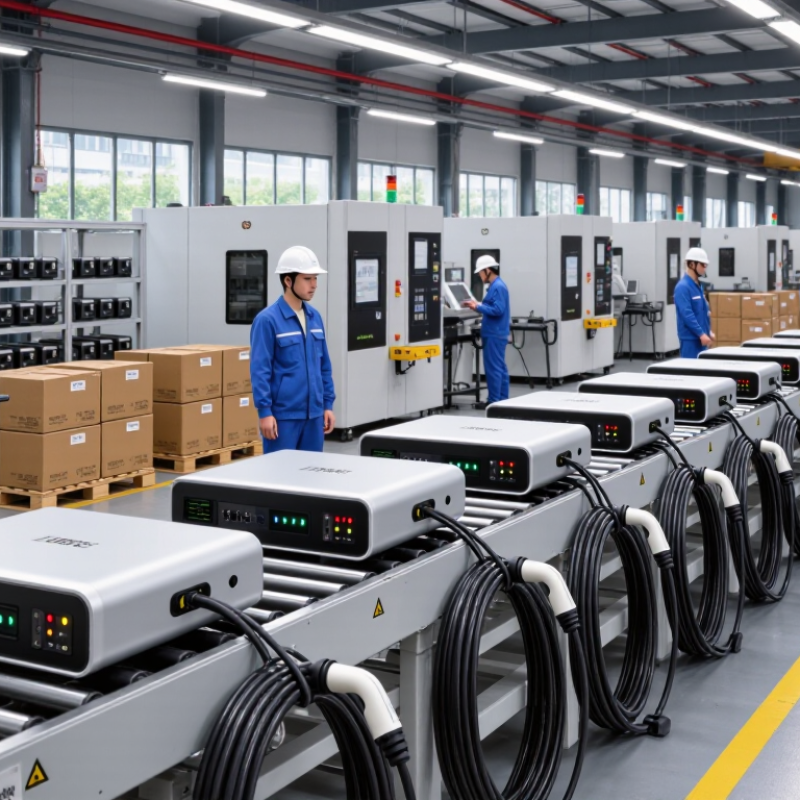
What Is an EV Wall Charger and How Does It Work?
An EV wall charger is a fixed device that supplies electricity to an electric vehicle at home or work. It usually receives alternating current from the building and sends it through a charging cable. The vehicle’s onboard charger then converts AC power into battery-ready electricity. A control signal checks whether the car is connected and ready. Safety systems monitor temperature, current, grounding, and leakage. Charging stops when a fault appears. It is a controlled process, not simply plugging in a larger cable.
Real charging speed depends on the vehicle, circuit capacity, cable rating, and local installation. A unit may support high power, but the car might accept less. An experienced electrician should inspect the panel, wiring, breaker, and grounding before installation. Outdoor units also need suitable weather protection and careful cable placement. In practice, charging may slow during extreme heat, cold, or heavy household use. That detail is easy to overlook. A “fast” wall charger can still feel slow if the vehicle has a small onboard charger.
Tips: Check the vehicle’s maximum AC charging rate first. Use a dedicated circuit with correctly rated protection. Keep connectors clean and dry. Avoid extension cables unless the manufacturer and local rules clearly allow them. Review charging data after installation. If the results seem unusual, pause and ask a qualified technician to test the system. Even reliable equipment needs periodic inspection.
Leading China EV Wall Charger Manufacturers and Suppliers
China’s leading EV wall charger manufacturers and suppliers combine practical engineering with scalable production. Strong suppliers typically offer AC chargers for homes, apartments, workplaces, and commercial parking areas. Their products may include adjustable current settings, RFID access, app control, load balancing, and OCPP compatibility.
Reliable sourcing requires more than comparing prices. Ask for clear datasheets, sample units, factory test records, and relevant safety certifications for your target market. Check enclosure strength, cable quality, thermal protection, residual-current monitoring, and communication stability. A professional supplier should explain charging output under different temperatures, not only quote the highest rating. Factory audits can also reveal assembly discipline, quality-control procedures, and spare-parts support. Some suppliers respond quickly before an order, then become vague afterward. That difference matters.
Tips: Test one sample for several weeks before bulk purchasing. Review installation guides with a qualified electrician. Confirm warranty terms, software maintenance, packaging details, and delivery responsibilities in writing. Ask whether customized labels affect testing or lead times. A low price can look attractive. It may hide weak components or limited support. I have seen buyers focus on appearance and forget cable flexibility in cold weather. That mistake is easy to make. Suppliers should also explain failed-unit handling and replacement timelines. Their answers show operational maturity. Do not accept every certificate at face value; verify its scope, date, and issuing body. Good manufacturers welcome careful questions, even when the questions slow the first conversation.
China EV Wall Charger Manufacturers and Suppliers: Common AC Power Classes
The chart compares commonly specified AC wall charger power classes used in residential and commercial EV charging. For a 60 kWh battery, ideal charging time is approximately 17.1 hours at 3.5 kW, 8.6 hours at 7 kW, 5.5 hours at 11 kW, and 2.7 hours at 22 kW. Actual charging time depends on battery capacity, vehicle AC charging limits, installation conditions, and charging losses.
How to Evaluate EV Charger Manufacturers in China
Choosing a Chinese EV wall charger supplier requires more than comparing factory prices.
The IEA’s Global EV Outlook 2024 reports that China held over half of the world’s public charging points in 2023.
Scale is impressive, but quality can still vary. Check whether the manufacturer controls design, testing, firmware, and final assembly. Ask for traceable test records, not attractive certificates alone.
Technical compatibility deserves close attention.
Confirm support for relevant IEC 61851 requirements, local grid standards, connector specifications, and safety protections. For connected chargers, examine communication security, remote updates, and data ownership. The China Electric Vehicle Charging Infrastructure Promotion Alliance reported more than 2.7 million public charging points by the end of 2023. This growing network increases demand for stable hardware and responsive service. A supplier should provide load testing, temperature testing, and clear failure-rate records.
Some sales teams avoid these questions. That is a warning sign.
Tips:
Request three recent customer references from different climates. Inspect a production sample before signing. Test residual-current protection, cable heating, screen visibility, and Wi-Fi recovery. Review warranty exclusions carefully. Ask how spare parts remain available after five years. TÜV or laboratory reports help, but independent verification is stronger.
I would not trust a perfect presentation immediately; field data often reveals weaknesses.
Evaluate response time through a real support ticket, not a promise.
A low unit price may become expensive after installation delays, replacements, and software problems.
Export Standards, Certifications, and Buyer Considerations
China’s top EV wall charger suppliers should treat export compliance as market-specific, not universal. Buyers must check voltage, frequency, connector type, and grid protection requirements before ordering. IEC 61851 and IEC 62196 are common reference standards for charging equipment and connectors. However, a test report is not always a product certification.
For European shipments, buyers commonly request CE documentation, electromagnetic compatibility testing, low-voltage safety evidence, and substance-restriction compliance. Other markets may require national approval, electrical safety marks, or additional radio certification for wireless functions.
Ask for the declaration of conformity, complete test reports, and the exact model number covered. Verify that the laboratory is independently accredited. Small details matter.
A reliable supplier should also provide factory quality records, serial-number traceability, firmware controls, and inspection procedures. Check the charger’s IP rating, residual-current protection, surge resistance, cable temperature monitoring, and emergency shutdown behavior. A high IP rating can still fail after poor installation. Request samples from the same production line. Inspect labels, terminals, screws, enclosure seals, and user instructions. Certificates may cover an earlier hardware revision, which is an easy detail to miss. I would also review warranty terms, spare-part availability, software support, and response times before signing. On-site audits are useful, but they do not replace independent testing.